
By Tremmel Watson
My journey from isolation to community started with a $1,000 mistake.
Years ago I was embarrassed by my hearing loss. I had developed a habit that many people with hearing loss fall into: smiling, nodding, and pretending I understood conversations even when I didn’t.
In group settings or noisy environments, it often felt easier to go along than to ask people to repeat themselves. I didn’t want to slow conversations down or draw attention to the fact that I was struggling to hear.
For a long time, I convinced myself that this was just part of adapting.
Then one day, that habit cost me $1,000.
During a conversation I thought I understood, I nodded along like I usually did. Later I realized that I had unknowingly agreed to let someone borrow $1,000.
That moment forced me to confront something I had been avoiding. My hearing loss wasn’t just about missing words. It was affecting my confidence, my relationships, and even my financial decisions.
That was my turning point.
I knew I had to stop nodding and start speaking up. I began looking for community and resources that could help me better understand my hearing loss and connect with others navigating similar experiences.
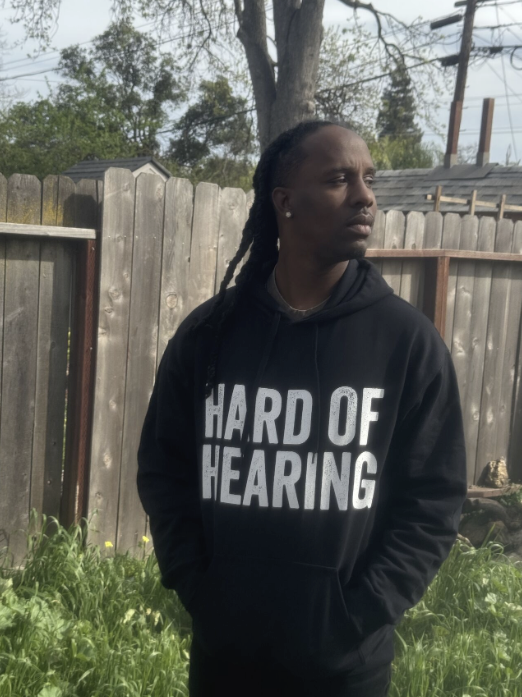
Tremmel Watson now wears his “HARD OF HEARING” hoodie proudly because he’s no longer hiding from his hearing loss.
That search led me to the Global Alliance of Speech-to-Text Captioning, the only organization solely dedicated to the captioning industry. Within six months, I was representing the organization as an exhibitor at national conventions hosted by the Hearing Loss Association of America (HLAA) and the Association of Late-Deafened Adults (ALDA).
Those experiences changed how I saw myself.
I found my sense of belonging not just by manning the booth, but also by talking to others with hearing loss at workshops, meeting over meals, and through shared laughter during karaoke. It was here that I learned about assistive technologies, strategies for self-advocacy, and resources for deaf and hard of hearing people that I would not have known about otherwise.
Listening to others share their experiences showed me how they had navigated challenges I was still figuring out. Their insights provided practical knowledge that could help me and that might help you on your own journey.
One thing I especially appreciate about ALDA is its philosophy of “whatever works” when it comes to communication. At their conventions, you see a mix of styles: Some sign, some speak, some rely on captioning, and many use a combination.
Accessibility is always at the forefront, with American Sign Language interpreters and CART (Communication Access Real-time Translation) captioners at workshops so everyone can participate in the way that works best for them.
This year, I’m also planning to attend the SayWhatClub convention on the recommendation of hearing loss leaders Chelle Wyatt and Pat Dobbs.
Today, I wear my “HARD OF HEARING” hoodie proudly because I’m no longer hiding from my hearing loss.
If you’re living with a hearing loss, don’t wait for an expensive mistake to find your people. Organizations like HLAA, ALDA, and the SayWhatClub offer spaces where you can learn, connect, and grow.
The workshops are valuable, but the real impact comes from the community connections. I hope to see you there.
Tremmel Watson is a disability advocate and consultant with experience in assistive technology. He is based in Sacramento, California. Contact him at tremmel.watson@disabilityrightsca.org. He shared his hearing loss journey and cowrote this story with Chelle Wyatt on accessibility.
The Latest Blog Posts



Hearing loss began affecting how I saw myself. There is a word in Chinese that describes how I felt: 自卑 (zìbēi), a feeling of insecurity and inferiority that makes you shrink yourself around other people.