
How a family health mystery inspired a high school student to pursue hearing research and raising awareness of healthy hearing habits.
By Rishi Pampati
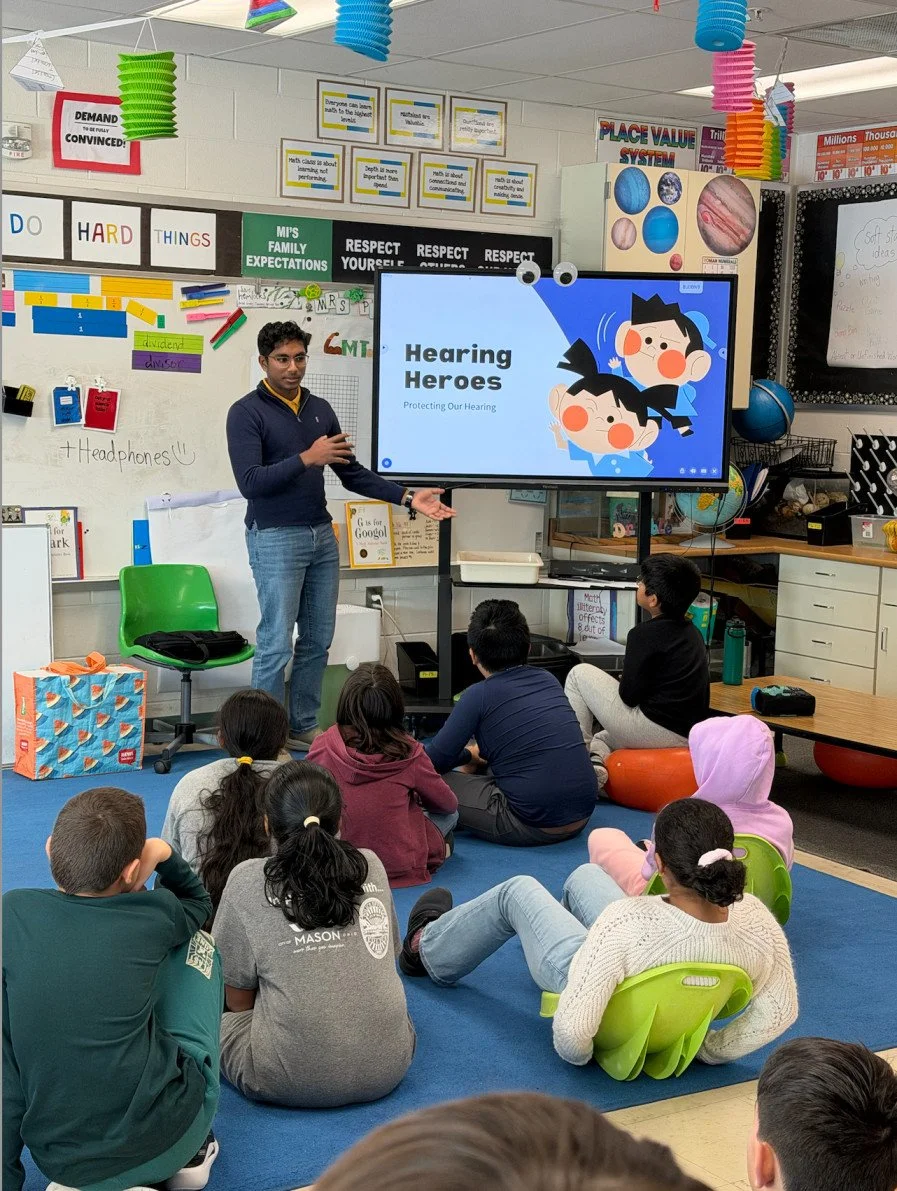
RIshi Pampati has been presenting healthy hearing tips to schools around Cincinnati.
About four years ago a close family member suddenly presented with a high fever and severe headache. He had just returned from a trip to the Great Smoky Mountains. He was hospitalized and over the next 10 days, his health slowly degraded. He told me that his vision was blurry and that his ears felt oddly “full,” like something was buffering every sound going in.
I remember getting my first phone around this time. One of the few photos I had saved was of my bright “Get Well Soon” card, hanging against the pale side wall of his hospital room. Whether it was the poor resolution or the ghastliness of the scene itself, it felt cold and hostile.
Thankfully, he recovered and was back at it—his vision was getting better and so was the fullness in his ears. But at some point during his hospital stay, he had lost hearing in his left ear. For weeks, we held onto the hope that it was just temporary, and that his hearing would soon return.
But it never did. He was diagnosed with idiopathic sudden sensorineural hearing loss (ISSNHL), which wasn’t much beyond “yeah, we don’t know why you lost your hearing.” Eventually, I got used to it. I started speaking a little louder, repeating things once or twice over, and walking on his right side so I could be heard. These were minor inconveniences at most, but for him, they were a permanent facet of life.
Only after he received a cochlear implant did things start changing for the better. His hearing eventually improved, but it was far from normal. The whole experience pushed me to learn about ISSNHL and hearing loss in general. According to the National Institute on Deafness and Other Communication Disorders (NIDCD), only 10 percent of people diagnosed with sudden hearing loss have an identifiable cause. Most are not given a concrete explanation for their condition, just like him.
This statistic was disturbing—I’d always assumed that medicine had most of the answers already. Why wasn’t the whole field focused on solving the true problem? Every “solution” he was given was only a bandage for a wound that could never heal. The whole experience had disenchanted me about the field; I didn’t want anything to do with a science that thrived on patients suffering first just to “fix” them.
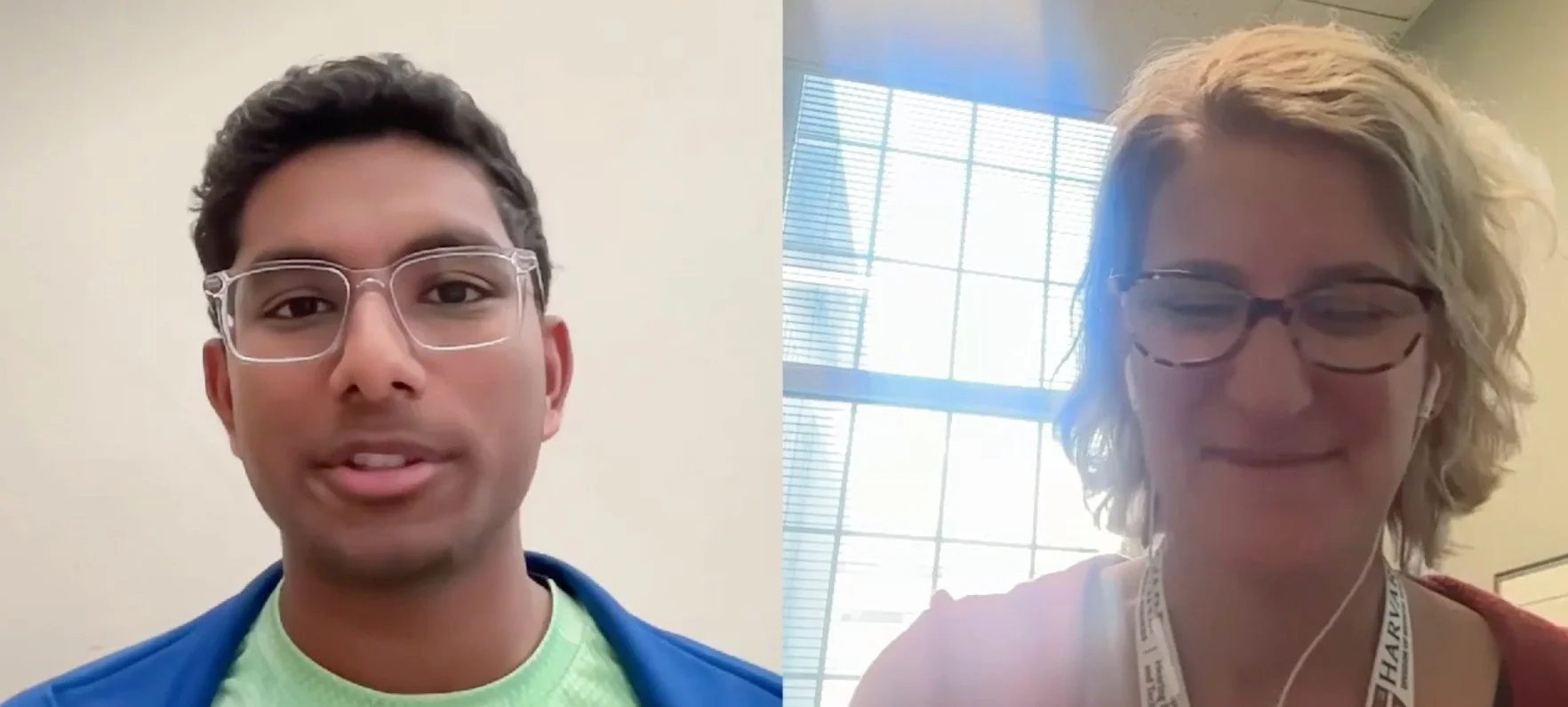
On his podcast Can You Hear Me?, Rishi interviewed neurologist Julie Arenberg, Ph.D., CCC-A, of Harvard Medical School/Mass Eye and Ear, whose research focuses on improving speech perception outcomes and quality of life for children and adults with severe hearing loss.
Nevertheless, I feel pressured to do my part. Even though a cochlear implant doesn’t give back patients their full hearing, it is truly a magical device that has transformed the lives of more than a million people. Now that I’m involved in cochlear implant research at the University of Cincinnati with Daniel Sun, M.D., a neurotologist, I am playing my small role in the world of hearing loss treatment.
But as my work continued, I realized that prevention is just as important, or even more important than treatment. Noise-induced hearing loss (NIHL) is becoming increasingly prevalent among Gen Z—my peers—due to increased access to personal listening devices and loud entertainment events, yet there are no widespread interventions to educate kids about the dangers of hearing loss. I founded Hearing Heroes to remediate this gap.
Over the past few months, I’ve hosted sessions for elementary school classes across the Cincinnati community, where we discuss the ear’s mechanisms, how they can be damaged in day-to-day life, and how to prevent damage. Many of these kids are totally unaware of how seemingly normal things, like sports events and even headphones, can have adverse effects on their hearing. Adults, too, tend to underestimate the importance of protecting their hearing. As a result I have made prevention a key message in my outreach.
According to the World Health Organization, “Prevention of hearing loss is essential throughout the life course, from prenatal and perinatal periods to older age. In children, nearly 60 percent of hearing loss is due to avoidable causes that can be prevented through implementation of public health measures. Likewise, most common causes of hearing loss in adults, such as exposure to loud sounds and ototoxic medicines, are preventable.”
For its part the NIDCD says, “NIHL is the only type of hearing loss that is completely preventable. If you understand the hazards of noise and how to practice good hearing health, you can protect your hearing for life.”
Through my podcast, Can You Hear Me?, I aim to inform the general public about all things related to hearing—my slogan is “the podcast about hearing, hearing loss, and everything in between.” I discuss current treatments for hearing loss, the research that got us to where we are, and the research taking us forward.
By far my favorite part of this journey has been the amazing people I’ve met. My project at the University of Cincinnati uses diffusion tensor imaging, an MRI technique that can reconstruct white matter tracts, to investigate the central auditory pathway in cochlear implant candidates.
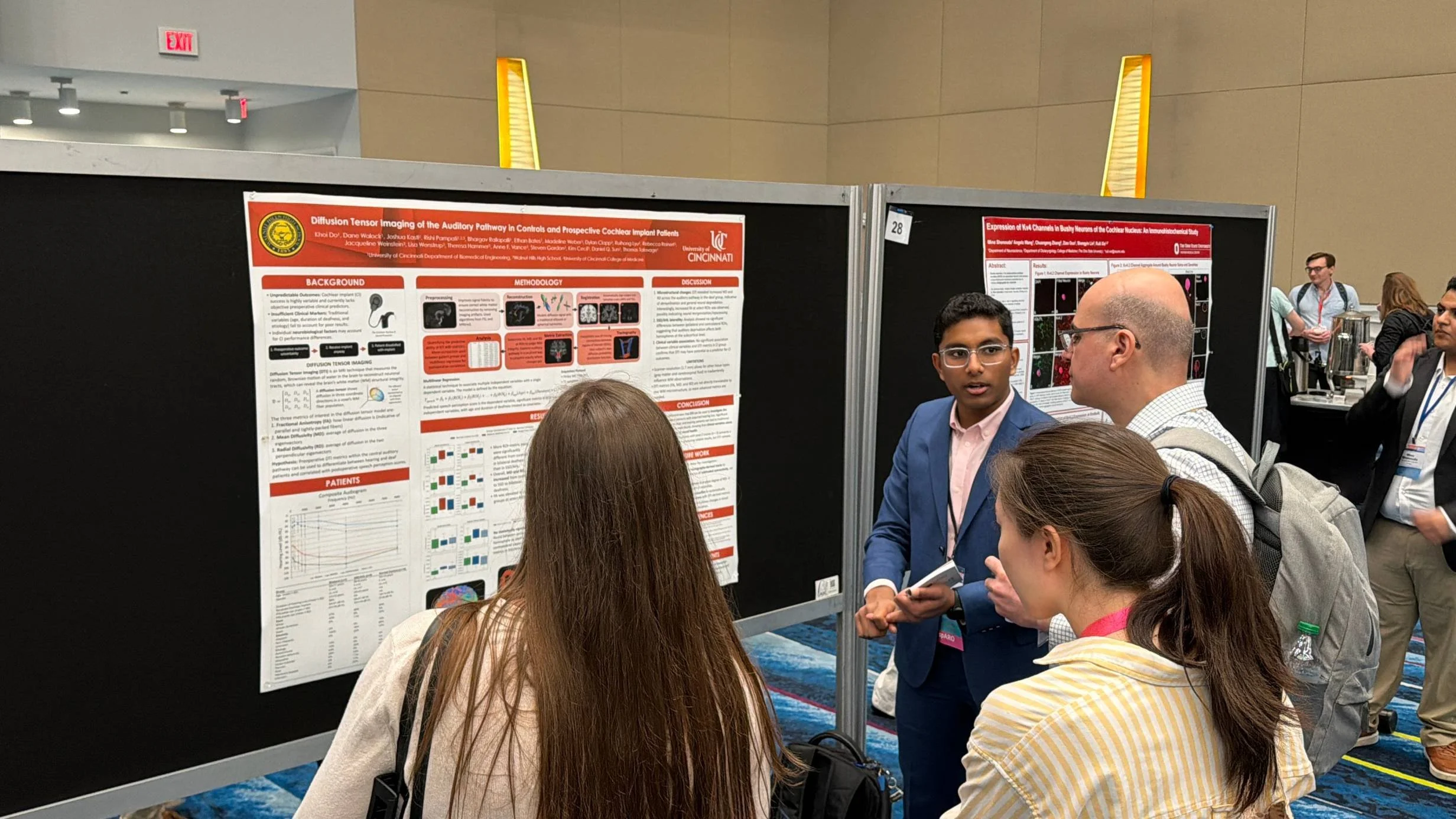
Rishi presented a poster at the 2026 ARO MidWinter Meeting on his research using diffusion tensor imaging to investigate the central auditory pathway in cochlear implant candidates.
Dr. Sun’s group had already registered an abstract for the 2026 Association for Research in Otolaryngology (ARO) Midwinter Meeting, so I was able to attend, too! It was an amazing experience to be able to present my poster, “Diffusion Tensor Imaging for Predicting Cochlear Implant Outcomes,” at the ARO meeting in San Juan, Puerto Rico.
Whether I’m discussing white matter tracts with scientists in San Juan or explaining ear mechanisms to elementary school students, the goal remains the same: improving hearing health. This includes not only future therapeutic technologies discovered through scientific research but also real conversations on the ground, with all ages, about hearing loss prevention.
Rishi Pampati is a high school student in Ohio. For more, see Hearing Heroes. Find his podcast Can You Hear Me? on Spotify and YouTube.
Learn about Hearing Health Foundation’s Keep Listening prevention campaign at hhf.org/keeplistening.
The Latest Blog Posts




A person becomes hard of hearing, caregivers and families start raising their voices, no one likes shouting at another person, the conversations decline.