What Is Ménière’s Disease?

Ménière’s disease is a chronic inner ear disorder affecting balance and hearing.

French doctor Prosper Ménière first identified and described the symptoms of the medical condition that now bears his name in 1861. These symptoms include fluctuating hearing loss, episodic vertigo, a sensation of ear fullness, and tinnitus. 

Get Updates in Your Inbox

Many disorders have similar characteristics.

“Ménière’s disease is a disorder of the inner ear that includes episodes of vertigo with possible hearing loss, ringing or buzzing in the ear, or ear pressure.

“Ménière’s disease is defined by spontaneous vertigo attacks, each lasting 20 minutes to 12 hours, with low- to mid-frequency sensorineural hearing loss in the affected ear  before, during, or after one of the episodes of vertigo. The clinical practice guideline defines vertigo as the feeling of spinning or moving when one is not moving. This is different from dizziness, which can mean feeling lightheaded or feeling like passing out.”

These symptoms can vary from patient to patient including, over time, in the patient themselves.


What Are the Symptoms of Ménière’s Disease?

If you’re wondering, “how do I know if I have Ménière’s disease?,” the National Institute on Deafness and Other Communication Disorders (NIDCD) and the Mayo Clinic list four main symptoms.

  • Recurring episodes of vertigo: This is experiencing a spinning sensation that starts and stops spontaneously. Episodes of vertigo occur without warning and can last several minutes to several hours. Some may experience drop attacks, where the vertigo is so severe and sudden that the patient falls to the floor.

  • Hearing loss: Hearing loss in Ménière's disease usually fluctuates but can become permanent.

  • Tinnitus: Hearing a ringing, buzzing, roaring, whistling, or hissing sound.

  • Ear fullness: This is feeling pressure or fullness in the ear, usually in one ear.

What Are the Stages of Ménière’s Disease?

In the 1980s and ’90s there were attempts to classify Ménière’s disease into stages that take into account the fluctuating nature of the symptoms. However, as Yi Ge, M.D., of MED-EL shares, these stages “should be viewed as a general description of possible pattern of progression, not a fixed timeline that everyone follows the same way.”

More recently, researchers and clinicians have pointed to evidence of subtypes among Ménière's disease patients, now able to be objectively measured.

At the 2025 Ménière’s Disease Symposium (cohosted by HHF), Amy Juliano, M.D., shared these findings, thanks to advanced imaging of the inner ear:

• MRI imaging techniques have evolved to visualize endolymphatic hydrops in Ménière’s disease patients by using contrast agents that permeate into perilymph but not endolymph, allowing radiologists to objectively identify enlarged cochlear ducts, saccules, and utricles as visible signs of the condition.

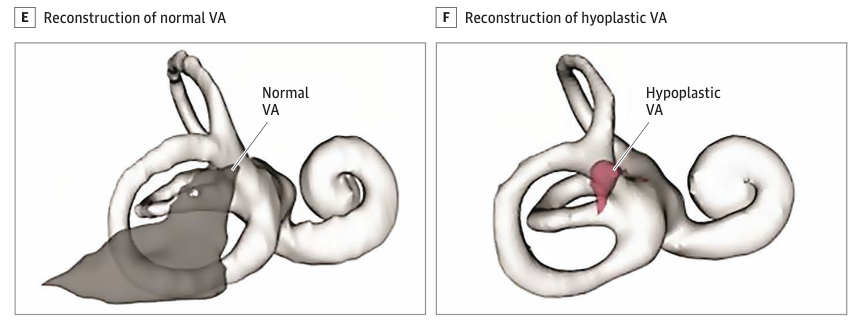
• Research has identified two distinct endotypes of Ménière’s disease: hypoplastic (where the endolymphatic sac never developed properly) and degenerative (where the endolymphatic sac developed but then degenerated), which can be distinguished on imaging by examining the vestibular aqueduct angle or the thickness of retrolabyrinthine bone.

• Modern radiological reports for Ménière’s disease patients now include assessment of endolymphatic structure sizes, perilymph enhancement (which correlates with sensorineural hearing loss), and anatomical features that help subtype the disease, providing valuable prognostic information for treatment planning.


How Is Ménière’s Disease Diagnosed?

Since Ménière's disease can have similar symptoms as other illnesses, your healthcare provider will look into your medical history, hearing and/or balance assessments, and, according to the Mayo Clinic, the presence of the following conditions to diagnose the disease: 

  • Two or more vertigo attacks, each lasting 20 minutes to 12 hours, or up to 24 hours

  • Hearing loss validated by a hearing test

  • Tinnitus or a feeling of fullness or pressure in the ear

These signs can be accompanied by other additional symptoms, according to the Cleveland Clinic: headaches, abdominal pain, and nausea. Individual patients may report a range of other symptoms that could be connected with the experience of Ménière’s disease.


How Common Is Ménière’s Disease?

Most cases are in one ear and in adults ages 40 to 50.

Most cases of Ménière’s disease are unilateral (affecting only one ear), but some will be affected in both ears. Ménière’s disease often starts as unilateral and progresses to bilateral. Around 15 percent of people with Ménière’s will experience bilateral hearing loss.

It's estimated that there are 600,000–750,000 cases of Ménière’s disease in the United States, with 45,000 to 60,000 new cases diagnosed annually. Estimates of the worldwide incidence of Ménière’s disease vary significantly, from 3.5 to 513 per 100,000. 

According to AAO-HNS, “Ménière’s disease is almost exclusively reported in adults, with less than 3 percent of cases estimated to occur in children younger than 18 years old. The disease is most prevalent between ages 40 to 60 years, with peak onset in the 40s and 50s.

“In many patients, the most detrimental decline in hearing and balance function occurs within the first decade of diagnosis, yet patients continue to have longstanding deficits that make Ménière’s disease a chronic disease. It is important to evaluate and document the hearing in both ears as a subset of patients will eventually experience Ménière’s disease bilaterally.”


What Are the Causes of Ménière’s Disease?

Even though the exact causes of Ménière’s disease are not clearly known, symptoms are believed to arise from the buildup of fluid in the chambers of the inner ear.

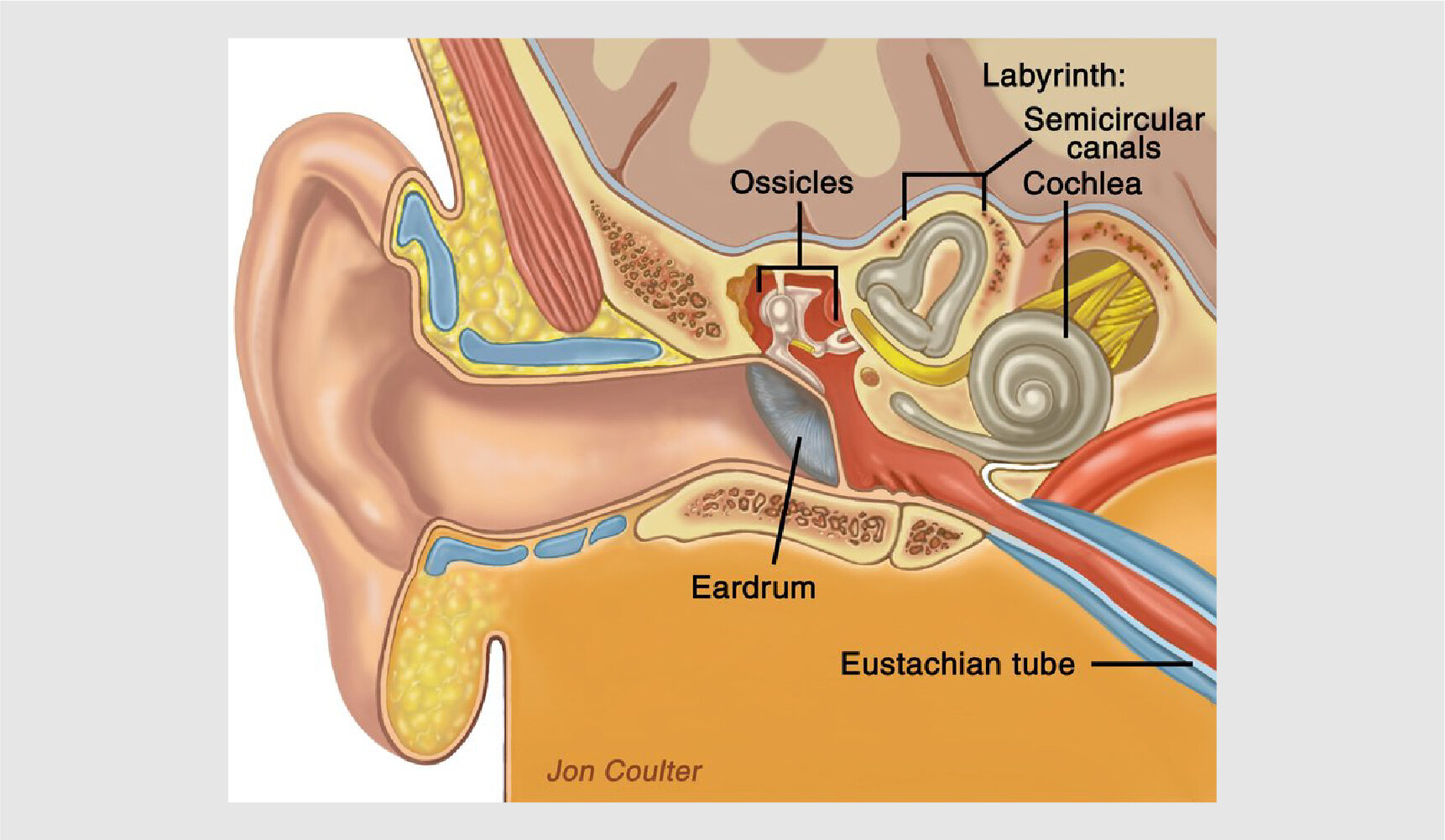
According to the National Institute on Deafness and Other Communication Disorders (NIDCD), the disorder is physically caused by a buildup of a fluid called endolymph in the compartments of the inner ear, called the labyrinth. The labyrinth contains the organs of balance (the semicircular canals and otolithic organs) and hearing (the cochlea).

The labyrinth has two sections: the bony labyrinth and the membranous labyrinth, the second of which is filled with endolymph which, in the balance organs, stimulates receptors as the body moves. The receptors then send signals to the brain about the body’s position and movement. In the cochlea, fluid is compressed in response to sound vibrations, which stimulates sensory cells that send signals to the brain.

This excess fluid–beyond the normal amount of fluid that exists in the cochlea–affects both balance and hearing. The cause of the fluid buildup is not yet completely understood.

Some researchers believe it is related to the same blood vessel constrictions that lead to migraine headaches; others say it might be due to an autoimmune condition, a viral infection, an allergic reaction, or head trauma. Ménière’s disease appears to have a hereditary component, so there may be a gene variant connected to the regulation of endolymph fluid.

Is Ménière’s Disease Connected With Migraine?

At the 2025 Ménière’s Disease Symposium, Jeffrey Sharon, M.D., of the University of California, San Francisco, shared:

• Migraine affects 10-15 percent of the global population and shows surprising connections with vestibular disorders, with more than half of Ménière’s disease patients meeting criteria for migraine, suggesting a relationship that dates back to Prosper Ménière’s original observations in 1861.

• Research shows biological links between migraine and vestibular function through CGRP (calcitonin gene-related peptide), a neuroinflammatory peptide expressed in the vestibular periphery that affects balance in animal models, with preliminary clinical trial data showing CGRP-blocking drugs may reduce dizziness symptoms.

• There are multiple lines of evidence connecting migraine and Ménière’s disease: epidemiological overlap, shared symptoms and triggers, correlation in symptom laterality, potential pathophysiological mechanisms involving trigeminal nerve innervation of inner ear blood vessels, and genetic patterns in affected families. This suggests that exploring migraine medications as treatments for Ménière’s disease is warranted.

Is Ménière’s Disease an Autoimmune Condition?

At the 2025 Ménière’s Disease Symposium, Andrea Vambutas, M.D., of Northwell Health, New York, shared:

• A challenge to traditional classifications of Ménière’s disease is that it may exist on a continuum with autoimmune inner ear disease, with some cases potentially being autoinflammatory rather than autoimmune in nature.

• Research shows different cytokine profiles among patients, particularly finding that corticosteroid-responsive patients have high TNF levels that drop with treatment, while corticosteroid-resistant patients have low TNF but high IL-1 levels and may respond to anakinra (an IL-1 receptor antagonist).

• A phase two clinical trial using anakinra for corticosteroid-resistant Ménière’s disease patients is being conducted, with preliminary results showing promising signals, building on their earlier research that found a 70 percent response rate in autoimmune inner ear disease patients treated with anakinra, according to her team’s August 2025 paper in Otology & Neurotology, that notes: “We are currently conducting a phase two placebo-controlled trial to determine the efficacy of anakinra in these corticosteroid-resistant AIED patients.”


Is Ménière’s Disease Genetic?

Ménière’s disease appears to have a genetic component, so there may be a gene variant(s) connected to the regulation of endolymph fluid.

A 2026 study by Divya Chari, M.D., a 2024–2025 Emerging Research Grants scientist, suggests that variants of a single gene may alter inner ear development decades before symptoms begin. (Chari’s 2024 ERG grant was generously funded by an anonymous donor and renewed for a second year in 2025, generously funded by Karen I. Coley.)

Recent research by Penn Medicine also links developmental genetics to adult vestibular conditions.

At the 2025 Ménière’s Disease Symposium, Jose Antonio Lopez-Escamez, M.D., Ph.D., of University of Sydney, Australia, shared:

• Ménière’s disease can be seen as not a single disease but as multiple subtypes, including three immune response-related subgroups (autoimmune, autoinflammatory, and IgE-associated) that can be identified through measuring cytokines and IgE in blood tests, while approximately 40% of patients may have a genetic origin with normal immune responses.

• Genetic research has identified about 20 genes associated with familial Ménière’s disease, with the three most common being OTOG (encoding otogelin), MYO7A (encoding myosin), and TECTA (encoding alpha-tectorin), and a newly discovered gene GJD3 (encoding Connexin 31.9), with most genetic cases involving the stereocilia and tectorial membrane.

• These findings suggest Ménière’s disease often results from a combination of genetic predisposition (a “fragile ear”) plus environmental triggers like noise exposure, with approximately 9 percent of European cases being familial, and an estimated 28 percent of sporadic cases potentially having genetic origins as well.

At the same symposium, Andreas Eckhard, M.D., of Harvard Medical School/Mass Eye and Ear, shared:

• Evidence that endolymphatic hydrops may be a compensatory cell response to inner ear injury rather than a pure pathology challenges the traditional view of Ménière’s disease as primarily a fluid pressure disorder.

• Research shows that the endolymphatic sac, which makes up about a third to half of the inner ear’s epithelial surface, is consistently damaged in Ménière’s disease patients, and this damage represents a major injury to the inner ear.

• This suggests a new model where Ménière’s disease follows a pattern of maladaptive progression similar to chronic kidney disease: with initial injury, compensatory mechanisms (including cell proliferation in hydropic membranes), a phase of fluctuating function, and eventual burnout.

The discoveries of Dr. Echkard’s team (which includes Drs. Chari and Juliano) are summarized in the Fall 2025 issue of Harvard Otolaryngology Magazine and quoted below:

  • New insights reveal that Ménière’s disease is driven by abnormal cell overgrowth in the inner ear, not simply by fluid pressure as long believed.

  • This harmful cell overgrowth appears to be the inner ear’s misguided attempt to repair itself after it initially sustained damage to the endolymphatic sac.

  • Different underlying problems damage the endolymphatic sac in different patients, and researchers have defined the first disease subtype using imaging and genetics—opening the door to more precise diagnosis and personalized, targeted therapies.


How Is Ménière’s Disease Treated?

The following is general information only. HHF does not offer medical advice. Please consult your hearing care professional with any specific questions about your auditory health and healthcare.

A cure for Ménière's disease does not yet exist, but lifestyle modifications and treatments can help patients. According to the NIDCD, “Scientists estimate that six out of 10 people either get better on their own or can control their vertigo with diet, drugs, or devices. However, a small group of people with Ménière’s disease will get relief only by undergoing surgery.”

Treatments include reducing the body’s retention of fluids through dietary changes (e.g., eliminating or reducing salt, caffeine, and/or alcohol). Medications such as antihistamines, anticholinergics, and diuretics may lower endolymphatic pressure by reducing the amount of endolymphatic fluid. Eliminating tobacco use and reducing stress levels may also help.

Hearing Health Foundation-funded scientists continue to investigate causes to find better treatments. Emerging Research Grants scientist Bryan K. Ward, M.D., reviewed surgical interventions in a paper published in Frontiers in Neurology in 2021.

  • Medical therapy is directed at treating the underlying disorder and controlling the symptoms. The primary method of treating the underlying hydrops (distension of the endolymphatic space) is to implement a low-sodium diet and diuretics to reduce fluid retention and, as a result, inner ear fluid pressure. A variety of vestibular suppressants, ranging from antihistamines to benzodiazepines, are utilized to control patients’ acute symptoms. Most patients are well controlled on medical therapy and require no surgical intervention.

  • One of the earliest interventions is intratympanic steroids. A steroid solution is placed directly into the middle ear, allowing for passive perfusion into the inner ear via the round window. Intratympanic steroids are often offered to patients with episodic vertigo, sensorineural hearing loss, and other classic symptoms of Ménière’s disease that do not respond well to medical management. Like any treatment for the condition, intratympanic steroids have variable effects among patients. They have been popular because of their low risk and easy administration in the doctor’s office. Many patients often prefer intratympanic steroids on a frequent basis as opposed to taking daily diuretics. Intratympanic steroids are associated with fewer side effects than systemic steroids.

  • The Meniett device was approved by the Food and Drug Administration in 1999 and requires a tympanostomy tube to be placed in the ear drum. A self-administered pressure device, the Meniett is inserted into the ear canal and applies intermittent, alternating air pressure pulses to the middle ear in order to reduce the fluid pressure that causes dizziness. While it showed early promise as a conservative treatment option, it is now used less and less frequently due to other treatments.

  • Endolymphatic sac surgery is done in the operating room under general anesthesia and is classified as a conservative procedure because it retains the function of the inner ear. By decompressing the endolymphatic sac, there is a chance to decompress the functional component of the inner ear, reducing symptoms. This procedure’s success rate is around 80% according to “Endolymphatic Sac Surgery for Ménière's Disease—Current Opinion and Literature Review,” published in International Archives of Otorhinolaryngology in 2017.

  • Another option is intratympanic gentamicin. Gentamicin is an antibiotic with a known side effect of hearing loss and a capacity to destroy the vestibular system. It is delivered specifically to the middle ear with the intent to reduce the function of the vestibular system in that ear. It is titrated so that hearing can be preserved while vestibular function is reduced or eliminated.

  • A vestibular nerve section requires surgically opening the skull. The balance portion of the 8th (auditory-vestibular) nerve is cut, sparing the hearing portion. It is now rarely performed due to the advent of transtympanic steroids and gentamicin therapy.

  • Labyrinthectomy is the surgical removal of the inner ear and is definitive in eliminating vestibular (inner ear) function. It remains the gold standard for treating Ménière’s disease patients with poor hearing but is generally only used after other treatment options have failed.

  • Hearing aids: Even though hearing aids do not cure Ménière’s disease, they can sometimes help to alleviate the hearing loss, one of the hallmark features of the disease. Consult with your hearing care provider to learn if hearing aids would be effective in managing your Ménière’s disease.

  • SPI-1005 is an investigational drug for the treatment of hearing loss in patients with Ménière’s disease. In December 2025 drug manufacturer Sound Pharmaceutical announced that the FDA had designated SPI-1005 as a breakthrough therapy to treat the disease. The new drug contains ebselen, a chemical that has been shown to reduce neuroinflammation of the nervous system, including several neurootologic indications in Ménière’s disease, such as hearing loss, tinnitus, and vertigo. More studies and testimonials should be forthcoming.

According to the NIDCD, other treatments include reducing the body’s retention of fluids through dietary changes (e.g., eliminating or reducing salt, caffeine, and/or alcohol). Medications such as antihistamines, anticholinergics, and diuretics may lower endolymphatic pressure by reducing the amount of endolymphatic fluid. Eliminating tobacco use and reducing stress levels may also help.

At the Ménière’s Disease Symposium, Habib Rizk, M.D., of the Medical University of South Carolina, noted:

• Current clinical care for Ménière’s disease lacks evidence-based treatments, with dietary modifications, diuretics, and betahistine commonly used despite limited scientific support, though clinicians observe patient improvements that suggest effectiveness beyond placebo effects.

• There is significant overlap between Ménière’s disease and vestibular migraine, with research suggesting multiple subclassifications or “endophenotypes” of Ménière’s disease that may require different treatment approaches, including those with migraine features.

• Clinical trials for Ménière’s disease face significant challenges including significant placebo response rates, inconsistent outcome measures, and the need for better trial designs that account for disease subtypes and fluctuating symptoms, with researchers suggesting alternative approaches like the STAR*D design used in depression clinical trials, to maximize recruitment accrual, compliance, and longitudinal follow-up.

HHF offers general information only and does not offer medical advice. Please consult your hearing care professional with any specific questions about your auditory health and healthcare.


 

What Can Trigger a Ménière’s Disease Attack?

The following is general information only. HHF does not offer medical advice. Please consult your hearing care professional with any specific questions about your auditory health and healthcare.

According to the NIDCD, you can reduce symptoms and/or the risk of triggering a vertigo attack by reducing the body’s retention of fluids through dietary changes (e.g., eliminating or reducing salt, caffeine, and/or alcohol).

Medications such as antihistamines, anticholinergics, and diuretics may lower endolymphatic pressure by reducing the amount of endolymphatic fluid. Eliminating tobacco use and reducing stress levels may also help.

HHF offers general information only and does not offer medical advice. Please consult your hearing care professional with any specific questions about your auditory health and healthcare.



How Does Balance Work?

The inner ear is a tiny but notable body part; not only is it important to hearing, but it is also where the balance organs and nerves are located.

The basic components of the inner ear include semicircular canals, the cochlea, the utricle, the saccule, and the vestibulocochlear nerve. The cochlea and one half of the vestibulocochlear nerve (the cochlear nerve) are responsible for hearing. The remaining semicircular canals, utricle, saccule, and vestibular nerve are responsible for balance.

There are three semicircular canals that contain fluid to activate sensory hair cells, which are arranged at 90-degree angles and detect different kinds of movement:

  • Up and down

  • Side to side

  • Tilting

The utricle connects the semicircular canals to the saccule, which also detect motion. They are located in the vestibule inside of the labyrinth, which is the bony outer wall of the inner ear. All of this is the vestibular system.

But it is not only the vestibular system that assists with balance. Vision and sensory receptors (muscles, joints, skin, etc.) all transmit messages to the brain that work together to regulate balance.

Emerging Research Grants scientist and Hearing Restoration Project member Jennifer Stone, Ph.D., provides an overview of the vestibular system in this research webinar and Hearing Health magazine article.


What Is the Latest Research on Ménière’s Disease?

Hearing Health Foundation co-hosted a research symposium on the condition at the ARO (Association for Research in Otolaryngology) MidWinter Meeting. Learn more about the symposium, including an overview, a detailed summary, and the recording of all the presentations with captions.

ERG scientist Wafaa Kaf, M.D., Ph.D., presented a research webinar on Ménière’s disease and its definition, evaluation, and interventions, and answered additional questions.

Thanks to the generosity of our donors, Hearing Health Foundation (HHF) funds groundbreaking research to advance our scientific understanding of the often debilitating inner ear and balance disorder Ménière's disease through the Emerging Research Grants (ERG) program.

For the very latest news, research, and personal stories about Ménière's disease, please click here.

Medically reviewed by Rohima Badri, Ph.D., whose doctorate is in audiology and hearing sciences. Last reviewed May 2026.


Learn More