
Why Deaf and hard of hearing children need to see themselves in books
By Kristin Blakely, Ph.D.
Children’s books are often described as mirrors and windows. They are mirrors because they reflect a child’s own experience and windows because they offer a view into other worlds. For many Deaf and hard of hearing (HoH) children, those mirrors are painfully scarce. For hearing children, the windows into the worlds of Deaf and HoH children are also scant.
It is my mission, as both a children’s author and a sociologist, to champion empowering, inclusive, and empathetic representation of Deaf and hard of hearing characters, ensuring that every child can see themselves reflected and celebrated in the stories they read and for the hearing world to better understand the diversity of peoples’ hearing and language journeys.
Representation in Children’s Literature
Research confirms that there is a dearth of representation of the Deaf and hard of hearing communities in children’s literature. Large-scale surveys of children’s publishing show that only about 3 to 4 percent of books feature a main character with a disability—and that figure includes all disabilities combined, not specifically deafness or hearing differences.
But we know in the real world that hearing differences are common. More than 430 million people globally, or 5 percent of the world’s population, experience hearing loss, including millions of children. In the United States, approximately 1 in 500 infants are diagnosed with hearing loss and 1 in 10 children and teens have some degree of hearing loss.
One study examining hundreds of board books in a library’s collection found only one title that included a character using an auditory device such as a hearing aid. Data on picture book, middle grade, and young adult genres consistently show that Deaf and HoH characters are uncommon.
Inadequate Portrayals
When Deaf and HoH characters do appear, another issue emerges: how they are portrayed.
Scholarly analyses of children’s picture books featuring Deaf and HoH characters show that many rely on the medical disability or pathological model. This framework presents disability as a deficit located within the individual with deafness as an obstacle to overcome. The story revolves around fixing, compensating, or minimizing the “problem.”
What is often missing is representation aligned with a cultural or social model. This positions Deaf and HoH identities as encompassing language, community, and lived experience. Child characters living with hearing loss are not merely medical subjects or reduced to individuals with disabilities who are “poor little things” and/or “brave little souls,” as Emiliano C. Ayala, Ph.D., a professor at California State University San Marcos, put it in a 1999 analysis of how people with disabilities are portrayed in children’s literature. Rather, they are full protagonists with agency, imagination, personality, and everyday routines.
Stories shape perception. And perception shapes reality.
The Importance of Familiarity
In 1968, social psychologist Robert Zajonc identified what is known as the mere exposure effect, or the idea that people develop preferences and comfort toward things they encounter repeatedly.
Familiarity builds ease and repeated exposure reduces anxiety. What we see often and regularly becomes normalized.
When children frequently encounter diverse characters in books, those identities become integrated into their understanding of the world. So when Deaf and HoH characters are rare, unfamiliarity persists. Hearing aids, cochlear implants, and sign language are foreign and unknown.
Representation is not symbolic. It is the necessary groundwork for empathy and inclusion in society.
Writing Inclusive Stories
That understanding shapes my work as an author. As a HoH person who wears hearing aids, I navigate listening challenges and fatigue in noisy spaces. I understand the subtle choreography of positioning myself to hear, advocating for repetition, and choosing when to explain my hearing difference.
I know that hearing loss is a part of me and my identity. As an adult, I also know how and where to seek resources, support, community, and friendship in my hearing loss journey.
For Deaf and HoH children, books and stories are vital spaces where they can see themselves, feel understood, find community and belonging, and lay the foundation for confidence and identity development that will set them up for success throughout their lives.
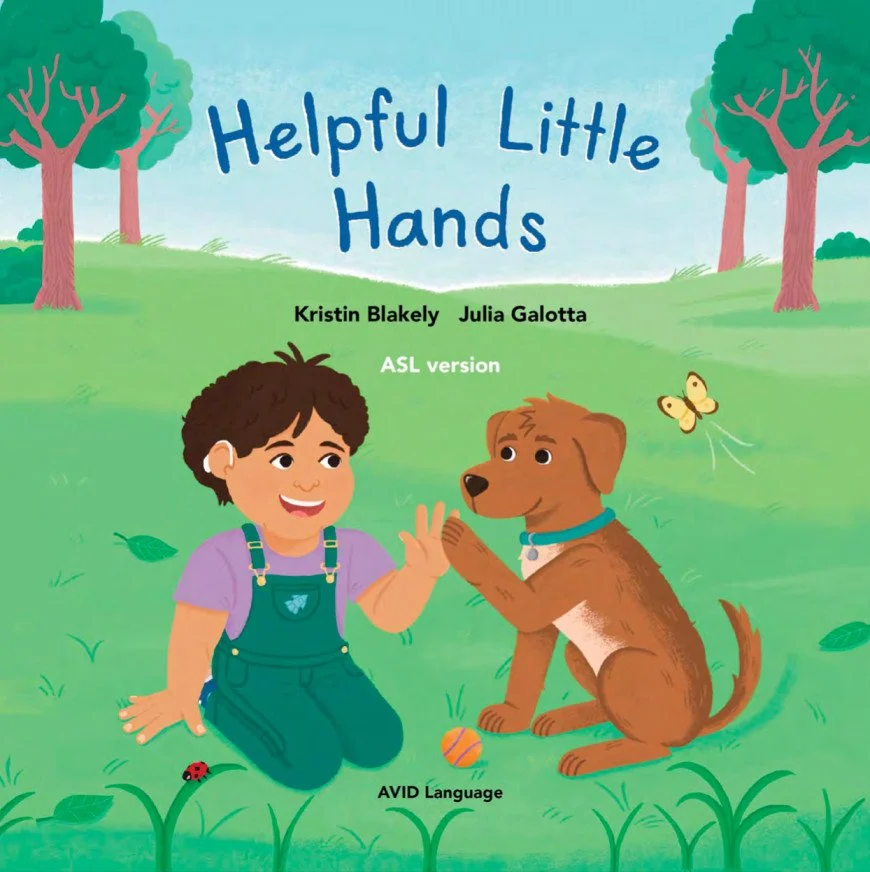
In my latest children’s book “Helpful Little Hands: ASL Version,” young readers meet Nate, a hard of hearing toddler who discovers all of the things that he can do with his hands. He can clap, write, paint, high five, drive, scoop, tie, peel, wipe, pat, stir, scrub, shush, and wave. Nate can also sign.
Each layout in the book pairs everyday actions with the corresponding American Sign Language (ASL) sign, incorporated into the illustrations. By combining gestures, spoken words, and signs, “Helpful Little Hands” promotes speech and language development for children with and without hearing loss. Developed in consultation with sign language interpreters and Teachers of the Deaf, it serves as both an introduction to ASL and a joyful celebration of communication in many forms.
Nate’s hearing difference is present and he wears hearing aids but it is not a “problem” to solve. He plays, explores, communicates, and learns. Hearing loss is a feature of the story but it’s not the story.
In my other book in the series, “I’ve Never Sawn That Before!,” Nate faces something many children experience: bedtime anxiety. As he removes his hearing aids and settles into bed, his imagination runs wild. He wonders about a donut downpour, a dancing dinosaur, a sunken candy store and many other things that he’s never “sawn” [seen] before.
The story tenderly follows the reassuring interaction between father and son as Nate learns that he can feel safe and snug at night, without his hearing aids. Here, hearing aids are not dramatized. They are part of the bedtime routine. Taking them out is neither tragic nor heroic, it is simply real.
This normalcy is intentional.
The Magic of Representation
With hearing aids and ASL directly embedded into the visual and textual storytelling in my books, Deaf and HoH children experience the mirror effect, reflecting their lived experience.
For a hearing child, the books contribute to familiarity and—with the psychological principle of the mere exposure effect in mind—it also nurtures empathy. Differences are normalized and inclusion becomes intuitive rather than instructed.
There is no single Deaf or HoH narrative. Some children sign, some speak, some do both, some use hearing aids or cochlear implants, some identify as Deaf or deaf or HoH. Our bookshelves should reflect that diversity.
When Deaf and HoH children see themselves on the page as fully realized characters, they receive a powerful message: You are a full person and are not in need of “fixing.” Moreover, when hearing children encounter those same culturally represented stories, they learn that difference is part of humanity and that the world is made better through diversity.
That is the quiet, transformative magic of representation. And that is the power of story.
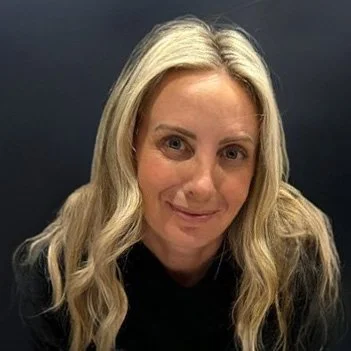
Kristin Blakely, Ph.D., is a Toronto-based children’s author, a sociologist with a doctoral degree from Loyola University Chicago, and a hearing aid wearer. She has previously shared her hearing loss journey. For more, see kristinblakely.com and follow her at instagram.com/authorkristinb.
The Latest Blog Posts


The resulting SGN-like neurons matched the appearance, molecular structure, electrical behavior, and functional characteristics of SGN cells in vivo.