
As we approach October’s National Protect Your Hearing Month, here are simple ways to lower your noise exposure before, during, and after a loud event.
By Brooke Saxbee
Credit: @reddfrancisco/Unsplash
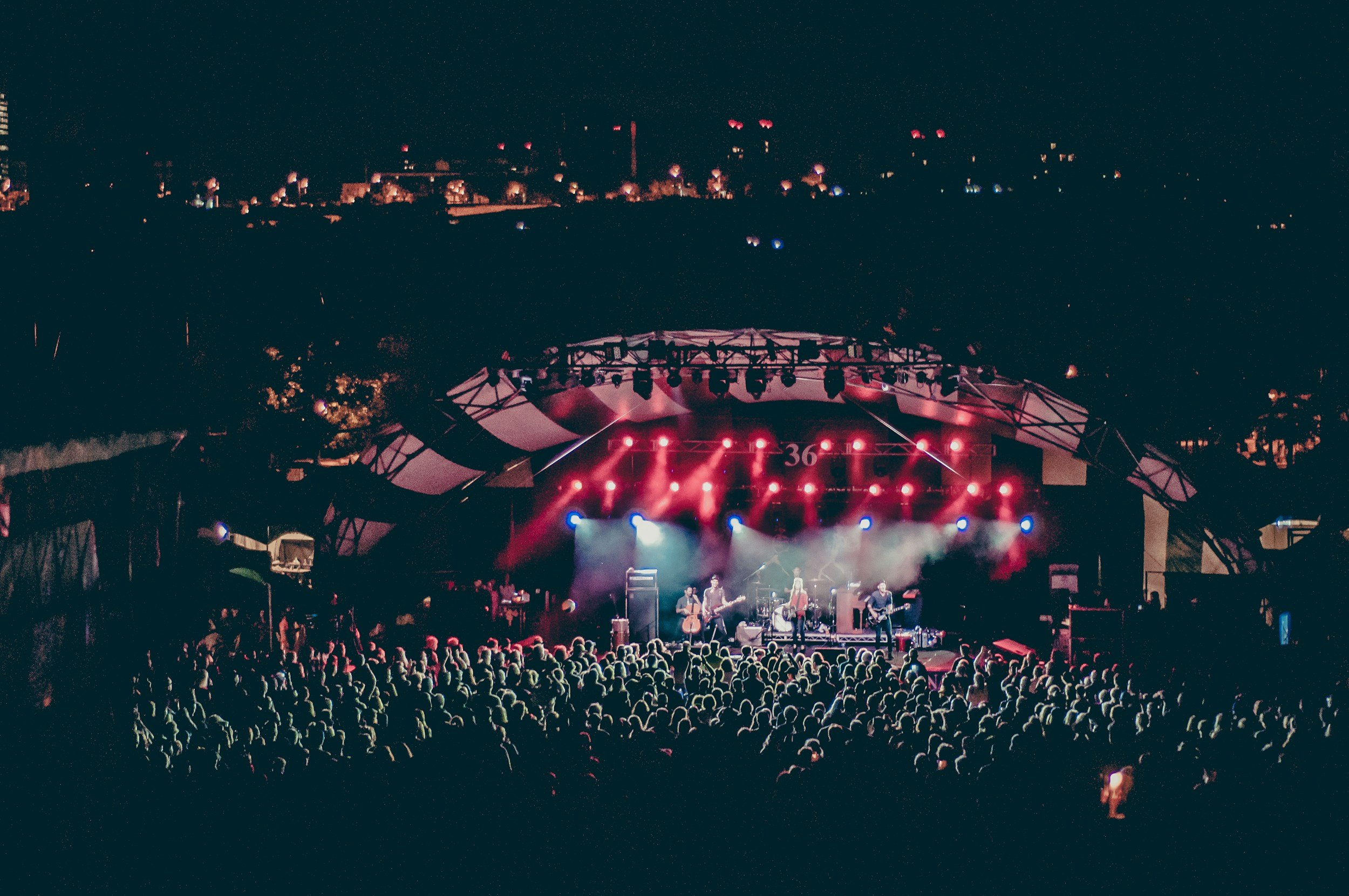
Live music should leave you with a good memory, not ringing ears and muffled sound the next morning. Concerts, festivals, clubs, and sporting events can all be loud enough to put hearing at risk, especially when exposure lasts for hours or happens regularly.
The good news is that protecting your hearing does not mean avoiding the events you enjoy. A few practical choices can reduce your exposure while still letting you hear the performance clearly.
Volume and Time Both Matter
Sound is measured in decibels, and the risk to hearing depends on both intensity and duration. The National Institute on Deafness and Other Communication Disorders explains that long or repeated exposure at or above 85 dBA can cause hearing loss. As sound gets louder, the amount of time it can be heard safely becomes shorter. (A-weighted decibels are a measure of how the human ear perceives sound.)
This is important at live events because concerts and sporting events can reach roughly 94 to 110 dBA. At those levels, an evening of exposure may be very different from hearing one brief loud sound. The damage can also build gradually, so someone may not notice a clear change after a single night.
The practical goal is not to make every environment quiet. It is to manage the parts of exposure you can control. Distance, time, and hearing protection all matter. Moving farther from the speakers, taking quiet breaks, and wearing well-fitted earplugs can reduce your exposure without taking you out of the experience.
Choose Hearing Protection You Will Actually Wear
Foam earplugs are inexpensive and widely available, but they need to be inserted correctly. Roll the plug into a narrow shape, pull the top of the ear gently up and back, insert it, and hold it in place while it expands. If most of the plug is sticking out, it may not be providing the intended protection.
Musicians earplugs are another option. They are designed to reduce sound more evenly across frequencies, which can make music sound more natural than it does through some basic foam plugs. Reusable filtered plugs may be useful for people who attend events often, while custom options may offer a more consistent fit.
No earplug works well if it is uncomfortable, loose, or removed for most of the show. Try your hearing protection before the event so you know how it fits and how speech and music sound through it. Bring a spare pair in case one is lost.
Be Strategic About Where You Stand
The area directly in front of a loudspeaker may expose you to more sound than a position farther back or off to the side. Health Canada specifically advises people at entertainment events to avoid standing or sitting close to loudspeakers and sound systems.
If you arrive early, look at the stage and speaker layout before choosing a spot. You do not have to move to the farthest corner, but even a little more distance from the source can help. If the sound feels painfully loud or you notice distortion, move away rather than waiting for your ears to adjust.
Take Real Listening Breaks
A break works best when it is genuinely quieter. Moving from the dance floor to a crowded bar beside the speakers may not reduce your exposure very much. Step outside, use a quiet lobby, or find another lower-volume area for several minutes.
The World Health Organization recommends limiting time spent in noisy activities, taking short breaks away from loud sounds, and wearing ear protection in noisy places. If you attend several events in one weekend, rest your ears in quiet between them.
Do Not Turn Up Your Headphones Afterward
After a loud event, music through earbuds may seem unusually quiet. That is not a reason to increase the volume. Your hearing may be temporarily less sensitive after noise exposure, making your normal setting seem lower than it did earlier.
Give your ears a quiet period after the event. Schedule quiet time after entertainment events to give your ears an opportunity to recover. On the trip home, keep personal audio low or skip it altogether.
Know the Warning Signs
Temporary symptoms after a loud event should not be treated as proof that no lasting harm occurred. Common warning signs include:
Ringing, buzzing, or another sound in one or both ears
Muffled or dull hearing
Difficulty following speech, especially in background noise
A feeling of fullness or pressure in the ears
Sound seeming distorted or unusually harsh
If a sudden change in hearing is severe, affects one ear, follows an explosive sound, or is accompanied by pain, discharge, or dizziness, seek medical care. Sudden hearing loss is a medical emergency and should be addressed immediately. Ongoing ringing, repeated difficulty hearing after events, or changes that do not settle should also be discussed with a qualified professional.
A professional hearing test can measure hearing across different pitches and establish a baseline for future comparison. It cannot undo noise exposure, but it can help clarify whether a perceived change should be investigated further.
Use Phone Sound Meters as a Guide, Not a Guarantee
Many phones and smartwatches can estimate environmental sound levels. These readings can help you notice when an environment is consistently loud, but a consumer device is not a substitute for calibrated sound-level equipment or professional advice.
A simple non-technical clue is whether you must raise your voice to speak with someone standing close to you. If normal conversation is difficult, treat the environment as loud: Add hearing protection, move farther from the source, or take a break in quiet.
A 5-Minute Plan Before Your Next Event
Pack earplugs and a spare pair.
Check the venue layout and avoid choosing a spot beside the loudspeakers.
Decide in advance where you can take a quiet break.
Keep your phone or watch sound alert turned on if you use one.
Plan a quieter trip home and limit additional loud sound afterward.
Hearing protection is easiest when it becomes part of the routine, like bringing your ticket, water, or a jacket. You do not need to wait until your ears hurt or ring. By then, the sound has already been louder than your ears were comfortable with.
You can enjoy concerts and other loud events while making safer choices for your hearing. Wear well-fitted protection, create distance from loudspeakers, take quiet breaks, and limit additional noise afterward. If you repeatedly notice ringing, muffled sound, or difficulty understanding speech, do not simply accept it as the price of a good night out. Get it checked.
Brooke Saxbee is a licensed hearing care professional and marketer with Connect Hearing Canada. Medical disclaimer: This article provides general educational information and is not a substitute for diagnosis or individualized medical advice.
The Latest Blog Posts



Hearing Health Foundation (HHF) is very pleased to announce the addition of four new members to our Board of Directors: Andreas H. Eckhard, M.D., Steven D. Rauch, M.D., Konstantina Stankovic, M.D., Ph.D., FACS, and Daniel J. Tollin, Ph.D.