
By Lisa Goodrich, Ph.D.
The Hearing Restoration Project (HRP) is building the knowledge, tools, and scientific community needed to accelerate development of effective and lasting treatments for hearing loss. Thanks to the work of the HRP, we have a mechanism for data sharing and collaboration, a way to assess gene expression rigorously and identify relevant patterns, and examples of new hair cell-like cells generated in a post-hearing mammalian cochlea.
Today, a dozen HRP-funded laboratories are using new approaches to break barriers to scientific discovery, working collaboratively to create new treatment options, and generating a new online platform for scientists around the world to access data that will push their research forward. HRP labs also provide top-notch training to emerging researchers who will continue to improve treatments for hearing loss.
Accelerating Scientific Discovery
Many of the scientific approaches that investigators across the world use today to study hearing restoration were customized by HRP scientists over the past dozen years for application to inner ear tissues. HHF support enabled these scientists to develop and hone cutting-edge approaches that are technically challenging yet essential as scientists strive to overcome obstacles to hearing restoration.
These efforts take time, they are high risk, and they are not supported by most types of federal grants. However, they promise high rewards because they provide investigators with the potential to leap forward and make big discoveries that were not possible before, increasing chances that a successful treatment will be developed. This progress would not have occurred without donations to the HRP.
Here are a few examples of the tools that HRP scientists are applying in the inner ear.
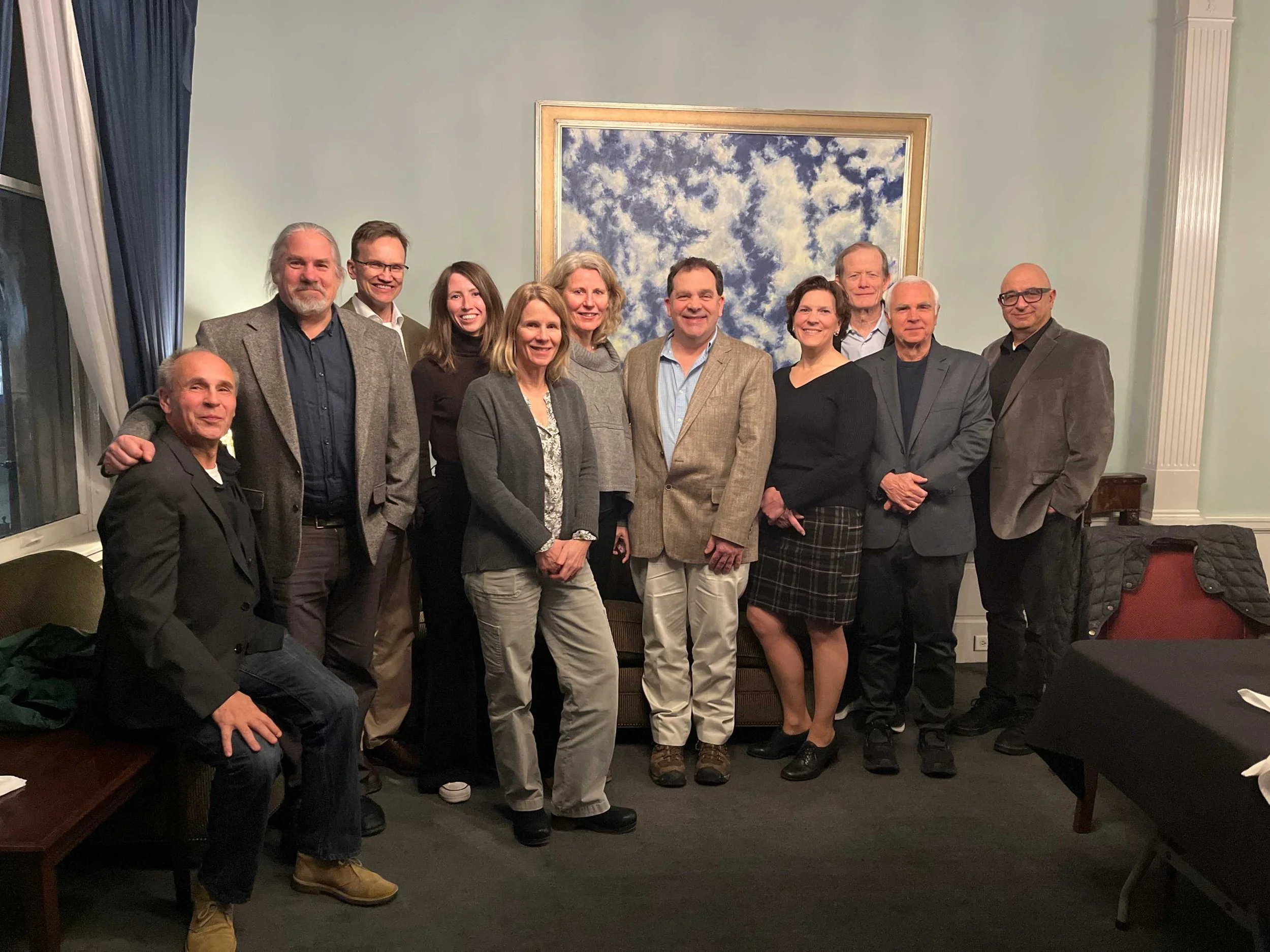
The HRP met in person in March 2025 for their annual meeting that supplements the frequent working group meetings throughout the year.
Single-cell transcriptomics: Every cell in the body plays a specific role that is determined by what genes it expresses. Technological advances now make it possible to characterize the overall program of gene expression quantitatively and in single cells, including those that might become hair cells if given the proper genetic instructions. Using these methods, HRP investigators are now able to query the cellular basis of hearing, hearing loss, and hearing regeneration cell by cell and gene by gene at any point in time. Examining the unique “transcriptome” of each cell helps us understand its ground state and how that state changes after damage.
This investigation is essential for understanding the molecular mechanisms by which auditory hair cells are readily regenerated in some species (such as birds) but are not in others (such as humans). Understanding how gene expression changes in various conditions, such as aging, injury, disease, and regeneration, is a key step toward developing new genetic or pharmaceutical therapies for hearing loss.
Single-cell epigenomics: It is not enough to know what genes are expressed—ideally, we need to understand the molecular events that allow some cells to turn on the genes needed to be a hair cell. Single-cell epigenomics works hand in hand with single-cell transcriptomics to provide insight into these mechanisms. The epigenetic state of each cell reflects the ground state of its DNA and therefore its ability to respond beneficially to changes that occur during aging, injury, and disease. Epigenomics yields important insights as to why regeneration is blocked and which tools we can develop to release this blockade. This is transforming our understanding of stem cell biology and regenerative medicine.
Leveraging AI: The HRP has recently integrated AI-powered analysis into our workflow. In using methods such as single-cell transcriptomics and epigenomics, we are faced with the challenge of studying how tens of thousands of genes change expression across four species at many developing and adult timepoints and in a variety of hearing loss conditions, which requires extensive time and computation.
AI enables an integrated analysis of multiple types of biological data (or “omics”) from the same cells or tissues and to compare patterns across different cell types, tissues, and organisms. AI also enhances our ability to make predictive models and identify genes and gene networks that orchestrate regeneration, including those that instruct supporting cells to either form a permanent scar, such as in humans, or yield new hair cells, as happens in birds.
AI’s ability to rapidly transform massive, “messy” datasets into clear biological insights is a major leap in analytical capability, allowing us to go beyond low-resolution understanding toward multidimensional discovery, and it represents one of the clearest signs of the HRP’s impact.
The “green cochlea”: In response to the push to reduce animal testing in biomedical research, the HRP is leading the field in developing a “green cochlea” movement. This approach employs collections of cells, or organoids, derived from human cells that are grown in laboratory conditions that promote the formation of simplified 3D tissues that resemble the inner ear’s sensory organs. Organoids can be maintained and expanded in vitro, allowing us to test hypotheses earlier, faster, and with strong relevance to human biology, without animal testing.
Toward this goal, HRP investigator Ksenia Gnedeva, Ph.D., recently found that inhibiting the action of a group of proteins called Lats kinases causes supporting cells from the adult mouse or human to propagate (divide and expand) in vitro. For the first time, we can directly study the cells we need to target in the future in a high throughput and reproducible manner.
We are now working to apply this approach more generally and establish a robust platform for discovery. This achievement moves us closer to a complete and effective regeneration therapy that includes both the creation of new hair cells and the replacement of the supporting cells that form the hair cells—all in a dish.
Collaborative Projects
HRP members have a commitment to work collaboratively with one another and share data in an open, responsible manner. This approach hastens scientific discovery. We meet regularly to share ideas for how to improve experimental design and provide feedback and alternative interpretations of data, in real time. This strengthens the research and yields robust, reproducible, and impactful results. This includes:
Cross-species comparisons: This powerful analytical approach compares gene expression across different animal models—zebrafish, chicks, mice, and humans—to identify fundamental biological processes related to hearing and regeneration that are shared or different across species. Identifying the genetic pathways by which hair cells in fish and birds regenerate will allow us to determine how those pathways are blocked in mice and humans. We are leveraging the organism-specific expertise of individual investigators and enabling pioneers in the bioinformatics field to develop custom analysis pipelines that are informed by the biology.
Direct cellular reprogramming strategies: A major approach toward restoring hearing is to coax supporting cells or other cells that remain in the damaged inner ear to regenerate into hair cells. One way to achieve this is by genetically reprogramming supporting cells to shed their normal features, acquire properties of hair cells, and integrate into neural circuits. We are now able to test and evolve innovative reprogramming gene cocktails in a rapid and iterative fashion.
Open Data Sharing
The gEAR (gene Expression Analysis Resource): This online tool provides a platform to share “omics” data with investigators around the world. It is designed for users who lack in-depth bioinformatics or programming experience, providing user-friendly tools for tasks like searching how various genes are expressed in inner ear cells and generating graphs and other visuals for one or more genes. The platform supports data from multiple species, tissues, and time points, and can link datasets to their source publications and public databases.
The HRP and Gene Therapy
Hair cell regeneration and gene therapy for hearing loss represent interdependent approaches. The HRP’s discoveries of pieces of DNA that enable cell-type–specific expression and of the regulatory networks that control cell fate are valuable to both fields. In addition, gene therapy is promising but, to date, can only target a single genetic variant for hearing loss at a time. Since many variants cause hair cells to degenerate, regeneration of hair cells may be a necessary first step and will broaden the range of variants that can be repaired. In addition, most hearing loss is acquired, not genetic, so hair cell regeneration is essential for treating common types of age-related and noise-induced hearing loss.
Training the Next Generation
To have a lasting impact, it is essential to recruit emerging scientists into hearing research, provide them with the skills they need to advance the field, and promote their success as independent scientists. HRP investigators have already trained a cohort of young scientists who are now starting to lead their own labs across the country. Trainees from HRP labs are now principal investigators themselves working on hearing restoration. This training multiplies the impact of the consortium and provides a pipeline for the future.
Basic Science to Breakthroughs
Breakthroughs in medicine are rooted in years of basic science. From a starting point of zero transcriptomic data, no organoid models, no regenerative framework, no AI-driven analysis, and only limited collaboration, the HRP has helped create a robust toolbox to tackle next steps: integrating cross-species genomic and epigenomic maps into a unified regenerative model; identifying universal switches that allow hair cells to regenerate after damage; finding ways to produce mature regenerated hair cells in adult mammalian tissue; and translating organoid and human cell discoveries into therapeutic concepts that can motivate and inform work in industry. All of us at the HRP are excited to build on this foundational work in order to advance discoveries toward future treatments in humans.

Lisa Goodrich, Ph.D., is the scientific director of the HRP. She is a professor of neurobiology at Harvard Medical School.
The Latest Blog Posts



Hearing loss began affecting how I saw myself. There is a word in Chinese that describes how I felt: 自卑 (zìbēi), a feeling of insecurity and inferiority that makes you shrink yourself around other people.