
By Tom Ross
My journey with hearing loss didn’t happen overnight. It started years ago with hearing aids. For a long time, they worked—and then they didn’t.
Things I once did without thinking slowly became difficult. Conversations took effort. Background noise wore me out. At work, communication became harder, not because I didn’t know my job, but because hearing had become a barrier.
Socially, I pulled back. It was easier to stay home than constantly explain myself or pretend I was keeping up.
Eventually, hearing aids were no longer enough, and I made the decision to get cochlear implants. That decision gave me a lot back, but it didn’t make life perfect. I still struggle to hear some people. Children are especially difficult. Music, for the most part, is gone from my life. Social settings are still challenging.
Even so, cochlear implants gave me back far more than I lost, and for me, they were a thousand times better than hearing aids had become.
The challenges didn’t disappear. They just changed.
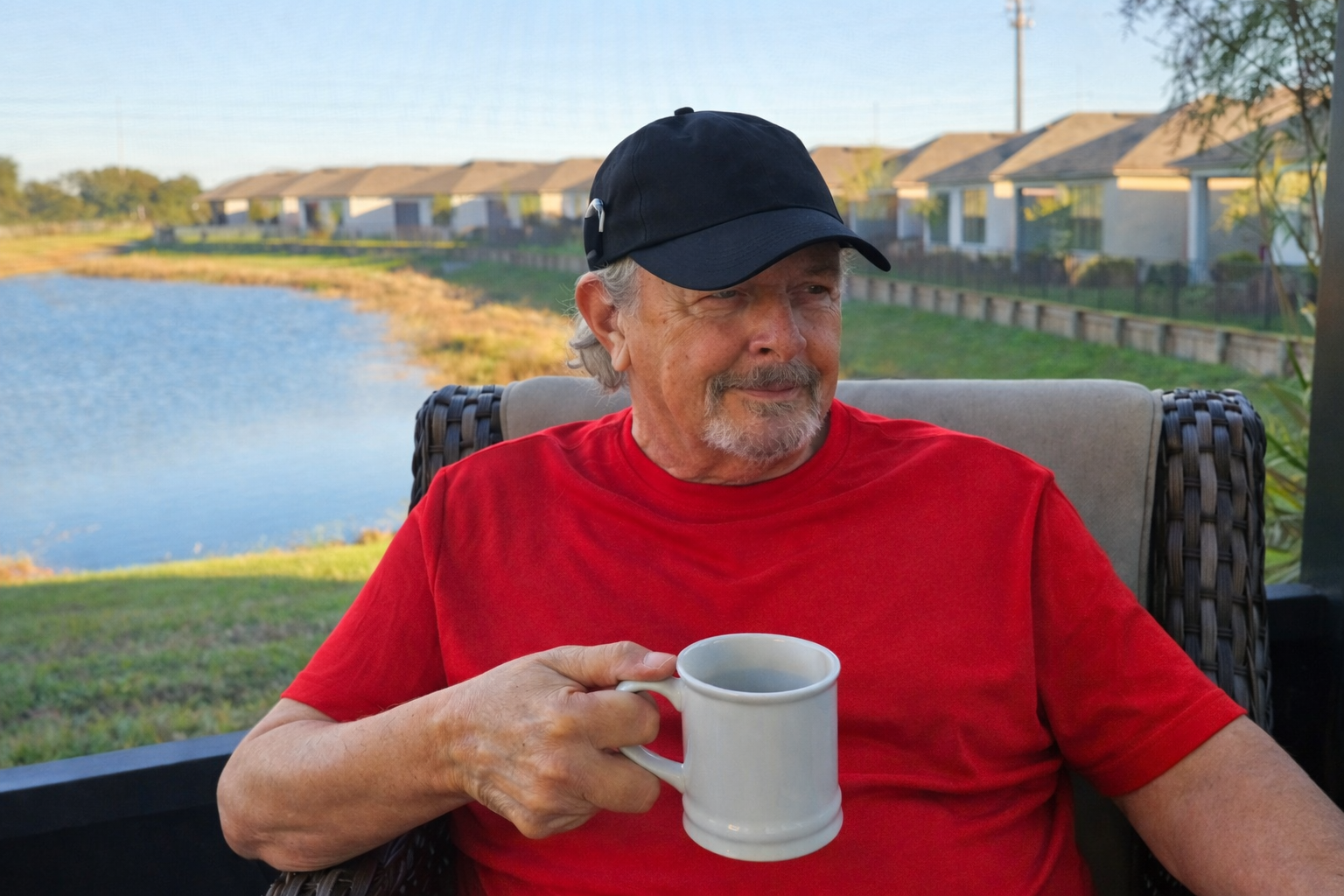
Needing a hat for tennis that protected his cochlear implant processor inspired Tom Ross to create headgear for CI wearers.
The first hat I made had nothing to do with starting a business. It was about tennis. Living in Florida, I was dealing with heat, sweat, and constant movement. I didn’t feel I could rely on my cochlear implant processor staying securely on my ear, and I worried about sweat pouring into it. I wanted to play without constantly worrying about my processor.
That first hat took a long time to get right. I worked with my brother-in-law to create it. He made a basic design. I had an engineering drawing made from it and showed it to numerous suppliers. I received a few samples from suppliers that weren’t correct.
I finally found a supplier that took the time to make up drawings so we were on the same page. I’ve been with this supplier even since.
So after a bit of trial and error, I had a hat that worked for me. Then, family and friends started telling me I should sell them. Some even joked that I should take the idea to “Shark Tank.” I laughed it off at first. I wasn’t thinking about business. I was just solving my own problem.
But eventually, in September 2021, I decided to invest my own money and see if I could make it work for others. For the first two years, Etsy was my sales platform. Orders were small, but personal.
When I started sending hats out to children, something changed for me. Packing those orders became emotional. Parents would message me. Some shared photos. Some shared relief.
That’s when it hit me. This wasn’t just a product. This was something people actually needed. To this day, I still pack every order myself and personally read the messages that come in.
Helping children stay active, comfortable, and protected—without drawing attention to their processor—means more to me than any sale ever could. It made all the effort worth it. I expanded sales to Amazon the past three and a half years.
I didn’t set out to educate anyone or build a traditional business. What grew out of this was personal and unplanned.
My longtime supplier helped manufacture my new design which I’m extremely excited about. It blocks wind from hitting the processor, allows sound through clearly, and the pocket the processor sits in is also waterproof. I’ve expanded the product line to include headbands for children and adults and visors. I’m currently working on a baby headband and a winter stocking hat. As ideas come up I research existing products and try to improve on them.
I made one hat to solve problems, never imagining how many other adults and children would relate. It’s an honor to be able to give something back to the cochlear implant community that understands this journey so well.
Florida resident Tom Ross founded EarFree. For more, see earfree.net.
The Latest Blog Posts


Hearing Health Foundation (HHF) is very pleased to announce the addition of four new members to our Board of Directors: Andreas H. Eckhard, M.D., Steven D. Rauch, M.D., Konstantina Stankovic, M.D., Ph.D., FACS, and Daniel J. Tollin, Ph.D.