
Music masked by tinnitus.
By Shuman Yuan
The conductor raises his baton on the stage of Seiji Ozawa Hall, and I bring my violin to my shoulder. With the rest of the orchestra at Tanglewood in Massachusetts, I keep my eyes attentively on the baton, waiting for it to give us the cue to come in.
I’m a 16-year-old musician, and for the past 12 years of my life, music has been my method of storytelling. To play a piece of music is to live through a composer’s journey, experiencing their world through every phrase. When I play, I feel down to my very core. But behind the narrative of the composer is my own story—one that I’ve frequently conveyed through music, and am now finally translating into words.
Tinnitus: The Never-Ending Chime
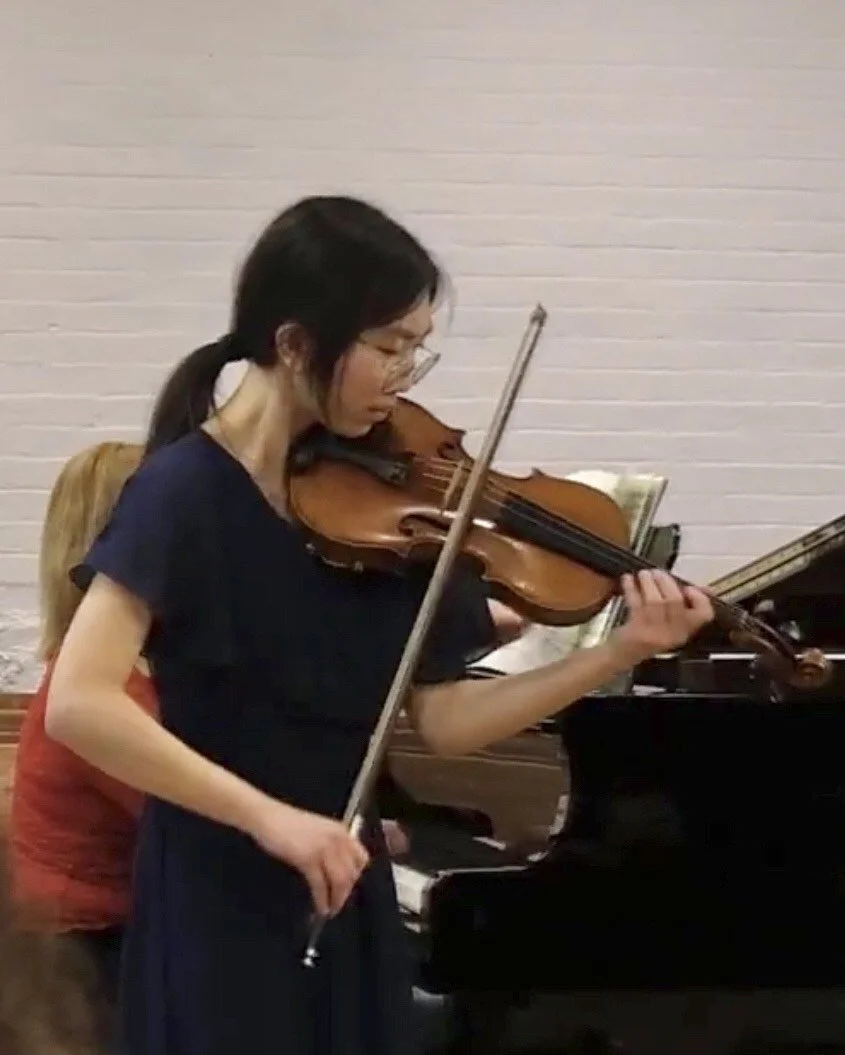
Music has been the method of storytelling for 16-year-old Shuman.
I remember waking to the sound of a discordant chime one morning. No, it wasn’t the humming of the fridge or construction outside my window. What I heard was the sound of tinnitus sparking from within my head. I hadn’t even reached high school, yet I was facing a condition that usually marks the end of a long musical career. At 13, I lost my silence.
In the following weeks, my frantic Google searches of “does tinnitus go away,” only to discover that tinnitus apparently has no cure, left me in a state of denial. Slowly and painfully, I realized that I was in for a long ride. As I practiced again, I learned just how true that would be.
Saint-Saëns’ B minor concerto rang from my violin, but the persistent C and F of my tinnitus pierced above his music, wrestling with the melody to be present in a way that I’d never again be able to be inside of my head.
And as Beethoven’s “Serenade” sang from my flute, his struggle felt familiar: I am a musician, but my ears carry a disturbance. I couldn’t help but realize how I’d once taken advantage of the serenity of silence that would fill the rests in my music and in my life.
I resented the divide between my friends and me when the topic of our conversation was music. I envied their ability to enjoy it, whereas I, a well-trained musician, couldn’t experience it the same way. My woundless injury isolated me, with no outward sign of struggle as I silently sought for an escape. Of course, tinnitus wouldn’t be welcome no matter who I was, but why was it specifically designed to upset the fiber of my being, targeted to my identity as a musician?
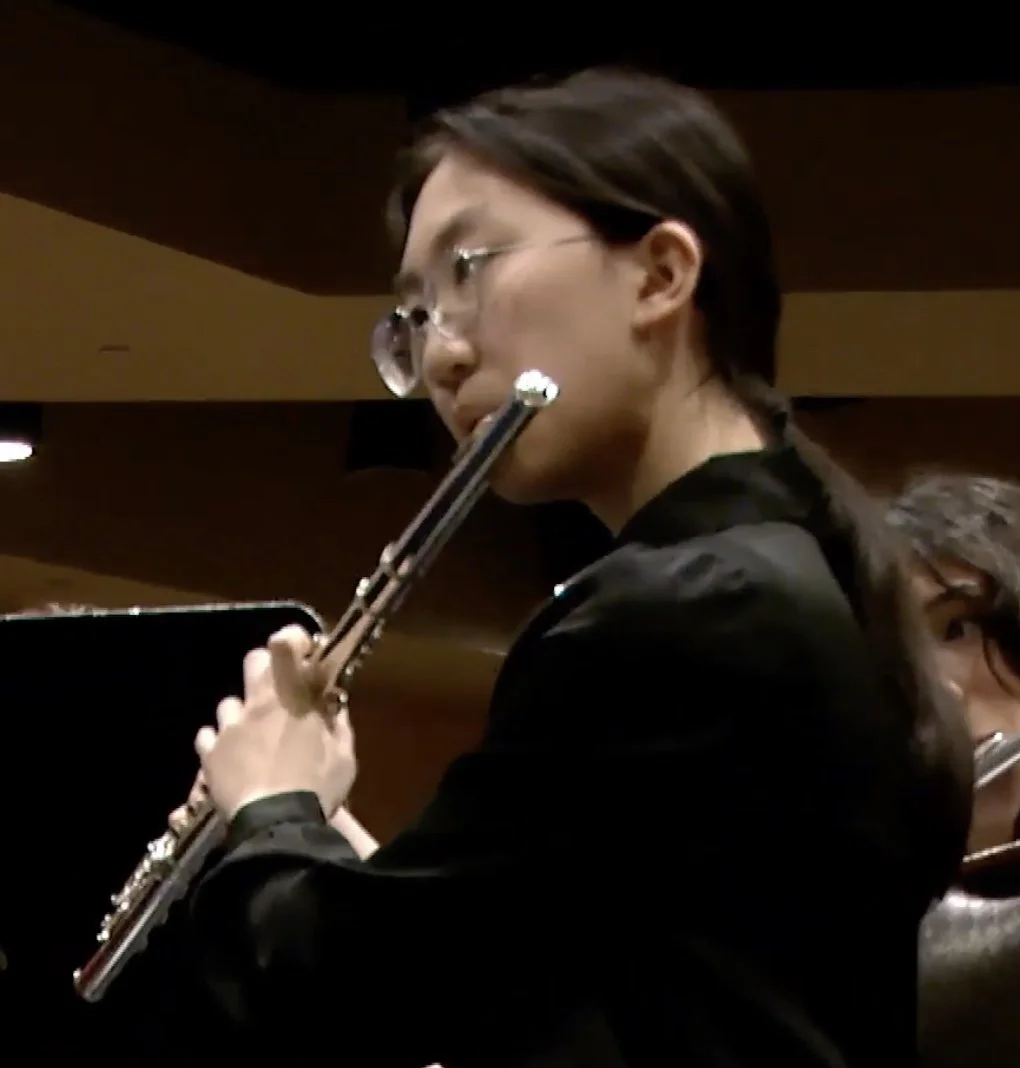
In her efforts to better understand tinnitus, Shuman started researching its causes and now contributes to Tinnitus Quest as a researcher and blogger.
Even “silent” reading no longer lived up to its name. At school, an intrusive chime screamed in my head as I failed to immerse myself in “Jane Eyre.” Despite my attempts to create white noise by playing with my hair or rubbing my hands together, tinnitus remained a barrier between myself and the physical world.
Going to bed also became something to dread. I became used to sleeping on my right side with my blanket covering my left ear, and my right ear pressed against the pillow. It felt less like time to rest and recharge and more like nine whole hours with nothing to distract me from a perennial ringing.
Tinnitus was woven into every piece of me, but I worried that it would never mesh with me. This chime wasn’t just a disturbance. It became an unrest in my soul, and as I floundered for silence, the depths of me drowned in a poor attempt to grasp for peace out of reach.
A Double-Edged Sword
The “cure,” or perhaps lack thereof, wasn’t a burst of sudden realization. Time was indifferent to tinnitus, and life carried on. Day after day, I practiced against this extraneous noise. I was forced to hear past my tinnitus, beneath the surface of the music, and into its core. Deep into this core, I found, lies the music of music. Slowly, I began to feel a musical translation of my reality from the melodies that sang from my violin and my flute.
The very act of performance became an exercise in profound focus, a necessity to push past the internal noise and connect, truly connect, with the shared space between player and listener. When I play the Dvořák violin concerto or Widor’s Suite for Flute, I communicate my own story alongside theirs. To do so lies beyond perfecting every technical detail like vibrato or articulation, and instead consists in shaping each line to lead to the next, building each climax to suit its phrase.
Music transformed from something I hear into something I feel. I stopped waiting for the sound to disappear and began listening to what it was trying to say.
As I grappled with tinnitus, the uncertainties surrounding it tempted me to learn more. For one, its direct causes are unknown, and for another, it doesn’t have a definite cure. My initial research to discover my condition transformed into an eagerness to explore these unanswered questions. Since then, I reached out to the Tinnitus Quest foundation about their research efforts, and I started a blog that developed from the countless hours my 13-year-old self spent searching for answers.
The three years separating that girl from myself today mark the difference between trying desperately to hide problems and using them to fuel curiosity and passion. Today, I’m proud to say that I can look back on my tinnitus journey and say, “Wow, what a ride that was!”
What Tinnitus Has Taught Me
It seems paradoxical that a hearing condition intended to work against me could give me the power to truly understand music, but this battle has taught me more about positivity and hope than any motivational speech could. From tinnitus, I’ve learned three lessons that I’ll always carry with me:
1. The mind is powerful; allow it to guide you beyond the limitations of your physical senses.
You have control over what you believe. Make the most of it and let it bring you the happiness you deserve.
2. Purpose is born from the persistence to find answers where none currently exist.
No matter how hopeless it may seem, always search for a solution. You may be surprised by what you find and where you end up.
3. Satisfaction comes from not the objective reality, but how you perceive it.
Two people may be looking at the same painting, but one calls it ugly while the other calls it beautiful. Be the person that appreciates its beauty.
On the stage of Seiji Ozawa Hall, the conductor takes a breath and drops down his baton. I come in with the rest of the orchestra on a grand E-flat major chord of Mussorgsky’s “Pictures at an Exhibition.” The orchestra journeys through Mussorgsky’s narrative, his emotions pouring from the notes on the page into ourselves and the audience.
Thanks to tinnitus, I don’t love music; I understand it.
Shuman Yuan is a high school junior who lives in Pennsylvania. She is currently investigating the impact of tinnitus in the workforce as a volunteer for Tinnitus Quest, cofounded by friend of HHF Hazel Goedhart and team.
The Latest Blog Posts



Our Emerging Research Grants program is the leading seed funding opportunity for early stage researchers. ERG also includes Expanded and Focused Discovery Awards, which are grant opportunities in specific topics (such as central auditory processing disorder, hyperacusis, Ménière’s disease, and tinnitus) that are open to eligible investigators at any career stage.