Research

Spotlight On: Stefan Heller, Ph.D.

By Stefan Heller, Ph.D.

CURRENT INSTITUTION: 

Stanford University

EDUCATION:

Studied Biology at the University of Mainz, Germany

Ph.D. at the Max Planck Institute for Brain Research in Frankfurt, Germany

Postdoc at The Rockefeller University, New York, NY
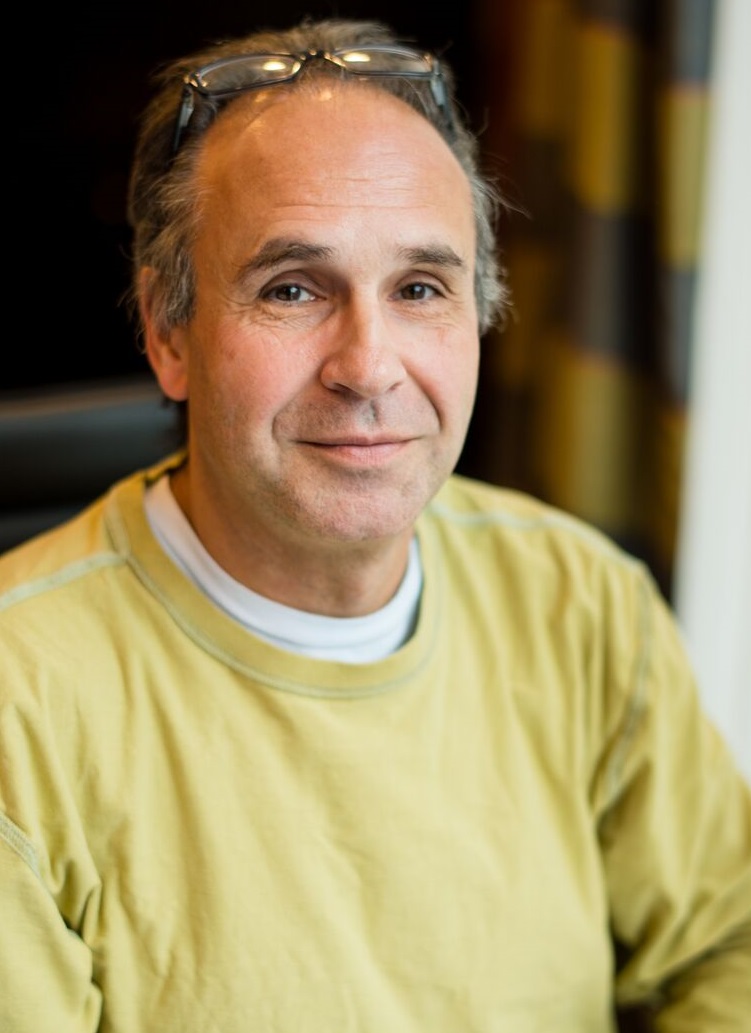
Heller_Retreat_3_crop.jpg

We are grateful for your interest in Hearing Health Foundation (HHF). Through Spotlight On, HHF aims to connect our supporters and constituents to its Hearing Restoration Project (HRP) consortium researchers. We hope this feature helps you get to know the life and work of the leading researchers working collaboratively in pursuit of a cure for hearing loss and tinnitus

What is your area of focus? 

My laboratory seeks to understand how a small patch of embryonic cells forms the inner ear, particularly the sensory hair cells of the cochlea and vestibular organs. We are also very interested in the biology of supporting cells, which in chickens have the ability to regenerate lost hair cells. Another research interest of ours is the use of stem cells to generate inner ear cells “from scratch.”

Why did you decide to pursue scientific research? 

As a kid, I convinced my parents to buy me a chemistry lab kit. On numerous occasions the basement needed to be evacuated because of nasty fumes that filled the room. This experience probably gave me an edge when studying science in school, where I had encouraging teachers who inspired interest in neuroscience and genetics. I realized that science provides an endless playing field to connect basic discoveries to the development of useful applications.

Why hearing research? 

Serendipity! My Ph.D. thesis focused on how nerve cells are affected by so-called neurotrophic factors. This field of research was popular in the early 1990s because it promised to lead to cures for disorders such as ALS, Parkinson’s, and Alzheimer’s. With many researchers already working on finding cures for these conditions, I believed a cure was right around the corner and I’d be out of a job quickly. So I looked for a new challenge and found the laboratory of Jim Hudspeth, an HHF Emerging Research Grantee in 1979 and 1980, whose research focuses on inner ear hair cells. Five minutes with Jim and I was hooked.

What do you enjoy doing when not in the lab?

I enjoy renovating our family’s 65-year-old midcentury modern house one step at a time. After 10 years, I am about half done. I also enjoy camping trips with my wife and dog; we like hiking and being off the grid to recharge our batteries.

If you weren’t a scientist, what would you have done?

I’ve always felt that research is the best fit for me. I like modern architecture, and although I am not necessarily talented in drawing, I might have liked to do something in that field.

What do you find to be most inspirational?

Interacting with creative people and living in the Bay Area, a region where innovation is cherished and rewarded. All of my mentors have one important trait in common, and that is generosity. They were generous in volunteering their time to discuss wild ideas and scientific problems, giving me resources to explore and experiment. I try to apply this principle to my laboratory group as well.

Hearing Restoration Project

What has been a highlight from the HRP consortium collaboration?

The most valuable aspect of the HRP is that we get together as a group and talk about experiments, approaches, and the problems at hand. There are not many researchers focusing on hearing restoration, so bringing them together frequently is very helpful. We meet twice a year in person and once a month via conference calls, which is optimal for fruitful discussions. Having unlimited access to this talented group brings a lot of value.

How has the collaborative effort helped your research?

Without the HRP, I would not have started to focus on chicken hair cell regeneration. The collaborative approach, made possible through funding from HHF, has helped us to implement novel tools and the latest technology. Combining resources and technologies strengthens our research and expedites projects that help us reach our goal to find a cure for human hearing loss and tinnitus.

What do you hope to have happen with the HRP over the next year? Two years? Five years?

I envision that we will have started to fill in some of these missing components and that we have identified ways to reactivate hair cell regeneration in the mammalian cochlea. I also hope that people connected to the cause, such as individuals living with hearing loss and HHF’s generous supporters, remain patient, because science takes time in order to reach a desired result. We are working on a very complicated problem, and with each new discovery we find new roadblocks that need to be eliminated. I dream of the day when these roadblocks are all gone and we do not encounter new ones. This will be the day we realistically can expect a cure.

What is needed to help make HRP goals happen?

Ongoing funding. HHF is currently supporting research projects at a dozen laboratories, and increased funding per laboratory would allow for even more research to be conducted. HRP researchers benefit from sharing knowledge and small collaborations, but I feel that large-scale concerted efforts and sustained funding are essential to make the HRP’s goals a reality. Hopefully one of the currently funded, small-scale, concerted collaborations will lead to a “eureka” moment that will allow us to leapfrog directly to testing new drugs. Finally, patience is a must! Combined, all of the laboratories working on finding cures for hearing loss and tinnitus totals fewer than 500 researchers worldwide. It is a small field with limited resources, but I am very encouraged about the progress we’ve made so far.

Empower the Hearing Restoration Project's life-changing research. If you are able, please make a contribution today.


 
 
Print Friendly and PDF

BLOG ARCHIVE

Promoting Research to Improve Hearing Health - Seven Questions - ARMY Magazine - Dec 2015

Promoting Research to Improve Hearing Health

ClaireSchultzistheCEOofHearing Health Foundation (HHF), a 501(c)(3) tax- exempt organization committed to ensuring the public—especially service members, veterans and their families—have the opportunity to enjoy life without hearingloss and tinnitus.

  1. What is Hearing Health Foundation’s mission?

    HHF’s mission is to prevent and cure hearing loss and tinnitus through groundbreaking research, and to promotehearing health. Through our Hearing Restoration Project, we are working on a biological cure for hearing loss and tinnitus for millions of Americans—including hundreds of thousands of military service members and veterans.

  2. What military-specific initiatives has HHF worked on?

    In 2012, we joined the DoD’s Hearing Center of Excellence as a partner through general outreach, radio programs and co-authored articles. We share many of the same goals in raising awareness, providing resources and information, and continually improving the health and quality of life of service members and veterans.

    In 2014, HHF launched an online campaign geared toward veterans to provide information and resources about tinnitus treatments and the Hearing Restoration Project’s efforts, and including links to expert content in our magazine and to other hearing and veteran-related organizations and associations. [Visit http://hearinghealthfoundation.org/veterans.]

    Pharmaceutical intervention for hearing loss is a major research area for the military.

  3. Some military members feel hesitant about seeking treatment for hearing-related issues. What does HHF do to mitigate that stigma?

    Service members may feel stigmatized about seeking treatment for their hearing problems because there are many myths and misconceptions about people with hearing loss. At HHF, we provide factual information as well as resources to help reduce the stigma of hearing loss, and to encourage getting treatment as soon as possible.

  4. Do many service members regard hearing loss as a “badge of honor”?

    HHF has not heard this sentiment, but it is our hope that members of the military take every effort to prevent hearing loss while in the service, and to address any hearing issues they may have developed as soon as they are discovered. Untreated hearing loss can lead to many additional medical problems; for example, depression, isolation and dementia.

  5. Are more Iraq and Afghanistan veterans seeking hearing loss treatment?

    At least 60 percent of troops returning from Iraq and Afghanistanhave acquired hearing loss or tinnitus because of noise exposure during their service. According to the Hearing Center of Excellence, in the past decade, 840,000 service members have been diagnosed with tinnitus, and just over 700,000 have hearing loss.

  6. What are the most effective treatment options?

    Current treatments include hearing aids, cochlear implants and other devices. Treatments available for tinnitus include sound therapy, drug therapy, psychological interventions, brain stimulation and tinnitus retraining therapy, which is being tested through clinical trials at six flagship military treatment centers.

    A sequential program known as progressive tinnitus management has emerged as one of the most promising research-based methods. In order to help patients, it is necessary to mitigate the functional effects of tinnitus, such as difficulties with sleep, concentration and relaxation.

  7. How can service members prevent hearing loss?

Traditional earplugs are effective in preventing hazardous noise from entering the ear canal, but they can interfere with speech communication or low-level combat sounds. Level-dependent earplugs have a small filter that enables soft noises to be conveyed with full strength while eliminating high-frequency or impulse noise.


Earmuffs are another option. … They provide greater attenuation than earplugs [but] make it harder to pick up the softer sounds that may be necessary for verbal communication. An electronic communication system in the earmuff allows wearers to communicate clearly with each other.


Noise-attenuating helmets should be used by military personnel operating combat vehicles or aircraft. These helmets protect the wearer from hearing loss, crash impact and eye injuries while also increasing communication ability through a radio communication piece.
Technologically advanced helmets include an active noise-reducing technology that monitors the sound energy around the ear and cancels any unwanted noise while preserving verbal communications. A communications earplug with a microphone can be worn in addition to the helmet for high-quality verbal clarity.

—Thomas B. Spincic

Print Friendly and PDF

BLOG ARCHIVE

Scientists restore hearing in noise-deafened mice

By the University of Michigan Health System

Scientists have restored the hearing of mice partly deafened by noise, using advanced tools to boost the production of a key protein in their ears.

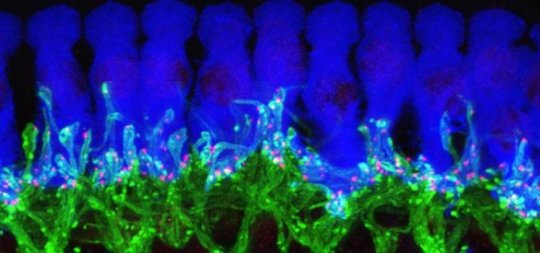
This microscope image of tissue from deep inside a normal mouse ear shows how ribbon synapses (red) form the connections between the hair cells of the inner ear (blue) and the tips of nerve cells (green) that connect to the brain.Credit: Corfas lab …

This microscope image of tissue from deep inside a normal mouse ear shows how ribbon synapses (red) form the connections between the hair cells of the inner ear (blue) and the tips of nerve cells (green) that connect to the brain.

Credit: Corfas lab - University of Michigan

By demonstrating the importance of the protein, called NT3, in maintaining communication between the ears and brain, these new findings pave the way for research in humans that could improve treatment of hearing loss caused by noise exposure and normal aging.

In a new paper in the online journal eLife, the team from the University of Michigan Medical School's Kresge Hearing Research Institute and Harvard University report the results of their work to understand NT3's role in the inner ear, and the impact of increased NT3 production on hearing after a noise exposure.

Their work also illustrates the key role of cells that have traditionally been seen as the "supporting actors" of the ear-brain connection. Called supporting cells, they form a physical base for the hearing system's "stars": the hair cells in the ear that interact directly with the nerves that carry sound signals to the brain. This new research identifies the critical role of these supporting cells along with the NT3 molecules that they produce.

NT3 is crucial to the body's ability to form and maintain connections between hair cells and nerve cells, the researchers demonstrate. This special type of connection, called a ribbon synapse, allows extra-rapid communication of signals that travel back and forth across tiny gaps between the two types of cells.

"It has become apparent that hearing loss due to damaged ribbon synapses is a very common and challenging problem, whether it's due to noise or normal aging," says Gabriel Corfas, Ph.D., who led the team and directs the U-M institute. "We began this work 15 years ago to answer very basic questions about the inner ear, and now we have been able to restore hearing after partial deafening with noise, a common problem for people. It's very exciting."

Using a special genetic technique, the researchers made it possible for some mice to produce additional NT3 in cells of specific areas of the inner ear after they were exposed to noise loud enough to reduce hearing. Mice with extra NT3 regained their ability to hear much better than the control mice.

Now, says Corfas, his team will explore the role of NT3 in human ears, and seek drugs that might boost NT3 action or production. While the use of such drugs in humans could be several years away, the new discovery gives them a specific target to pursue.

Corfas, a professor and associate chair in the U-M Department of Otolaryngology, worked on the research with first author Guoqiang Wan, Ph.D., Maria E. Gómez-Casati, Ph.D., and others in his former institution, Harvard. Some of the authors now work with Corfas in his new U-M lab. They set out to find out how ribbon synapses -- which are found only in the ear and eye -- form, and what molecules are important to their formation and maintenance.

Anyone who has experienced problems making out the voice of the person next to them in a crowded room has felt the effects of reduced ribbon synapses. So has anyone who has experienced temporary reduction in hearing after going to a loud concert. The damage caused by noise -- over a lifetime or just one evening -- reduces the ability of hair cells to talk to the brain via ribbon synapse connections with nerve cells.

Targeted genetics made discovery possible

After determining that inner ear supporting cells supply NT3, the team turned to a technique called conditional gene recombination to see what would happen if they boosted NT3 production by the supporting cells. The approach allows scientists to activate genes in specific cells, by giving a dose of a drug that triggers the cell to "read" extra copies of a gene that had been inserted into them. For this research, the scientists activated the extra NT3 genes only into the inner ear's supporting cells.

The genes didn't turn on until the scientists wanted them to -- either before or after they exposed the mice to loud noises. The scientists turned on the NT3 genes by giving a dose of the drug tamoxifen, which triggered the supporting cells to make more of the protein. Before and after this step, they tested the mice's hearing using an approach called auditory brainstem response or ABR -- the same test used on humans.

The result: the mice with extra NT3 regained their hearing over a period of two weeks, and were able to hear much better than mice without the extra NT3 production. The scientists also did the same with another nerve cell growth factor, or neurotrophin, called BDNF, but did not see the same effect on hearing.

Next steps

Now that NT3's role in making and maintaining ribbon synapses has become clear, Corfas says the next challenge is to study it in human ears, and to look for drugs that can work like NT3 does. Corfas has some drug candidates in mind, and hopes to partner with industry to look for others.

Boosting NT3 production through gene therapy in humans could also be an option, he says, but a drug-based approach would be simpler and could be administered as long as it takes to restore hearing.

Corfas notes that the mice in the study were not completely deafened, so it's not yet known if boosting NT3 activity could restore hearing that has been entirely lost. He also notes that the research may have implications for other diseases in which nerve cell connections are lost -- called neurodegenerative diseases. "This brings supporting cells into the spotlight, and starts to show how much they contribute to plasticity, development and maintenance of neural connections," he says.

In addition to Corfas, Wan and Gómez-Casati, who now works in Argentina, the research was performed by Angelica R. Gigliello, and M. Charles Liberman, Ph.D. director of the Eaton-Peabody Laboratories of the Massachusetts Eye and Ear Infirmary. The research was supported by the National Institute on Deafness and Other Communication Disorders (DC004820, DC005209) and by the Eunice Kennedy Shriver National Institute of Child Health and Human Development (HD18655), both part of the National Institutes of Health, and by the Hearing Health Foundation.

The above post is reprinted from materials provided by University of Michigan Health System

  We need your help in funding the exciting work of hearing and balance scientists. 

To donate today to Hearing Health Foundation and support groundbreaking research, visit hhf.org/name-a-grant.

Print Friendly and PDF

BLOG ARCHIVE

Meet the Researcher: Noah R. Druckenbrod, Ph.D.

MEET THE RESEARCHER

NAME:

Noah R. Druckenbrod, Ph.D.
Harvard University

BIO:

Druckenbrod received a Ph.D. in Cellular Biology and Neurobiology at the University of Wisconsin, Madison, and is now a postdoctoral fellow in the department of neurobiology at Harvard Medical School, Boston. A 2015 Emerging Research Grant scientist, he is the recipient of The Todd M. Bader Research Grant of The Barbara Epstein Foundation, Inc.


IN HIS WORDS:

The mature cochlea is a spiraled hollow chamber of bone, nestled next to the brain, that contains all the necessary components to transmit sound information to the brain.

This feat is accomplished through the organization of inner ear hair cells and spiral ganglion neurons (SGNs). Nerve cell fibers (axons) must transmit electrochemical information from the hair cells through precise synaptic connections whose arrangement is established in the fetus.

Surrounding almost all nerves are glial cells that are classically thought to support neuron health. Our early data and evidence from other studies lead us to hypothesize that how nerve cells interact with the glial tissue plays a major role in how signals guide nerve fibers through the three-dimensional terrain of the cochlea.

For example, glial cells and neurons not only attract one another but they also send signals back and forth to instruct one another’s cellular properties and behaviors. I am focusing on a glial cell type called Schwann cells.

Aspects of this research relate to cancer—and, relatedly, tinnitus. Schwann cell tumors, called schwannomas, are among the most common nervous system tumors in humans, and the most common tumors in the skull are schwannomas of the inner ear. As these tumors grow they compress vestibular and auditory nerves, usually causing hearing loss, tinnitus, and dizziness.

A fascinating property of Schwann cells is that they will begin to divide if they are not in contact with neurons. And a hallmark of inner ear schwannomas is that they appear to fail to interact with SGN axons. Therefore, the fetal cochlea offers a unique opportunity to better understand how auditory circuitry develops as well as how it can be disrupted by disease.

The thrill of discovery and figuring out the unknown has always inspired me. After some time enjoying all the sciences I became most interested in biology and health.

The first experiment of mine I can remember was in third grade for a science fair. At the time I was very interested in optical illusions and thought that left- and right-handed people may report seeing different images in a specific type of illusion. In this case I discovered that experiments don’t always work as planned! The results of the experiment were unclear because I couldn’t find enough left-handed people in my school.

You may have heard of “Ancient Aliens,” a funny show on the History Channel. About three years ago, as a favor to one of the producers I’d met, I appeared on a couple of episodes. It was a fun experience—but I was sure to make no scientifically dubious statements, unlike some of their other experts!

A 2015 Emerging Research Grant scientist, Noah R. Druckenbrod, Ph.D., grant was generously funded by The Barbara Epstein Foundation, Inc. To join Hearing Health Foundation in funding the innovative, groundbreaking work of emerging hearing and balance researchers, please see hhf.org/name-a-grant.

Print Friendly and PDF

BLOG ARCHIVE

Unlocking the Potential for Hair Cell Regeneration

By Laura Friedman

On November 5, 2015, Hearing Health Foundation hosted its second live-video research briefing as part of our effort to provide regular updates on our research programs and progress. Through these briefings, our goal is for our attendees to obtain new information and understanding about hearing loss, prevention and research toward a cure.


Dr. Andy Groves, Hearing Restoration Project consortium member, presented recent research advances and new discoveries, the use of new technology, and our future plans to prevent and cure hearing loss and tinnitus. The HRP was founded in 2011 and is the first and only international research consortium focused on investigating hair cell regeneration as a cure for hearing loss and tinnitus. The overarching principle of the consortium is collaboration: open sharing of data and ideas. The HRP consortium consists of 13 of the top investigators in the audiological space, as well as a scientific director, Dr. Barr-Gillespie.

We wanted to share with you highlights from the presentation, which is available to watch with live captioning or to read with notes summarizing each slide.

Your Support Is Needed!

Hair cell regeneration is a plausible goal for eventual treatment of hearing and balance disorders. 

The question is not if we will regenerate hair cells in humans, but when.  

However, we need your support to continue this vital research and find a cure! Please make your gift today. 

Print Friendly and PDF

BLOG ARCHIVE

Selective Attention or Selective Hearing?

By Ross K Maddox, Huriye Atilgan, Jennifer K Bizley, Adrian KC Lee

In the noisy din of a cocktail party, there are many sources of sound that compete for our attention. Even so, we can easily block out the noise and focus on a conversation, especially when we are talking to someone in front of us.


This is possible in part because our sensory system combines inputs from our senses. Scientists have proposed that our perception is stronger when we can hear and see something at the same time, as opposed to just being able to hear it. For example, if we tried to talk to someone on a phone during a cocktail party, the background noise would probably drown out the conversation. However, when we can see the person we are talking to, it is easier to hold a conversation.

Maddox et al. have now explored this phenomenon in experiments that involved human subjects listening to an audio stream that was masked by background sound. While listening, the subjects also watched completely irrelevant videos that moved in sync with either the audio stream or with the background sound. The subjects then had to perform a task that involved pushing a button when they heard random changes (such as subtle changes in tone or pitch) in the audio stream.

The experiment showed that the subjects performed well when they saw a video that was in sync with the audio stream. However, their performance dropped when the video was in sync with the background sound. This suggests that when we hold a conversation during a noisy cocktail party, seeing the other person's face move as they talk creates a combined audio–visual impression of that person, helping us separate what they are saying from all the noise in the background. However, if we turn to look at other guests, we become distracted and the conversation may become lost.

This post originally appeared on eLife Science on Feb 5, 2015 in reference to the scienctific publication, "Auditory selective attention is enhanced by a task-irrelevant temporally coherent visual stimulus in human listeners." HHF amended the title from the original publication, permitted through Creative Commons

We need your help in funding the exciting work of hearing and balance scientists. 

To donate today to Hearing Health Foundation and support groundbreaking research, visit hhf.org/name-a-grant.

Print Friendly and PDF

BLOG ARCHIVE

How Noise Affects the Palate

By Melissa Osgood, Cornell University

If you're planning to fly over the holiday, plan to drink some tomato juice. While examining how airplane noise affects the palate, Cornell University food scientists found sweetness suppressed and a tasty, tender tomato surprise: umami.

A Japanese scientific term, umami describes the sweet, savory taste of amino acids such as glutamate in foods like tomato juice, and according to the new study, in noisy situations -- like the 85 decibels aboard a jetliner -- umami-rich foods become your taste bud's best buds.

"Our study confirmed that in an environment of loud noise, our sense of taste is compromised. Interestingly, this was specific to sweet and umami tastes, with sweet taste inhibited and umami taste significantly enhanced," said Robin Dando, assistant professor of food science. "The multisensory properties of the environment where we consume our food can alter our perception of the foods we eat."

With Dando, Kimberly Yan, co-authored the study, "A Crossmodal Role for Audition in Taste Perception," published online in March in the Journal of Experimental Psychology: Human Perception and Performance. The research will appear in a forthcoming print edition of the journal.

The study may guide reconfiguration of airline food menus to make airline food taste better. Auditory conditions in air travel actually may enhance umami, the researchers found. In contrast, exposure to the loud noise condition dulled sweet taste ratings.

Airlines acknowledge the phenomenon. German airline Lufthansa had noticed that passengers were consuming as much tomato juice as beer. The airline commissioned a private study released last fall that showed cabin pressure enhanced tomato juice taste.

Taste perception depends not only on the integration of several sensory inputs associated with the food or drink itself, but also on the sensory attributes of the environment in which the food is consumed, the scientists say.

"The multisensory nature of what we consider 'flavor' is undoubtedly underpinned by complex central and peripheral interactions," said Dando. "Our results characterize a novel sensory interaction, with intriguing implications for the effect of the environment in which we consume food."

The above post is reprinted from materials provided by Cornell University.

Print Friendly and PDF

BLOG ARCHIVE

Best Supporting Actors - In Your Ears?

By the University of Michigan Health System

This microscopic view of cells deep within the ear of a newborn mouse show in red and blue the supporting cells that surround the hair cells (green) that send sound signals to the brain. New research shows that the supporting cells can regenerate if…

This microscopic view of cells deep within the ear of a newborn mouse show in red and blue the supporting cells that surround the hair cells (green) that send sound signals to the brain. New research shows that the supporting cells can regenerate if damaged in the first days of life, allowing hearing to develop normally. This gives new clues for potential ways to restore hearing.


Credit: Guoqiang Wan, Univ. of Michigan

There’s a cast of characters deep inside your ears -- many kinds of tiny cells working together to allow you to hear. The lead actors, called hair cells, play the crucial role in carrying sound signals to the brain.

But new research shows that when it comes to restoring lost hearing ability, the spotlight may fall on some of the ear’s supporting actors – and their understudies.

In a new paper published online first by the Proceedings of the National Academy of Sciences, researchers from the University of Michigan Medical SchoolSt. Jude Children’s Research Hospital and colleagues report the results of in-depth studies of these cells, fittingly called supporting cells.  

The research shows that damage to the supporting cells in the mature mouse results in the loss of hair cells and profound deafness. But the big surprise of this study was that if supporting cells are lost in the newborn mouse, the ear rapidly regenerates new supporting cells – resulting in complete preservation of hearing. This remarkable regeneration resulted from cells from an adjacent structure moving in and transforming into full-fledged supporting cells. 

It was as if a supporting actor couldn’t perform, and his young understudy stepped in suddenly to carry on the performance and support the lead actor -- with award-winning results.

The finding not only shows that deafness can result from loss of supporting cells -- it reveals a previously unknown ability to regenerate supporting cells that’s present only for a few days after birth in the mice.

If scientists can determine what’s going on inside these cells, they might be able to harness it to find new approaches to regenerating auditory cells and restoring hearing in humans of all ages.

Senior author and U-M Kresge Hearing Research Institute director Gabriel Corfas, Ph.D., says the research shows that supporting cells play a more critical role in hearing than they get credit for.

In fact, he says, efforts to restore hearing by making new hair cells out of supporting cells may fail, unless researchers also work to replace the supporting cells. “We had known that losing hair cells results in deafness, and there has been an effort to find a way to regenerated these specialized cells. One idea has been to induce supporting cells to become hair cells. Now we discover that losing supporting cells kills hair cells as well,” he explains.

“And now, we’ve found that there’s an intrinsic regenerative potential in the very early days of life that we could harness as we work to cure deafness,” continues Corfas, who is a professor in the U-M Department of Otolaryngology. “This is relevant to many forms of inherited and congenital deafness, and hearing loss due to age and noise exposure. If we can identify the molecules that are responsible for this regeneration, we may be able to turn back the clock inside these ears and regenerate lost cells.”

In the study, the “understudy” supporting cells found in a structure called the greater epithelial ridge transformed into full-fledged supporting cells after the researchers destroyed the mice’s own supporting cells with a precisely targeted toxin that didn’t affect hair cells. The new cells differentiated into the kinds that had been lost, called inner border cells and inner phalangeal cells.

“Hair cell loss can be a consequence of supporting cell dysfunctional or loss, suggesting that in many cases deafness could be primarily a supporting cell disease,” says Corfas. “Understanding the mechanisms that underlie these processes should help in the development of regenerative medicine strategies to treat deafness and vestibular disorders.”

Making sure that the inner ear has enough supporting cells, which themselves can transform into hair cells, will be a critical upstream step of any regenerative medicine approaches, he says.

Corfas and his colleagues continue to study the phenomenon, and hope to find drugs that can trigger the same regenerative powers that they saw in the newborn mice.

The research was a partnership between Corfas’ team at U-M and that of Jian Zuo, Ph.D., of St. Jude, and the two share senior authorship. Marcia M. Mellado Lagarde, Ph.D. of St. Jude and Guoqiang Wan, Ph.D., of U-M are co-first authors. Additional authors are LingLi Zhang of St. Jude, Corfas’ former colleagues at Harvard University Angelica R. Gigliello and John J. McInnis; and Yingxin Zhang and Dwight Bergles, both of Johns Hopkins University.

The research was funded by a Sir Henry Wellcome Fellowship, a Hearing Health Foundation Emerging Research Grant, the Boston Children’s Hospital Otolaryngology Foundation, National Institutes of Health grants DC004820, HD18655, DC006471, and CA21765; Office of Naval Research Grants N000140911014, N000141210191, and N000141210775, and by the American Lebanese Syrian Associated Charities of St. Jude Children’s Research Hospital.

The above post is reprinted from materials provided by University of Michigan Health System

  We need your help in funding the exciting work of hearing and balance scientists. 

To donate today to Hearing Health Foundation and support groundbreaking research, visit hhf.org/name-a-grant.

Print Friendly and PDF

BLOG ARCHIVE

Hearing: It Takes Two

By Teresa Nicolson

A major challenge in hearing research is to understand how structures known as ‘hair bundles’ are formed in the cochlea. Hair bundles have a crucial role in the detection of sound and the conversion of mechanical signals (that is, sound waves) into electrical signals. The cochlea contains two types of hair cells – inner and outer – and a hair bundle protrudes from the top of every hair cell. Each hair bundle consists of a collection of smaller hair-like structures called stereocilia that line up in rows within the bundle to form a structure that resembles a staircase (Figure 1). The stereocilia are filled with filaments made of the protein actin.

Figure 1: The roles of the two isoforms of myosin 15 (MYO15) in hair bundles.Left: Schematic depiction showing the three rows of stereocilia in a normal hair bundle, with the first row (dark green) being the shortest and the third row (pale purple) …

Figure 1: The roles of the two isoforms of myosin 15 (MYO15) in hair bundles.

Left: Schematic depiction showing the three rows of stereocilia in a normal hair bundle, with the first row (dark green) being the shortest and the third row (pale purple) being the tallest. This difference in height results in a characteristic staircase-like structure. The stereocilia in the first two rows mediate the process of mechanotransduction, and the large isoform of myosin 15 localizes to the tips of these stereocilia; the small isoform is found primarily in the taller stereocilia in the third row. Right: When both isoforms are defective or absent, the stereocilia in the third row do not reach their normal height (top). If the N-terminal extension in the large isoform is absent in mice, hair bundles form normally but some of the stereocilia in the first two rows degenerate in older animals (bottom). The large isoform of myosin 15 has a large extension (shown in orange) at its N-terminus.

Through studies of deaf patients, geneticists have made remarkable progress in identifying genes that are required for hearing (see hereditaryhearingloss.org). Many of the corresponding proteins are important for the function of hair cells and more than a dozen of them have roles in the hair bundle; these proteins include several myosin motor proteins that differ from the conventional myosin motors that are found in muscle cells. Hair cells actually produce two versions (or isoforms) of one of these unconventional myosin motors, myosin 15 (Wang et al., 1998; Liang et al., 1999). One of these isoforms has a large (134kD) extension at its N-terminus, but the role played by this extension in hair cells has long been a mystery.

A clue to the importance of the extension is provided by the fact that mutations in the gene (exon 2) that encodes the additional amino acids in the extension cause deafness in humans (Nal et al., 2007). To explore the role of this extension Jonathan Bird and co-workers – including Qing Fang as first author – have compared mice in which the myosin 15 proteins have the extension (isoform 1) and mice in which they do not (isoform 2; Fang et al., 2015).

Previously our knowledge about the function of myosin 15 was based on studies of mice with a mutant shaker2 gene: this mutation leads to defective hair cells in both the cochlea and the vestibular system, which is the part of the ear that controls balance. (The name shaker was coined to describe the unsteady movements seen in these mice). The shaker2 mutation effects both isoforms of myosin 15 and prevents the stereocilia growing beyond a certain height (Probst et al., 1998). The staircase-like structure seen in normal hair bundles is not seen in the shaker2 mice.

Experiments with an antibody that recognizes both isoforms suggest that myosin 15 is located at the tips of the stereocilia (Belyantseva et al., 2003). The shaker2 phenotype suggests that myosin 15 promotes the growth of stereocilia, presumably by working as an actual motor that interacts with actin filaments (Bird et al., 2014). However, the details of how this happens are not fully understood, although it might depend on proteins that are transported to the growing tip by myosin 15 (Belyantseva et al., 2005; Zampini et al., 2011).

The large isoform of myosin 15 (green) localizes predominately at the tips of short stereocilia (magenta), but not tall stererocilia, in inner hair cells in the cochlea of mice

The large isoform of myosin 15 (green) localizes predominately at the tips of short stereocilia (magenta), but not tall stererocilia, in inner hair cells in the cochlea of mice

To examine the role played by the large extension in isoform 1, Fang, Bird and colleagues – who are based at the University of Michigan, the National Institute on Deafness and Other Communication Disorders, and the University of Kentucky – generated an antibody that is specific to this isoform and used it to investigate the effects of deleting the exon 2 gene (Fang et al., 2015). Surprisingly, they found that isoform 1 is restricted to the first two rows of stereocilia in inner hair cells (Figure 1). In outer hair cells, on the other hand, isoform 1 is also found at the tall stereocilia in the third row. As for isoform 2, it is mainly present in the third row in inner hair cells.

Finding the two isoforms in different locations came as a surprise, but it could help to explain why deletion of the N-terminus and shaker2 mutations lead to different phenotypes. Shaker2 mutations affect both isoforms and lead to short hair bundles. Deletion of the N-terminus does not affect the length of stereocilia: rather, the hair bundles develop normally at first, but the first two rows of stereocilia then wither away. This suggests that the large isoform is important for the maintenance of a subset of the stereocilia: in particular, it maintains the stereocilia are involved in converting sound energy into an electrical signal in the inner part of the cochlea.

This conversion process, which is called mechanotransduction, is largely present in both the shaker2 mutants and in the mice in which the N-terminus has been deleted, albeit with some subtle differences. This phenotype suggests that myosin 15 is not directly involved in mechanotransduction: however, it seems that the large isoform of myosin 15 can recognize and accumulate at sites where this process takes place. The localization pattern of myosin 15 observed in the outer hair cells reinforces the idea that some form of membrane tension is required for accumulation of the large isoform.

A similar result was found with another protein (called sans) that is required for growth of stereocilia: deleting sans after hair bundles had fully formed caused the first two rows of stereocilia to shrink over time (Caberlotto et al., 2011). Sans interacts with the mechanotransduction machinery in hair cells (Lefèvre et al., 2008), and the loss of sans has a more dramatic effect on mechanotransduction than the loss of myosin 15. Nevertheless, these two cases suggest that it is possible to uncouple the different roles of various proteins in development and in the subsequent maintenance of mechanically-sensitive stereocilia in hair bundles. It will be interesting to see whether other short bundle mutants may have a similar phenotype, if given the chance.

Paper Acknowledgements

We thank Dennis Drayna, Lisa Cunningham, Katie Kindt and Melanie Barzik for critical reading; and Stacey Cole, Elizabeth Wilson, Joe Duda, Karin Halsey, Lisa Kabara, Jennifer Benson, Stephanie Edelmann, Anastasiia Nelina and Ron Petralia for expert technical assistance. This research was supported by funds from the NIDCD intramural research program DC000039-18 and DC000048-18 (JEB, IAB, TBF), NIDCD extramural funds R01 DC05053 (SAC, GIF, QF, MM, and AAI), R01 DC008861 (AAI, GIF), P30 DC05188 (DFD), the Hearing Health Foundation (MM) and a University of Michigan Barbour Scholarship and James V. Neel Fellowship (QF). We thank the University of Michigan Transgenic Animal Model Core and grants that support them (P30 CA46592), and the animal care staff at each institution.

This post originally appeared on eLife Science on October 6, 2015 in reference to the scientific publication, "The 133-kDa N-terminal domain enables myosin 15 to maintain mechanotransducing stereocilia and is essential for hearing." For the article's references and citations, please click here

Print Friendly and PDF

BLOG ARCHIVE

Meet the Researcher: Samira Anderson, Au.D., Ph.D.

By Tine Aakerlund Pollard

Samira Anderson, Au.D., Ph.D.  received her Ph.D. from Northwestern University, and also holds an Au.D. from the University of Florida. Anderson is an assistant professor in the Department of Hearing and Speech Sciences at the University of Maryland and is a 2014 Emerging Research Grant recipient.

My experience as a clinical audiologist inspired my research. I worked for 26 years as an audiologist before deciding to pursue a Ph.D. Part of my motivation came from working with patients who struggled with their hearing aids. I was frustrated that I was unable to predict who would benefit from hearing aids based on the results of audiological evaluations.

Two people who have identical audiograms and who are fit with the same advanced hearing aids may experience vastly different results when hearing in the presence of noise. I wanted to study the way the brain processes sound, and how deficits in this process may impact the accuracy of the auditory signal reaching the brain.

To examine the neural processing of auditory input across the life span, I study the development of speech sound differentiation in infants, and the relationship between speech encoding and later language development. This information may lead to earlier identification and treatment of language-based learning impairments. 

In older adults, I am looking at the effects of aging and hearing loss on the ability to understand speech in complex environments. As we age, we begin to notice a gradual decrease in our ability to process incoming stimuli, in part due to slower speed of processing. These changes are exacerbated by hearing loss and deficits in cognitive abilities, such as memory and attention. 

Specifically in the future, I hope to determine the effects of manipulating hearing aid settings on the ability of the brain to accurately encode speech. Understanding the effects of amplification on the brain’s processing of speech means that better hearing aid processing algorithms can be developed. I would also like to compare changes in the brain’s processing of sound after wearing hearing aids alone vs. wearing hearing aids and using auditory training.

Studying language development made me interested in hearing science. My mother immigrated to the U.S. from Lebanon just before I was born, and I grew up hearing both English and Arabic. This exposure led to an interest in languages and how we first acquire spoken language as children. I was born in Southern California but grew up all over the U.S. as my father was a career Marine.

Both of my parents have hearing loss, so I have witnessed firsthand their struggles with hearing. My mother’s father was an agronomist and had a large farm in Damascus, Syria. When visiting him in Syria I would hear street vendors calling out that they had “Miqdadi cucumbers”—Miqdadi was his last name. I believe that my interest in the scientific field came from him as well as from my mother.

Read Anderson’s first-person account of her switch from the clinic to the lab and details about her research in “A Closer Look,” in the Winter 2014 issue of Hearing Health.

Samira Anderson, Au.D., Ph.D., is a General Grand Chapter Royal Arch Masons International award recipient. Hearing Health Foundation would like to thank the Royal Arch Masons for their generous contributions to Emerging Research Grantees working in the area of central auditory processing disorders (CAPD). We appreciate their ongoing commitment to funding CAPD research.

We need your help supporting innovative hearing and balance science through our Emerging Research Grants program. Please make a contribution today.


Print Friendly and PDF

BLOG ARCHIVE