
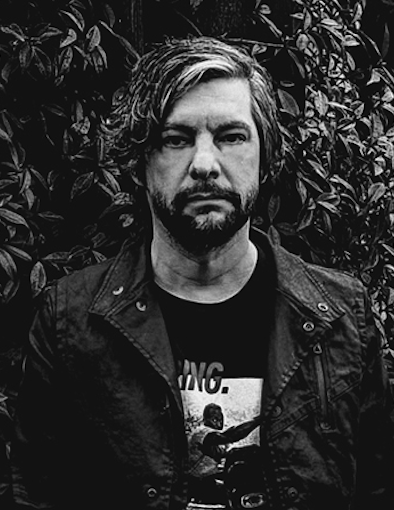
Sean Wolfe. Credit: Chris Eichenseer/Someoddpilot Records
Sean Wolfe is a Portland-based software engineer known in the electronic and IDM scenes as Salvo Beta. After decades of making music, Sean’s career took an unexpected turn when surgery for an acoustic neuroma left him completely deaf in his right ear. His return to music was made possible by a cochlear implant—marking a “bionic” evolution in both his life and his music.
Chris Eichenseer, the founder of Salvo Beta's label Someoddpilot Records (a spinoff of the lauded Chicago-based creative and design agency Someoddpilot), also suffered from acoustic neuroma. The two have been friends for decades and bonded through their treatments for the rare disorder. Statistically, the average audiologist will discover three of these cases during their career.
This month Sean is releasing his first major works since the surgery: two striking remixes of Chicago post-punks (and close friends of Sean) Still Machine that serve as his first foray into music production with his new “augmented” hearing.
The tracks are a masterclass in adaptation, blending the gritty, deconstructed sounds of the early 2000s Chicago IDM scene with a modern, “cyborg” perspective. It’s a story of resilience, dark humor, and the technical challenge of mixing audio when your brain processes sound through a handful of electrodes instead of thousands of hair cells.
The two recently chatted about their hearing loss and music journeys, edited below.
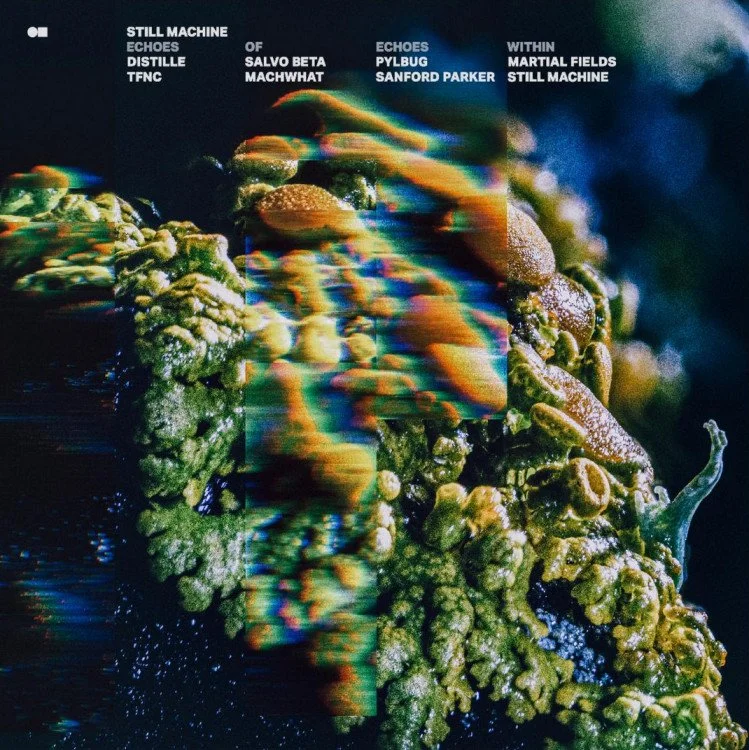
The album cover for Still Machine’s “Echoes of Echoes Within”
Chris: In the summer of 2022, I started noticing that when I held my phone up to my right ear, the reception wasn’t quite there. It felt like the volume had just been cut in half. I’d be watching TV with my kids, leaning my good ear into a pillow, and the voices coming from the TV sounded like they were being run through a guitar pedal or some gnarly outboard distortion gear. My good ear told me that wasn’t what was actually happening, but my bad ear was acting like a distortion box. I went to the audiologist, and she finally told me the only way she could explain it was that I had a tumor. I thought it was just from years of being a drummer and wrecking my hearing on stage, but she said asymmetrical loss is unusual because your ears travel together. It turned out to be an acoustic neuroma—benign, but rare.
Sean: It was a weird coincidence for me because I’d also been blaming my hearing issues on being in a band. I started getting loud tinnitus in my right ear, and everything sounded muffled, like someone was covering it. I got a free hearing test at Costco, and the audiologist noticed a huge drop-off at about 500 hertz. I eventually hung out with you at a bar in Chicago, and when I showed you my audiogram, you said it looked just like yours and told me to get an MRI. When the results came back mentioning an “enhancing mass,” I called you right away.
Chris: I remember. That language is terrifying. “Heterogeneously enhancing lesion.” If you Google that, it sounds like brain cancer. I spent a week falling off a cliff, thinking I was doomed. It wasn’t until my wife realized that’s just how these benign tumors look on a scan that I felt this profound relief. I realized: If the worst thing that happens is I lose my hearing in one ear, I am the luckiest guy on earth.
Sean: I felt that same relief knowing what the problem actually was, but the research part was a lot to handle. I ended up at UC San Diego, and they gave me the options: watch it, do radiation, or do surgery. I went with the trans-labyrinthine approach, which is what I think you had. It destroys whatever hearing you have left, but it’s the safer way to get the tumor out.
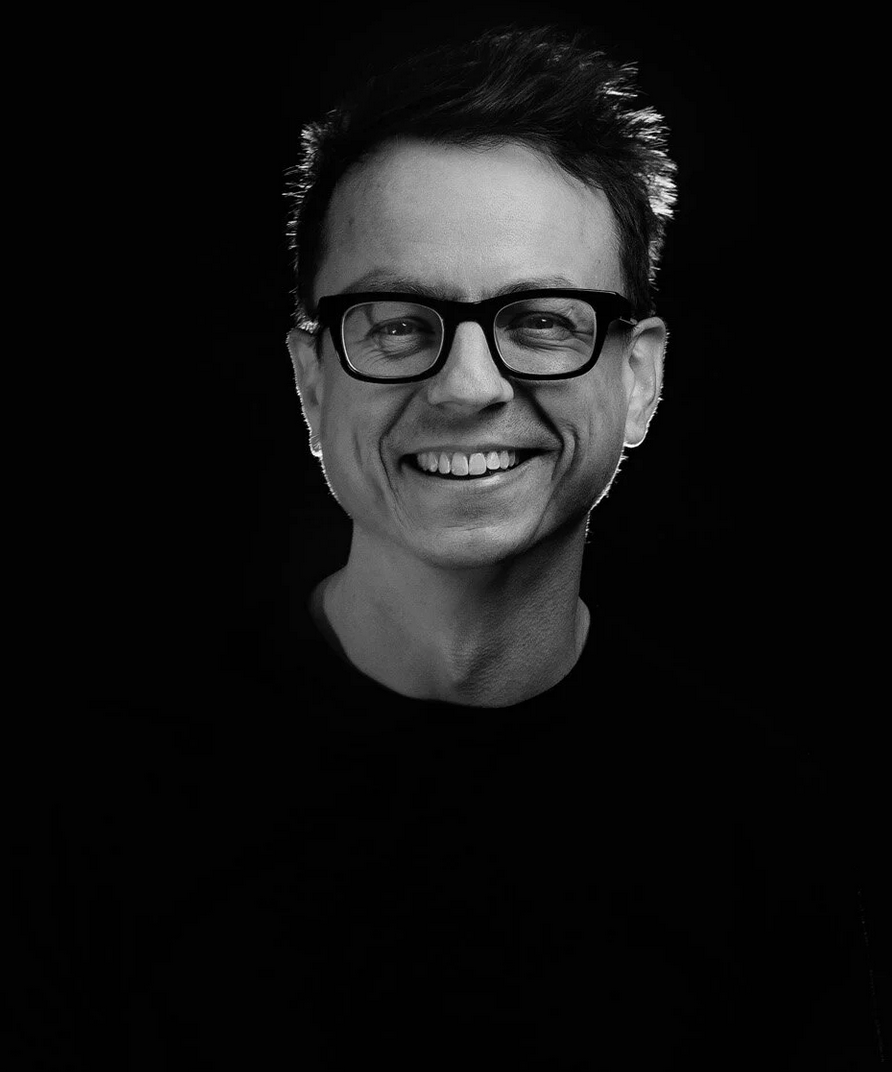
Chris Eichenseer
Chris: Yeah, they just obliterate everything in the ear. At that point, you stop worrying about stereo music and start worrying about whether your face will be paralyzed or if you’ll be able to walk. Coming out the other side of that made me realize I needed to get back to the things that mattered, like the record label I started in my 20s. Literally losing my hearing was the impetus to start supporting the music my friends were making again.
Sean: I’d dropped out of making music around 2006, but the hearing loss made me realize that if I wanted to do it, this was the time. I rented a rehearsal space and set up a studio before I even knew for sure about the surgery. But unlike you, I came out of it with a cochlear implant. We used to joke that I was half-man, half-robot because of my tech obsession, and now I actually have hardware installed in my head.
Chris: It’s wild that you have a “plug-in” device now. How has that changed how you actually make music?
Sean: My brain is learning. Because I have one “natural” ear, my brain uses that information to “correct” the robot ear. It’s called bimodal hearing. If I hear a famous person’s voice that I already know, my brain fills in the gaps and makes it sound natural.
Chris: This is the part that blows me away. Most people would retreat from music after this. Instead, we both leaned in harder than we have since our 20s.
Sean: I had to! I started using my studio gear to “train” my brain. I use a program called Bitwig and I set up a global “swap” button. I’ll flip the audio back and forth between my good ear and my CI ear to hear the difference. I use spectral shifting—basically a plugin that moves frequencies around—to simulate what my CI is doing. It’s like I’m EQ-ing my own brain.
Chris: It’s incredible. For me, losing my hearing was the impetus to restart the record label. I realized I don’t want to be the “sad story” in the middle of my friends’ lives. I want to be the guy supporting the incredible music they’re making.
Sean: It’s a shift in perspective. We spent our 20s flirting with music and tech. Now, we’re fully engaged. I’m making more music now than I have in 15 years, even with a “plug-in” in my head.
Chris: We’re not just musicians anymore. We’re proof that the brain is an incredible multiprocessor. You lose a channel, and you just find a new way to mix the track.
Here is a link to the collection of Still Machine remixes, which feature Salvo Beta's contributions. Watch their music video here. In addition, Oregon Public Broadcasting’s Think Out Loud podcast recently interviewed Sean.
The Latest Blog Posts



Our Emerging Research Grants program is the leading seed funding opportunity for early stage researchers. ERG also includes Expanded and Focused Discovery Awards, which are grant opportunities in specific topics (such as central auditory processing disorder, hyperacusis, Ménière’s disease, and tinnitus) that are open to eligible investigators at any career stage.