
A mom reflects on raising daughters with hearing loss.
By Jenny Byxbee
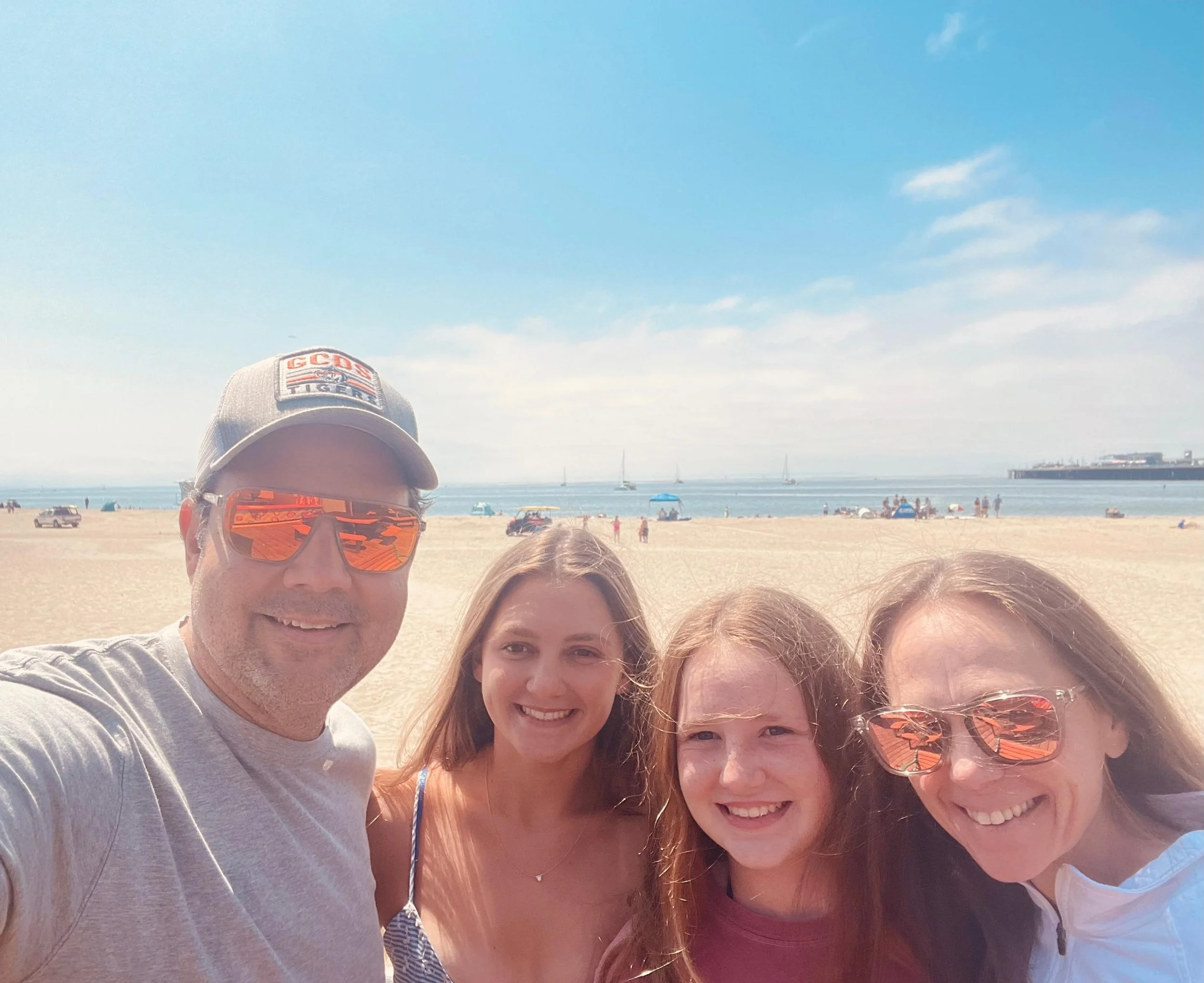
The girls were born with bilateral moderate to severe hearing loss.
To the parent sitting in a sterile audiology office, feeling the weight of the silence as the walls seem to close in, I see you.
To the parent currently sifting through a sandbox like a desperate gold miner, looking for a tiny, high-tech device that was treated like a frisbee, I am you.
When we first receive a diagnosis of hearing impairment for our children, the world often hands us a heavy folder filled with “won’ts” and “can’ts.” But if my journey has taught me anything, it’s that our children aren’t defined by what they don’t hear—they are defined by the fierce, resilient, and often hilarious ways they choose to engage with the world.
Raising a child with hearing loss requires a sharp sense of humor and the patience of a saint. We’ve all lived some of the “greatest hits” of this life as parents of the hard of hearing.
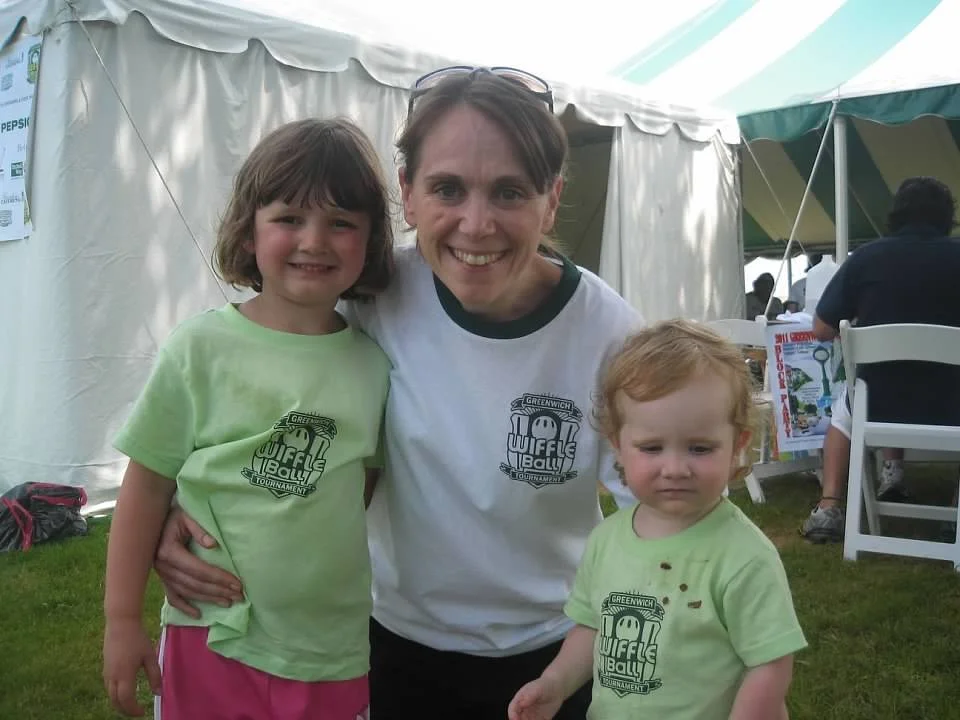
The family participated in the Hearing Loss Association of America’s Walk4Hearing events.
We’ve experienced the heart-stopping realization that a hearing aid has been buried three inches deep in the playground sand to “rest” in the shade. We have witnessed the tactical brilliance of a child who, bored or annoyed with a teacher’s lecture, simply reaches up and mutes the FM system. While those moments make for stressful parent-teacher conferences, there is a secret, rebellious part of us that admires a child who already knows how to curate their own peace.
However, these lighthearted moments are often balanced by the steep hurdles of doubt. I’ve stood on pool decks facing coaches who were terrified to have my daughters on the swim team, citing “safety” as a reason for exclusion, a word that is too often a polite mask for a lack of imagination.
It is in these moments that we realize we cannot afford to be passive. Because hearing loss is often tucked away behind a lock of hair or a colorful headband, it is easily forgotten or misunderstood.
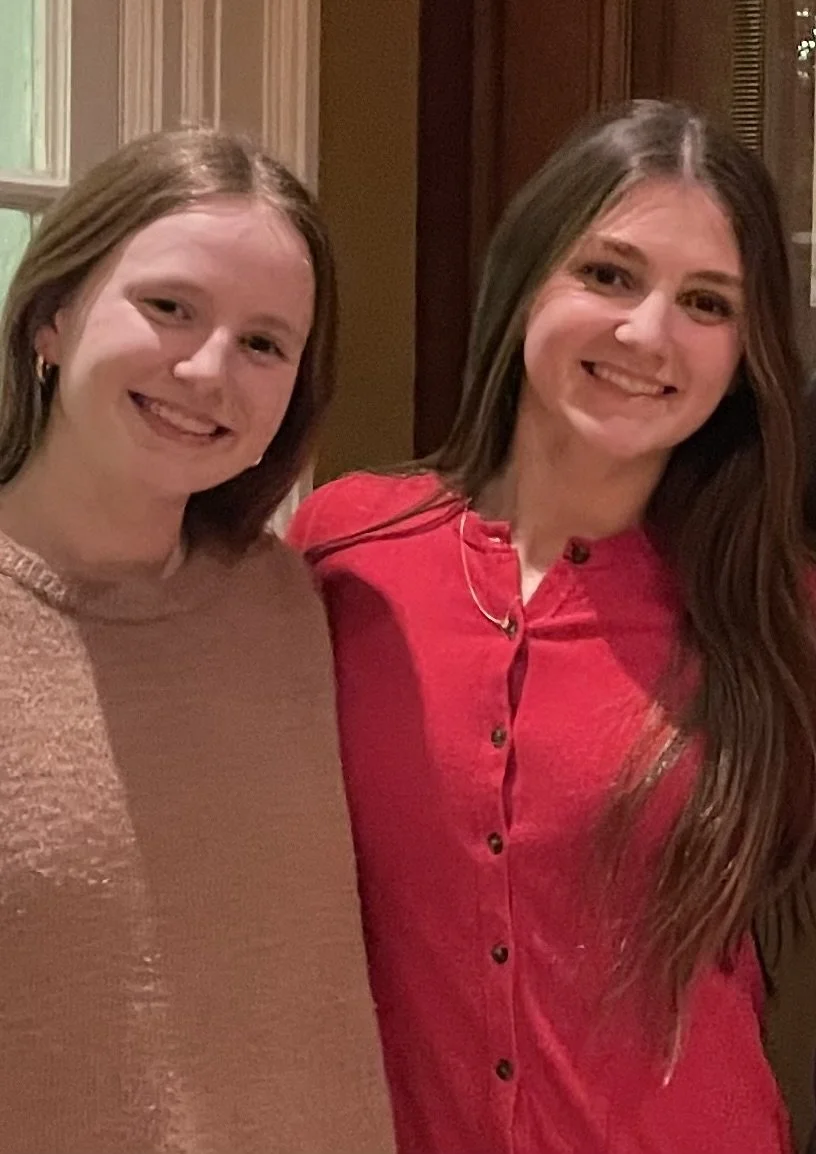
Now teenagers, Libby and Katie have each shared their hearing loss journeys with the wider community.
Unlike the hearing loss we associate with aging, this is a vibrant, growing, evolving challenge. We must be the ones to shift the narrative. Instead of accepting the world’s “they can’t,” we must lean in and demand: “Why can’t they?”
When you challenge the “can’t,” you force the world to innovate. If a whistle isn’t enough, we find a strobe light. If the barrier is communication, we teach the world a new way to speak. This perseverance isn’t just about the child working harder; it’s about the parent refusing to accept no as a final answer.
For years, my two daughters sat in the same audiology waiting rooms, flipping through magazines that featured only the elderly. They didn’t see themselves—young, vibrant, and thriving—represented in the stories of the hearing impaired.
So, they decided to become the representation they couldn’t find. Now teenagers, both have written for the Hearing Loss Association of America and Hearing Health Foundation. They are no longer just the subjects of the story; they wanted to be the authors of a new narrative, proving that their voices are powerful regardless of how they receive sound and how at times they navigate in a world without it.
This path in parenting the hard of hearing—let’s face it—can be exhausting. If you walked alone, and because this disability is so often invisible, your village might not be on your front porch. You have to go hunting for it.
You have to ask the “annoying” questions, push for the extra accommodations, and seek out the parents who have walked these miles before you. The villages are out there, tucked into speech therapy waiting rooms and hidden in online threads.
And when we find one another, we realize that our children aren’t “broken”’; they are pioneers of a different sensory experience. We are stronger together, and our voices ensure that our children don’t just get by, but that they lead, swim, laugh, and when they feel like it turn the volume back up on a world that is lucky to have them.
Jenny Byxbee is the mother of Katie, who is a student at the Rochester Institute of Technology, and high school student Libby. Both were born with bilateral moderate to severe hearing loss. See Libby’s stories: “My Aha! Moment,” “Advice I’d Give My Younger Self,” and “My Musical Journey With Hearing Aids.”
The Latest Blog Posts
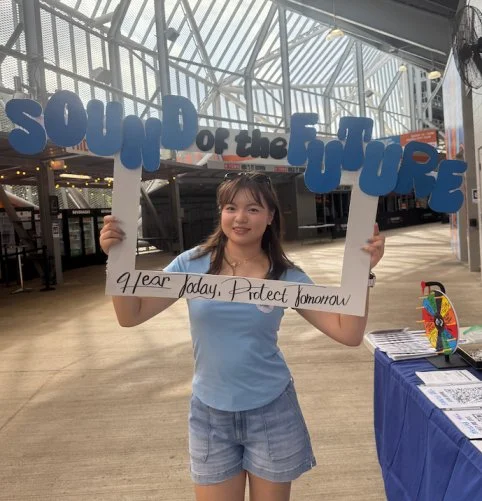



A simple, universal visual warning system (like a red, yellow, or green noise-level indicator at a concert venue, racetrack, or theme park) instantly conveys danger, warning, or safety to people of all ages. Combined with access to basic foam earplugs and insertion instructions, a simple prompt can transform behavior.