
Diagnosed with central auditory processing disorder as a child, this newly graduated actress-model plans to use her degree in speech-language pathology and audiology to improve outcomes for fellow CAPD patients.
By Chloe Evans
What if I told you that we don’t actually hear with our ears? Now, what if I told you that most people don’t understand the true definition of hearing? Believe it or not, both of those statements are absolutely true.
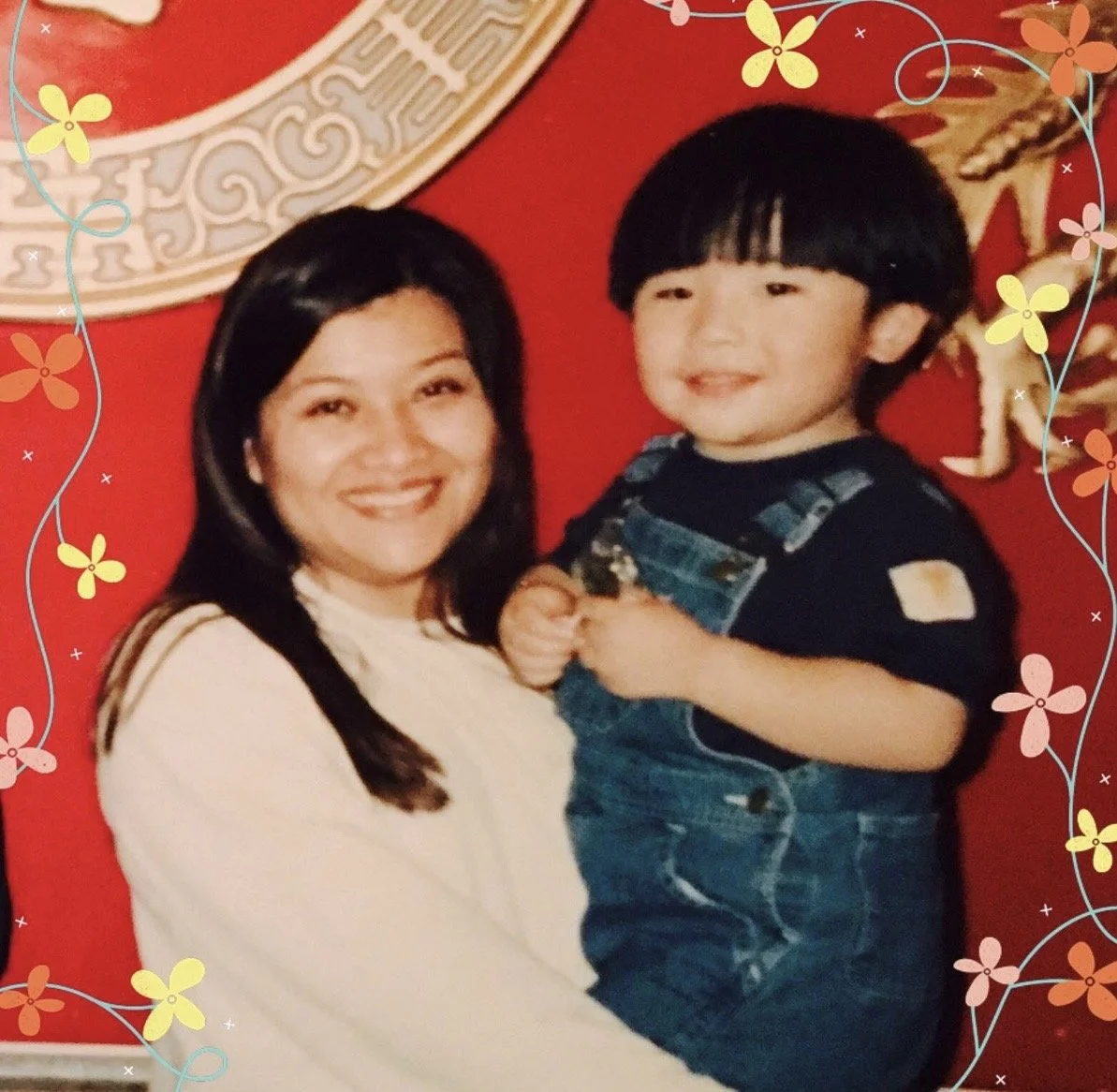
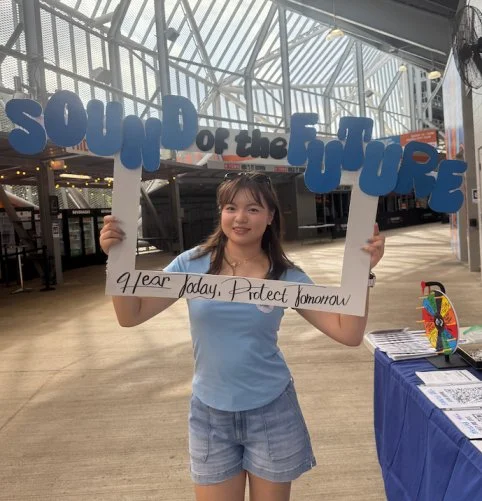
My name is Chloe Evans and I am a 22-year-old college student. As Coco-Eva Noire, I’m an actress and runway model. I currently hold a college minor in theatre, and in August I’ll earn my undergraduate degree in speech-language pathology and audiology.
I’m also living with central auditory processing disorder (CAPD), specifically the auditory decoding subset. I was diagnosed by a pediatric audiologist around the age of 9. My 2nd grade teacher was convinced I had ADHD (attention-deficit/hyperactivity disorder), and I understand why she thought so.
I’m grateful my teacher said something, because that’s why my mom took me to see a child psychiatrist. The psychiatrist did not think I displayed signs of ADHD, but her son happened to have a CAPD diagnosis. She recommended I see a pediatric audiologist to get tested, and the rest is history.
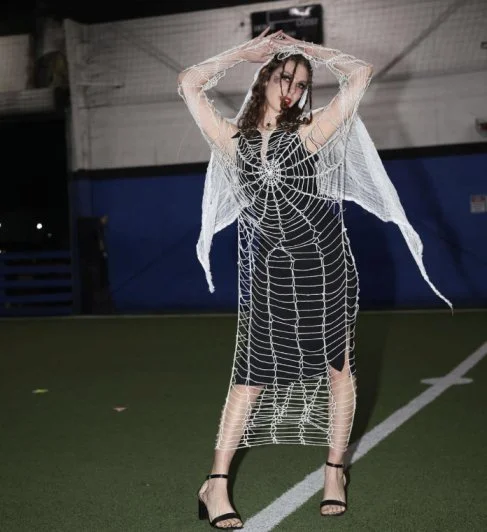
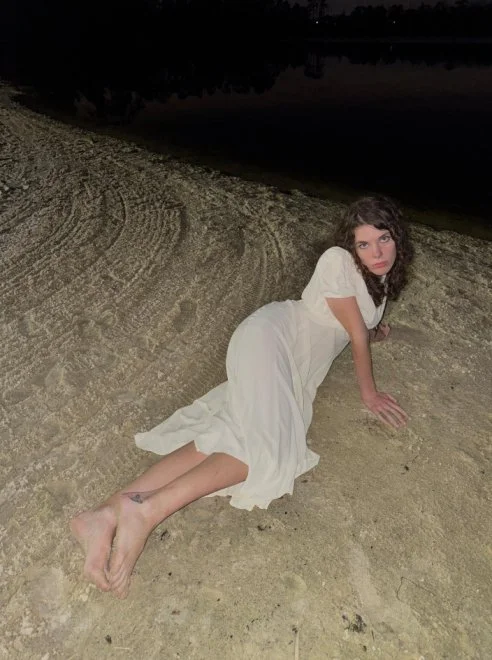
Photographer: @willreesephotography
Designer: @bumbreads
Makeup artist: @oliviaponssa
Executive producer: @_valeerrie_
Model director: @cesarsangel
Assistant producer: @5star._.mal
Creative director & PR marketing: @bxpao.art
CAPD is a disorder of the brain, not a disorder of the ears. When a child (or adult) has CAPD, their physical hearing may be fine, but their auditory cortex has an issue processing the auditory input. However, even after a diagnosis, the educators didn’t know how to actually help me (some of them just didn’t care either). I struggled with reading, and I had been in speech therapy since preschool.
One frustrating aspect of growing up with CAPD are all the misconceptions and lack of education surrounding it. Many people, including my elementary school teachers, confused it for physical hearing loss, and made assumptions that didn’t benefit me much. For example, when I was in 4th grade my school put me in a class with a teacher who used a microphone while teaching. That was the worst thing they could have done for me, on so many levels! The teacher and school did not understand that I did not have a hearing loss per se, so the microphone of course didn’t help. It only amplified speech that I couldn’t understand.
I needed a significant amount of intervention when I was younger, but that was just what had to be done. CAPD has a lack of funding in research, and I believe that’s a big part why children are struggling. When communicating to educators, something specific needs to be explicitly stated about auditory processing. The main thing is to not confuse it with hearing loss, or any other hearing conditions.
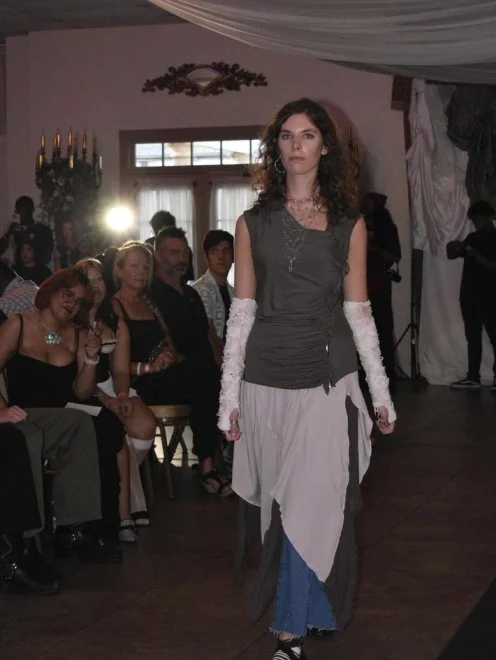
Photographer: @jmt.ep
Designer: @visceralg1rl
Makeup artist: @muagiga
Also, a noisy classroom environment is not where a child with a CAPD diagnosis is going to thrive. And for the record, putting a child who has CAPD in a classroom with a teacher who used a microphone because they assumed it would help me hear better was not the right thing to do.
The school I attended as a child did not have the resources to properly help me, so my mother had to go out of her way to get me the help and resources I needed, which had to be outside of school. This included seeing a private speech therapist for years as well as a special education teacher to work on my phonetics.
Later in life, I discovered I have misophonia, another neurologically based hearing condition, characterized by an extreme hatred of certain sounds which are “triggers.” That’s a whole other can of worms. A couple years later in college, I was officially diagnosed with Hypermobile Ehlers-Danlos Syndrome (a genetic connective tissue disorder), clinical obsessive-compulsive disorder, and anxiety.
But at the end of the day, everything turned out to be just fine. I almost have my bachelor of science degree and I couldn’t be more excited and grateful.
Chloe Evans receives her bachelor of science degree in early August 2026 at University of Central Florida, where she has been a member of the National Student Speech Language and Hearing Association (NSSLHA) as well as the group’s first Audiology Committee, which organized socials, fundraisers, guest speakers, volunteering, and other educational or hands-on events. Follow her at instagram.com/dokidokihana.
The Latest Blog Posts


Hearing Health Foundation (HHF) is very pleased to announce the addition of four new members to our Board of Directors: Andreas H. Eckhard, M.D., Steven D. Rauch, M.D., Konstantina Stankovic, M.D., Ph.D., FACS, and Daniel J. Tollin, Ph.D.