
As we enjoy the upcoming Memorial Day with lively parades and social events, let’s mark the occasion with consideration for our service members whose hearing health may have been impacted while on active duty.
By Jenn Schumacher, Au.D.
Data shows that veterans are 30 percent more likely to have severe hearing impairment, compared with the general public, underscoring the lasting toll of noise exposure long after military service ends.
The high rates of tinnitus (hearing ringing or buzzing without an external sound source) and hearing loss among veterans can be attributed to several contributing factors. Most significant is that veterans have had more occupational exposure to loud noises, such as gunfire and explosions.
Hearing loss occurs when the sensory hair cells in the inner ear (cochlea) are damaged from loud sounds, preventing them from converting sound waves into electrical signals that the brain interprets. This damage is typically permanent because, unlike cells in other parts of the body, human auditory hair cells cannot regenerate.
The World Health Organization recommends that adults aim for an average 80 decibels (dB) maximum volume level for no more than 40 hours a week. However, some noises are so loud that they’re unsafe to hear for any length of time:
Fireworks, firecracker, shotgun: 150 dB
Firearms (will vary based on caliber): 140 dB
Jet plane takeoff: 120 dB
Exposure to these levels of sound without any hearing protection can cause nearly instant, permanent hearing loss.
Aging is another common factor that contributes to hearing loss. The active-duty military population has fallen by nearly two-thirds since its peak during the Vietnam War in 1968. This decades-long downturn means that most U.S. veterans are older, with about 3 out of 4 veterans being over the age of 50: 36 percent are ages 50 to 70, and 37 percent are older than 70.
Research also suggests that traumatic brain injury (TBI) is associated with hearing loss, likely from damage to the inner ear and/or to the part of the brain that processes sound.
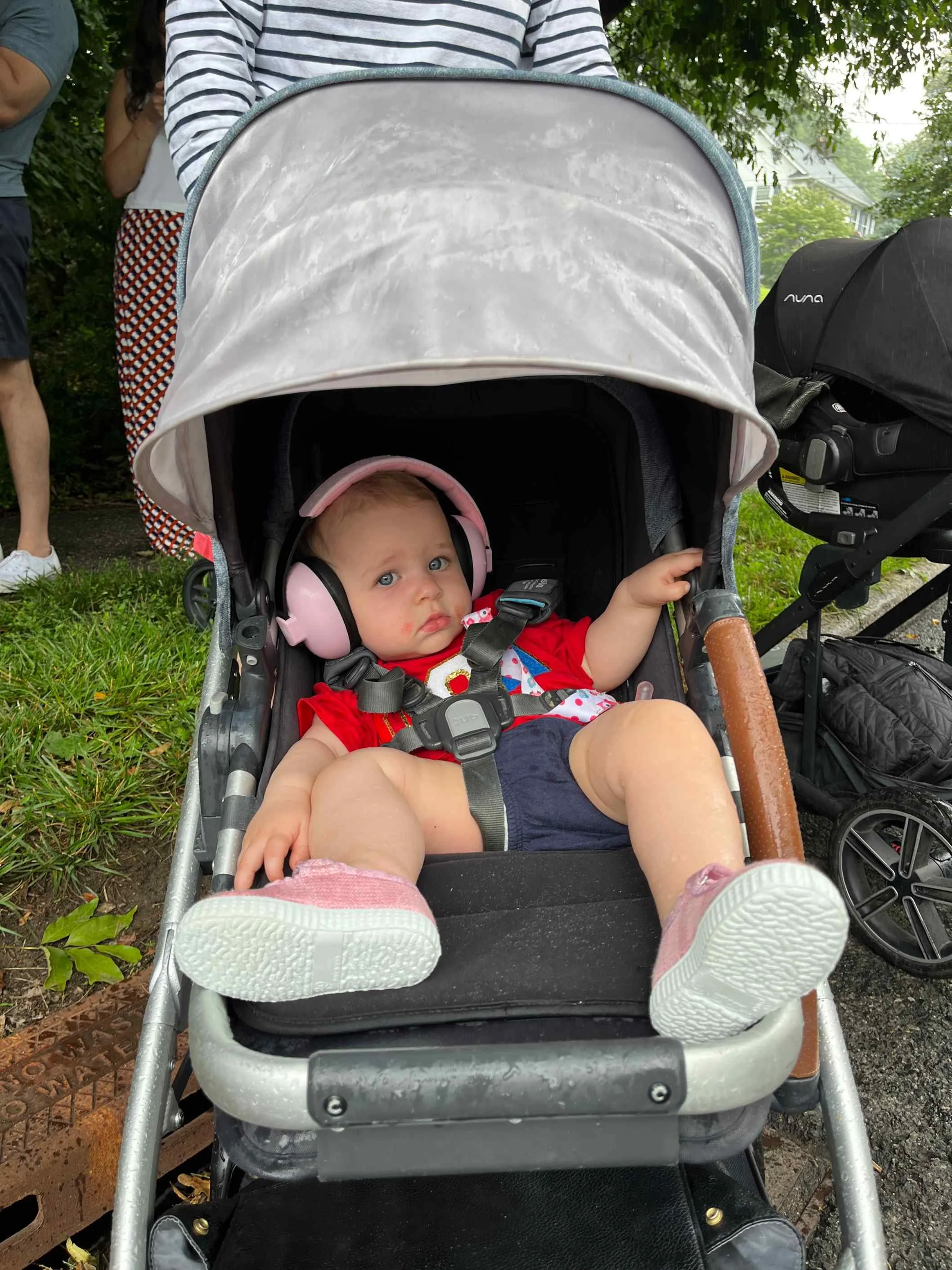
Protective earmuffs for the youngest spectators are especially valuable, since their ears have to last a lifetime.
For veterans struggling with their hearing health, it may be more difficult to watch parades for Memorial Day due to the loud marching bands, firetruck sirens and horns, and chatter from spectators lining the streets.
Protecting the ears in any loud environment is important for everyone, regardless of the current state of ther hearing health. Considering wearing hearing protection such as earplugs and sitting farther away from the parade vehicles. Protective earmuffs for the youngest spectators are especially valuable, since their ears have to last a lifetime.
The U.S. Department of Veterans Affairs has over 400 audiology clinics and hearing care sites nationwide, where veterans can get examined and consult with experts in hearing health to find the best treatment.
Treatments for hearing loss and tinnitus include:
Hearing aids: Devices that amplify sounds for people with hearing loss but can also help reduce the loudness of tinnitus.
Tinnitus Retraining Therapy (TRT): A combination of counseling and sound therapy to train the brain to ignore or mask the sounds of tinnitus.
Sound therapy: The technique of deliberately listening to safely administered, external noises made by masking devices to alter perception or reaction to tinnitus, using:
Table-top white noise machines
Wearable, ear-level sound generators
Hearing aids with tinnitus programs that deliver white noise
Earwax removal: An ENT can safely remove excessive earwax that may be causing tinnitus
General practitioners can provide additional support, including:
Medication adjustments: Tinnitus is sometimes a side effect of certain medications
Psychological counseling: Tinnitus can sometimes be triggered or worsened by stress, so caring for an individual’s mental health can also be an effective approach, such as through:
Cognitive behavioral therapy (CBT)
Stress relief efforts: mindfulness, meditation
Here’s wishing veterans, their families, and the communities they served all a healthy, happy, and safe Memorial Day weekend.

Jenn Schumacher, Au.D., is an audiologist at ReSound. Learn about more about managing hearing loss treatments, including captioning glasses, on HHF’s page Treating Hearing Loss, and get more healthy hearing tips on our Keep Listening pages.
The Latest Blog Posts



Fifty percent of maximum volume on a power-hungry headphone can be quite gentle. Fifty percent on a sensitive pair of earbuds, plugged into a strong source, can be loud enough to permanently harm hearing.