Research

Neural sensitivity to binaural cues with bilateral cochlear implants

By Massachusetts Eye and Ear/Harvard Medical School

Many profoundly deaf people wearing cochlear implants (CIs) still face challenges in everyday situations, such as understanding conversations in noise. Even with CIs in both ears, they have difficulty making full use of subtle differences in the sounds reaching the two ears (interaural time difference, [ITD]) to identify where the sound is coming from. This problem is especially acute at the high stimulation rates used in clinical CI processors.

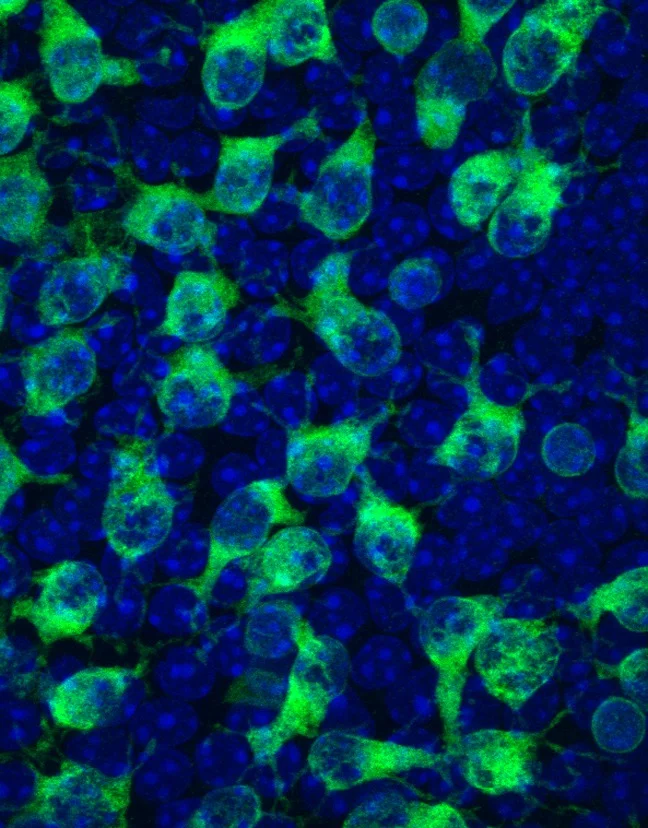
 A team of researchers from Massachusetts Eye and Ear/Harvard Medical School, including past funded Emerging Research Grantee, Yoojin Chung, Ph.D., studied how the neurons in the auditory midbrain encode binaural cues delivered by bilateral CIs in an animal model. They found that the majority of neurons in the auditory midbrain were sensitive to ITDs, however, their sensitivity degraded with increasing pulse rate. This degradation paralleled pulse-rate dependence of perceptual limits in human CI users.

This study provides a better understanding of neural mechanisms underlying the limitation of current clinical bilateral CIs and suggests directions for improvement such as delivering ITD information in low-rate pulse trains.

The full paper was published in The Journal of Neuroscience and is available here. This article was republished with permission of the Massachusetts Eye and Ear/Harvard Medical School.

Dr. Yoojin Chung, Ph.D. was a 2012 and 2013 General Grand Chapter Royal Arch Masons International award recipient through our Emerging Research Grants program. Hearing Health Foundation would like to thank the Royal Arch Masons for their generous contributions to Emerging Research Grantees working in the area of central auditory processing disorders (CAPD). We appreciate their ongoing commitment to funding CAPD research.

We need your help supporting innovative hearing and balance science through our Emerging Research Grants program. Please make a contribution today.


Print Friendly and PDF

BLOG ARCHIVE

Brain and Alzheimer's Disease Awareness Month

By Morgan Leppla

Bodies are complex systems, composed of many minute details. The human anatomy serves to remind us of the intricacies of our world. This June for Brain and Alzheimer’s Awareness Month, Hearing Health Foundation (HHF) invites you to join us in celebrating one of the most mysterious and fascinating part of the body: the brain.

For one to grasp the physiological complexity of being  human, one ought to understand how their body’s many systems work in tandem. For example, each person’s brain depends on stimulation to keep it in tip-top shape and and their bodies depend on their brains to function as they are intended to.

This is clearly a stripped down explanation of the role brains play. Of course an organism’s structure can be broken down into smaller and smaller parts, so let’s focus on one of special importance to us here at HHF, hearing.

Frank Lin, M.D., Ph.D., from Johns Hopkins University reports in 2014 that hearing loss affects brain structure, and specifically accelerates brain tissue loss. The study was conducted over a 10-year period with a sampling of people which included those with substantial hearing loss and those with normal hearing.  After analyzing years of magnetic resonance imaging scans, his conclusions suggest people with substantial hearing loss show higher rates of brain atrophy. Lin explains brain shrinkage could be the result of an “‘impoverished’ auditory cortex” since there is reduced brain stimulation in that area.

"If you want to address hearing loss well," Lin says, "you want to do it sooner rather than later. If hearing loss is potentially contributing to these differences we're seeing on an MRI, you want to treat it before these brain structural changes take place."

The human brain contains some of the most challenging biological mysteries in science (and always has). Unlocking those takes perseverance, so HHF thanks brain and hearing researchers for the time and energy devoted to rigorous research and ultimately revealing information critical to improving brain health.

Parts really do affect the health of the whole. So for the brain and beyond, please make an appointment with your hearing healthcare professional for your annual checkup and, if you are diagnosed with a hearing loss, managing it. More than just your hearing will benefit! Untreated hearing loss has been linked to dementia, depression, diabetes, falls, and heart disease.

Want to learn more about brain health? Check out last year’s blog here: Your Brain Is a Muscle: Use It or Lose It

Print Friendly and PDF

BLOG ARCHIVE

NEWS UPDATE: Report on Hearing Health Care Released

By Morgan Leppla

Did you know it is estimated that 67 to 86 percent of people who might benefit from hearing aids do not have them? In a much-anticipated National Academies of Sciences, Engineering, and Medicine (NAS) report, published on June 2, 2016, NAS addresses the areas of hearing healthcare that currently prevent many of the 48 million Americans with hearing loss from seeking treatment, and provide 12 recommendations for improvement.

The NAS report recognizes that hearing loss detracts from individuals’ participation in family life, school, and work, and can affect anyone, young or old. People deserve the ability to communicate effectively, live healthily, and enjoy a high quality of life.


Specifically, the report recommends “key institutional, technological, and regulatory changes that would enable consumers to find and fully use the appropriate, affordable, high-quality services, technologies, and support they need.”

Currently, hearing healthcare is not focused on the consumer. However, through implementing the report’s recommendations, it would improve:

  • The quality and affordability of hearing healthcare

  • Access to accurate information that should be readily available to the public

  • Increasing the number of options for consumers to choose from, in order to best fit individual needs

  • Reducing stigma and bettering education

  • Ending governmental measures that create obstacles to easy access

The NAS report further explains that this is everyone’s responsibility to manage their hearing health: Cross-sector, sustained collaboration is crucial to successful implementation of the report’s blueprint.

"Hearing Health Foundation (HHF) recommends everyone talk to their doctors to identify any hearing loss as well as to find the best hearing loss treatment for them. HHF is dedicated to funding research to cure and treat hearing loss and tinnitus  and is proud to play a role in pushing hearing and balance research forward,” says Nadine Dehgan, HHF CEO.

HHF would like to thank the NAS and its expert committee for their hard work in preparing this report, including the committee’s Judy R. Dubno, Ph.D., a member of HHF’s Board of Directors, and Debara L. Tucci, M.D., a member of HHF’s Council of Scientific Trustees

Print Friendly and PDF

BLOG ARCHIVE

Hearing Aid Use Is Associated with Improved Cognitive Function in Hearing-Impaired Elderly

By Columbia University Medical Center

A study conducted by researchers at Columbia University Medical Center (CUMC) found that older adults who used a hearing aid performed significantly better on cognitive tests than those who did not use a hearing aid, despite having poorer hearing.

The study was published online in the American Journal of Geriatric Psychiatry.

The researchers also found that cognitive function was directly related to hearing ability in participants who did not use a hearing aid.

More than half of adults over age 75 have hearing loss, yet less than 15 percent of the hearing impaired use a hearing aid device. Previous studies have shown that the hearing-impaired elderly have a higher incidence of fall- and accident-related death, social isolation, and dementia than those without hearing loss. Studies have also demonstrated that hearing aid use can improve the social, functional, and emotional consequences of hearing loss.

“We know that hearing aids can keep older adults with hearing loss more socially engaged by providing an important bridge to the outside world,” said Anil K. Lalwani, MD, professor of otolaryngology/head and neck surgery at Columbia and otolaryngologist at NewYork-Presbyterian/CUMC and NewYork-Presbyterian/Morgan Stanley Children’s Hospital. “In this study, we wanted to determine if they could also slow the effects of aging on cognitive function.”

The study included 100 adults with hearing loss between the ages of 80 and 99. Of the participants, 34 regularly used a hearing aid. Audiometry tests were performed to measure the degree of hearing loss. Cognitive function was evaluated by the Mini-Mental State Examination (MMSE), in which participants give vocal responses to verbal commands. Executive function was also assessed with the Trail Making Test, Part B (TMT-B), which does not have a verbal or auditory component.

Hearing aid users, who had worse hearing than non-users, performed significantly (1.9 points) better on the MMSE. Among non-users, participants with more hearing loss also had lower MMSE scores than those with better hearing. Although hearing aid users performed better than non-users on the TMT-B, the difference was not statistically significant. In addition, TMT-B scores were not correlated with hearing level.

“Our study suggests that using a hearing aid may offer a simple, yet important, way to prevent or slow the development of dementia by keeping adults with hearing loss engaged in conversation and communication,” said Dr. Lalwani.

This blog was reposted with the permission of Columbia University Medical Center

Anil K. Lalwani, M.D. is the Head of Hearing Health Foundation's Council of Scientific Trustees and sits on our Board of Directors

We need your help in funding the exciting work of hearing and balance scientists.

To donate today to support HHF's groundbreaking research,

please visit hhf.org/donate.

Print Friendly and PDF

BLOG ARCHIVE

Unraveling Genes Critical for Inner Ear Development

By Albert Edge, Ph.D., and Alain Dabdoub, Ph.D

The goal of the Hearing Restoration Project (HRP) is to determine how to regenerate inner ear sensory cells in humans to eventually restore hearing for millions of people worldwide. These sensory cells, called hair cells, in the cochlea detect and turn sound waves into electrical impulses that are sent to the brain. Once hair cells are damaged or die, hearing is impaired, but in most species, hair cells spontaneously regrow and hearing is restored. The HRP is aiming to enable this ability in humans. 

All cells develop through a chain of events triggered by chemical signals (proteins) from outside the cell. The signals kick off responses inside the cell that can change the cell’s ability to proliferate (grow and divide) and differentiate (take on specialized functions).

The Wnt signaling pathway, a sequence of events triggered by the Wnt protein, helps guide inner ear cell development, including the proliferation of cells that differentiate into the hair cells and supporting cells necessary for hearing and balance. But in mice and other mammals, inner ear cell proliferation does not continue past newborn stages.

Underscoring their importance in evolutionary terms, Wnt signals occur across species, from fruit flies to humans—the “W” in Wnt refers to “wingless”—and Wnt signaling is guided by dozens of genes. Albert Edge, Ph.D., Alain Dabdoub, Ph.D., and colleagues performed a comprehensive screen of 84 Wnt signaling-related genes and identified 72 that are expressed (turned on) during mouse inner ear development and maturation. Their results appeared in the journal PLoS One this February.

The Wnt signaling network has three primary pathways. Two are known to be integral to the formation of the mammalian inner ear, including the determination of a cell’s “fate,” or what type of cell it ultimately turns into. This is particularly significant because the inner ear’s sensory epithelium tissue is a highly organized structure with specific numbers and types of cells in an exact order. The precise arrangement and number of hair cells and supporting cells is essential for optimal hearing.

The relationship between the Wnt-related genes, the timing of their expression, and the various signaling pathways that act on inner ear cells is extremely complex. For instance, the composition of components inside a cell in addition to the cell’s context (which tissue the cell is in, and the tissue’s stage of development) will influence which pathway Wnt signaling will take. It is known that inhibiting the action of Wnt signaling causes hair cells to fail to differentiate.


The new research complements previous chicken inner ear studies of Wnt-related genes as well as a recent single-cell analysis of the newborn sensory epithelium in mice (conducted by HRP scientist Stefan Heller, Ph.D., and colleagues). Comprehensively detailing these 72 Wnt-related genes in the mouse cochlea across four developmental and postnatal time periods provides a deeper understanding of a critical component of hair cell development, bringing the HRP closer to identifying genes for their potential in hair cell regeneration.

Your Support Is Needed!

Hair cell regeneration is a plausible goal for eventual treatment of hearing and balance disorders.

The question is not if we will regenerate hair cells in humans, but when.  

However, we need your support to continue this vital research and find a cure!

Please make your gift today.  

Print Friendly and PDF

BLOG ARCHIVE

Are Hair Cell Regeneration Genes Blocked?

By Yishane Lee

On March 8, 2016, Hearing Health Foundation hosted a live-video research briefing, as part of an ongoing effort to provide regular updates on our research programs and progress. Through these briefings, our goal is for our attendees to learn new information and achieve a greater understanding of hearing loss, prevention, and to o develop effective therapies for hearing loss and tinnitus.

Peter Barr-Gillespie, Ph.D., the scientific director of the Hearing Restoration Project (HRP), began the webinar with announcing the newest HRP consortium member, Ronna Hertzano, M.D., Ph.D., from the University of Maryland. Ronna is a clinician as well as a research scientist, a rare combination and an asset for the HRP. She also developed a bioinformatics platform, gEAR, that the HRP is using to efficiently compare large, complex genetic datasets between species.

Dr. Barr-Gillespie went on to outline a year in the life of the HRP—how the investigators collaborate, discuss, and develop research projects. He then provided an overview of a currently funded project focused on examining whether genes can be manipulated to overcome a block to hair cell regeneration in mammals, including humans. The advancements in technologies, such as CRISPR gene modification, provides the HRP with the ability to study hair cell regeneration in different species and at a level of detail and manipulation unheard of before.

We invite you to watch the video with captioning, or read the presentation with summary notes. We are excited to share this discussion of the HRP’s progress to date and our plans for 2016 and beyond.


Your Support Is Needed!

Hair cell regeneration is a plausible goal for eventual treatment of hearing and balance disorders.

The question is not if we will regenerate hair cells in humans, but when.  

However, we need your support to continue this vital research and find a cure!

Please make your gift today.

Print Friendly and PDF

BLOG ARCHIVE

Defining Auditory-Visual Objects

By Molly McElroy, PhD

If you've ever been to a crowded bar, you may notice that it's easier to hear your friend if you watch his face and mouth movements. And if you want to pick out the melody of the first violin in a string quartet, it helps to watch the strokes of the players' bow.

I-LABS faculty member Adrian KC Lee and co-authors use these examples to illustrate auditory-visual objects, the topic of the researchers' recently published opinion paper in the prestigious journal Trends in Neurosciences.

Lee, who is an associate professor in the UW Department of Speech & Hearing Sciences, studies brain mechanisms that underlie hearing. With an engineering background, Lee is particularly interested in understanding how to improve hearing prosthetics.

Previous I-LABS research has shown that audio-visual processing is evident as early as 18 weeks of age, suggesting it is a fundamental part of how the human brain processes speech. Those findings, published in 1982 by the journal Science, showed that infants understand the correspondence between sight and the sound of language movements.

In the new paper, Lee and co-authors Jennifer Bizley, of University College London, and Ross Maddox, of I-LABS, discuss how the brain integrates auditory and visual information—a type of multisensory processing that has been referred to by various terms but with no clear delineation.

The researchers wrote the paper to provide their field with a more standard nomenclature for what an audio-visual object is and give experimental paradigms for testing it.

“That we combine sounds and visual stimuli in our brains is typically taken for granted, but the specifics of how we do that aren’t really known," said Maddox, a postdoctoral researcher working with Lee. “Before we can figure that out we need a common framework for talking about these issues. That’s what we hoped to provide in this piece.”

Trends in Neurosciences is a leading peer-reviewed journal that publishes articles it invites from leading experts in the field and focuses on topics that are of current interest or under debate in the neuroscience field.

Multisensory, especially audio-visual, work is of importance for several reasons, Maddox said. Being able to see someone talking offers huge performance improvements, which is relevant to making hearing aids that take visual information into account and in studying how people with developmental disorders like autism spectrum disorders or central auditory processing disorders (CAPD) may combine audio-visual information differently.

"The issues are debated because we think studying audio-visual phenomena would benefit from new paradigms, and here we hoped to lay out a framework for those paradigms based on hypotheses of how the brain functions," Maddox said.

Read the full paper onlineThis article was republished with permission of the Institute for Learning & Brain Sciences at the University of Washington

Ross Maddox, Ph.D. was a 2013 General Grand Chapter Royal Arch Masons International award recipient. Hearing Health Foundation would like to thank the Royal Arch Masons for their generous contributions to Emerging Research Grantees working in the area of central auditory processing disorders (CAPD). We appreciate their ongoing commitment to funding CAPD research.

We need your help supporting innovative hearing and balance science through our Emerging Research Grants program. Please make a contribution today.


Print Friendly and PDF

BLOG ARCHIVE

Engineering Music to Sound Better With Cochlear Implants

By Columbia University Medical Center

When hearing loss becomes so severe that hearing aids no longer help, a cochlear implant not only amplifies sounds but also lets people hear speech clearly.

Music is a different story.

“I’ve pretty much given up listening to music and being able to enjoy it,” says Prudence Garcia-Renart, a musician who gave up playing the piano a few years ago.

“I’ve had the implant for 15 years now and it has done so much for me. Before I got the implant, I was working but I could not use a phone, I needed somebody to take notes for me at meetings, and I couldn’t have conversations with more than one person. I can now use a phone, I recognize people’s voices, I go to films, but music is awful.”

Cochlear implants are designed to process speech, which is a much simpler auditory signal compared with music. People with severe hearing loss also have lost auditory neurons that transmit signals to the brain.

It’s not possible to tweak the settings of the implant to compensate for the loss of auditory neurons, says Anil Lalwani, MD, director of the Columbia Cochlear Implant Program. “It’s unrealistic to expect people with that kind of nerve loss to process the complexity of a symphony, even with an implant.”

Instead, Dr. Lalwani and members of Columbia’s Cochlear Implant Music Engineering Group is trying to reengineer and simplify music to be more enjoyable for listeners with cochlear implants. “You don’t necessarily need the entire piece to enjoy the music,” Dr. Lalwani says. “Even though a song may have very complex layers, you can sometimes just enjoy the vocals, or you can just enjoy the instruments.”

Right now the group is testing different arrangements of musical compositions to learn which parts of the music are most important for listener enjoyment. “It’s not the same for somebody who has normal hearing,” Dr. Lalwani says, “and that’s what we have to learn.”

Down the road, Dr. Lalwani thinks software will be able to take an original piece of music and reconfigure it for listeners or give the listener the ability to engineer their own music.

“Our eventual goal, though, is to compose music for people with cochlear implants based on what we’ve learned,” Dr. Lalwani says. “Original pieces of music that will possibly have less rhythmic instruments, less reverb, possibly more vocals—something that is actually designed for them.”

The study is titled, “Music Engineering as a Novel Strategy for Enhancing Music Enjoyment in the Cochlear Implant Recipient.” The other contributors are: Gavriel D. Kohlberg, Dean M. Mancuso, and Divya A. Chari.

This blog was reposted with the permission of Columbia University Medical Center

Anil K. Lalwani, M.D. is the Head of Hearing Health Foundation's Council of Scientific Trustees.

Print Friendly and PDF

BLOG ARCHIVE

Special Request for Meniere's Disease & Stria Vascularis Applications

By Laura Friedman

Thanks to generous donations, Hearing Health Foundation is requesting Emerging Research Grants (ERG) proposals in the areas of:

  • Ménière's disease, for innovative research that will increase our understanding of the inner ear and balance disorder.

  • Stria vascularis, for research that will increase our understanding of strial atrophy and/or development of the stria.

Letters of intents (LOIs) are required before a full application can be submitted. Full applications are due Thursday, March 31. 


Please review our Policy on Emerging Research Grants for eligibility requirements. If you are eligible, please make note of the deadlines below and review the instructions for submitting a LOI.

Deadlines:

  • Full Application: March 31, 2016

  • Award Notification: Spring 2016

  • Grant Period: July 1, 2016 - June 30, 2017

If you have any questions about the ERG program and process, please contact us at grants@hhf.org

Thank you for your interest in the ERG program. Please forward and share this information with your colleagues. 

We need your help in funding the exciting work of hearing and balance scientists.
To donate today to support HHF's groundbreaking research,

please visit hhf.org/name-a-grant.

Print Friendly and PDF

BLOG ARCHIVE

Hearing Loss vs. Dizziness: If I Could Choose!

By John V. Brigande, Ph.D.

I was about 9 when hearing loss in my left ear was first detected. The audiologist explained to me that as a result, I may not be able to hear birds singing as easily, and that I may need to concentrate more to understand words starting with “sh,” “k,” or “t.” Sensing my alarm, she tried to reassure me by saying it was unlikely that the hearing loss would affect both ears, and if it did, it would likely not be to the same extent.


Managing the loss of a primary sense is all about adaptation. In grade school, I simply tilted my right ear toward sound sources. Over time my hearing loss became bilateral and progressive, and its cause remains unknown. In graduate school I began using hearing aids and later received a cochlear implant in my left ear. I continue to use a hearing aid in my right ear, and thankfully for the past eight years, my hearing has remained stable, if stably poor.


I have always compensated. At Boston College (where I received my undergraduate, Master’s, and Ph.D., all in the biological sciences) I sat in the front seat of my classes, as close to the speaker as possible. I asked my professors and classmates to face me when they spoke so I could use visual cues to enhance oral comprehension. During postdoctoral training in auditory neuroscience at Purdue University, I was given complimentary assistive listening technology upon my arrival to the lab.


While I do not consider my hearing loss to be a profound limitation personally or professionally, it has certainly sculpted my career path. When picking my area of scientific focus, I settled on a career in auditory neuroscience to better understand hearing loss.


I also reasoned that the auditory research conferences and meetings I’d be attending would likely have assistive listening technology to allow me to participate more fully. I have benefited immeasurably from the scientific community that makes up the Association for Research in Otolaryngology, whose meetings have world-class assistive listening technologies and interpreter services plus overwhelming support of members who have hearing loss.


As I entered my 40s, I experienced vertigo for the first time. The clinical data do not fit with a diagnosis of Ménière’s disease, and the link between my vertigo and hearing loss is unclear.


When I have an acute attack of dizziness, my visual field scrolls from right to left very quickly so that I must close my eyes to avoid profound motion sickness and vomiting. I must lie down until the dizziness subsides, which is usually 12 to 16 hours. I honestly cannot do anything—I can only hope to fall asleep quickly.


Vertigo is a profound limitation for me. With no disrespect or insensitivity intended toward the hearing impaired community—of which I am a passionate member—I would take hearing loss over vertigo in a heartbeat. Dizziness incapacitates me, and I cannot be an effective researcher, educator, husband, or father. Some people perceive an aura before their dizziness occurs, but I do not get any advance warning. Unlike hearing loss, I cannot manage my dizziness—it takes hold and lets go when it wants to.


I recall one episode especially vividly. I was invited to give a seminar at the National Institute on Deafness and Other Disorders (NIDCD) and experienced a severe attack just hours before my flight. Vertigo forced me to reschedule my visit, which was tremendously frustrating. That night, I slept in the bathroom (my best solution when vertigo hits). Vestibular (balance) dysfunction is quite simply a game changer.   


A satisfying part of my research involves trying to define treatments for hearing loss and dizziness. Usher syndrome is a condition combining hearing, balance, and vision disorders. In Usher syndrome type 1, infants are born deaf and have severe vestibular problems; vision abnormalities appear by around age 10. In working with a group of dedicated colleagues at various institutions, we have evidence that fetal administration of a drug in mice with Usher syndrome type 1 can prevent balance abnormalities.


As part of HHF’s Hearing Restoration Project (HRP) consortium, I have been working on testing gene candidates in mice for their ability to trigger hair cell regeneration. This research is exciting as it is leading the HRP into phase 2 of its strategic plan, with phase 3 involving further testing for drug therapies. The probability is that manipulating a single gene will not provide lasting hearing restoration, and that we will need to figure out how to manipulate multiple genes in concert to achieve the best therapeutic outcomes.
It is an exciting time to be a neuroscientist interested in trying to find ways to help patients with hearing loss and balance issues. I am hopeful that we will make progress in defining new ways to treat and even prevent vertigo in the near future and ultimately to discover a cure for hearing loss and tinnitus.

Hearing Restoration Project consortium member John V. Brigande, Ph.D., is a developmental neurobiologist at the Oregon Hearing Research Center. He also teaches in the Neuroscience Graduate Program and in the Program in Molecular and Cellular Biology at the Oregon Health & Science University.

Your financial support will help ensure we can continue this vital research in order to find a cure for hearing loss and tinnitus in our lifetime. Please donate today to fund the top scientific minds working collaboratively toward a common goal.For more information or to make a donation, email us at development@hhf.org

Your help provides hope.

Print Friendly and PDF

BLOG ARCHIVE