News & Events

HHF Welcomes New Board Members in April 2017

By Nadine Dehgan

Hearing Health Foundation (HHF) is delighted to welcome Bob Shannon, Ph.D., and Ruth Anne Eatock, Ph.D., to our Board of Directors. Their unwavering commitment toward advancing research to better understand hearing loss and its associated disorders make Drs. Shannon and Eatock perfect additions to our leadership team.

BobShannon.jpeg

Dr. Robert Shannon is a research professor of otolaryngology at the University of Southern California’s Keck School of Medicine with over four decades of experience in researching auditory perception and psychoacoustics. He also serves as an editor and reviewer for several prominent scientific journals and funding agencies and has published more than 100 scientific articles on his research. Most recently Dr. Shannon has been a primary investigator on research studies that advance the technology and effectiveness of the auditory brainstem implant (ABI), an auditory prosthesis for people who have a non-functioning auditory nerve. The ABI is the first device approved by the Food and Drug Administration for prosthetic electrical stimulation of the human brainstem.

“I initially got involved with HHF (then DRF) by joining the Science Review Committee, to ensure the high quality of the research proposals, and later joined the Council of Scientific Trustees,” said Dr. Shannon. “Now I look forward to continued service on the HHF Board of Directors to have an integral role in pushing the Foundation’s research efforts forward.”

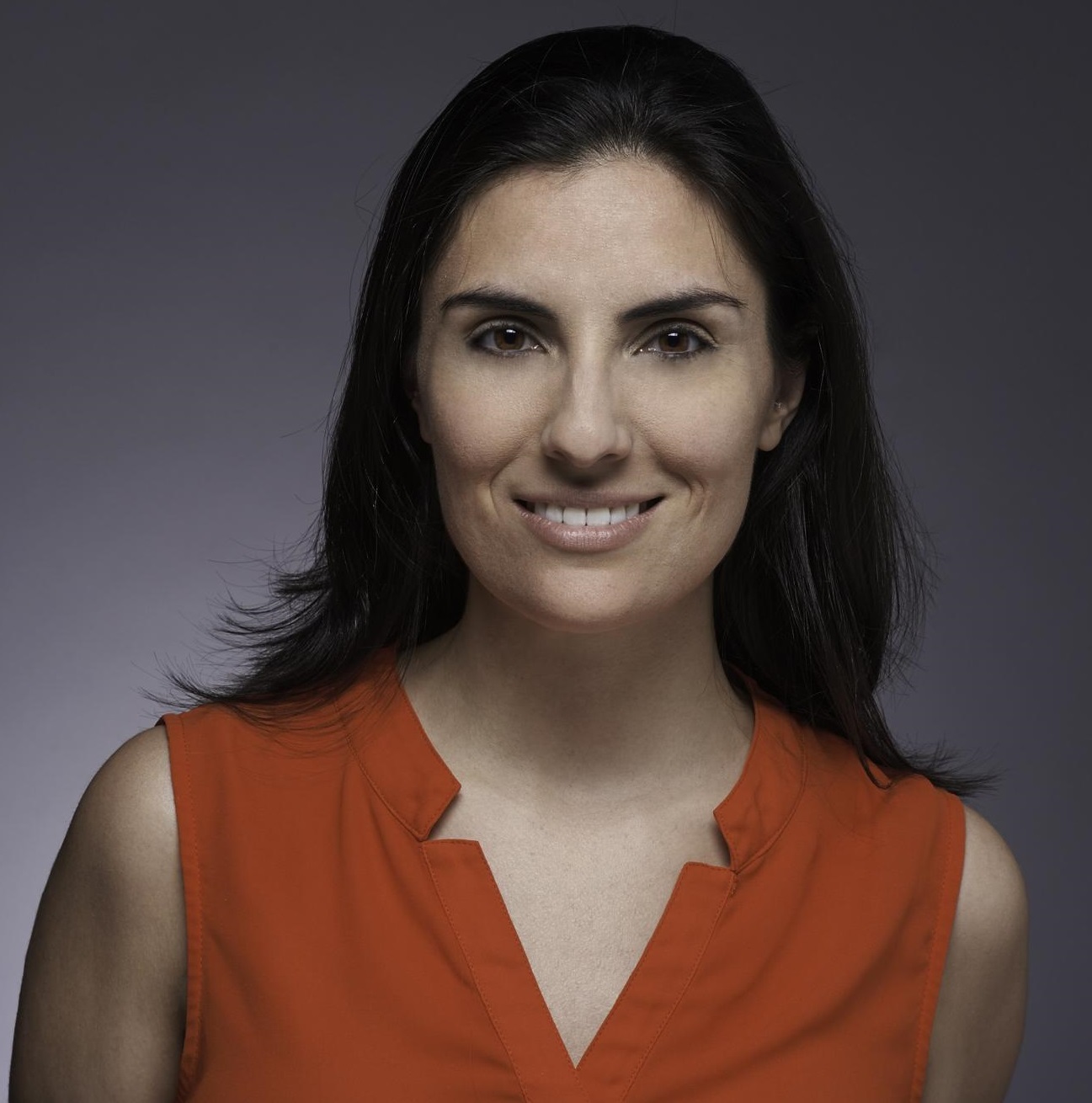
Ruth-Anne-Eatock.jpeg

Dr. Ruth Anne Eatock is a professor of neurobiology and the dean of Faculty Affairs for the Biological Sciences Division at the University of Chicago. She trained at McGill, Caltech, the Massachusetts Eye and Ear Infirmary, and MIT, and has held academic positions in otolaryngology and neuroscience departments at University of Rochester, Baylor College of Medicine, and Harvard. She has experience mentoring students, fellows and clinical scientists in sensory processing by the inner ear, reviewing federal and private grant applications, editing and reviewing research papers, and organizing hearing research meetings.  These experiences have given her a broad appreciation of the progress and goals driving our diverse hearing research community.

Dr. Eatock notes: “My first independent grant was a Deafness Research Grant (now known as Emerging Research Grants), so I am well aware of the importance of such seed funding in helping new investigators establish themselves and advance hearing research.”

HHF is excited to have Drs. Bob Shannon and Ruth Anne Eatock as new members of our Board of Directors and we look forward to their contributions toward HHF’s mission. Please join us in giving them both a warm welcome!


Print Friendly and PDF

BLOG ARCHIVE

AudiologyNow! 2017

By Kathleen Wallace

audiology-now.png

The American Academy of Audiology’s (AAA) annual conference, AudiologyNow!, took place in the Indianapolis Convention Center in early April. Although four days of lectures addressed nearly every aspect of the audiological scope of practice, one overarching theme emerged this year: How will the field of audiology evolve from here?

This past year has posed various disruptions to the field of audiology, such as how over-the-counter hearing aid legislation will change delivery of services, how the continued interest in personal sound amplification products (PSAPs, also called “hearables”) will guide consumer choice, and how to improve evaluations and interventions to best serve individuals with hearing loss. These questions, along with many others, fueled an exciting dialogue among professionals from around the country.

AAA President Ian Windmill, Ph.D., urged members of the academy to embrace disruptions to the field, including the recently introduced legislation for nonprescription hearing aids. Although these changes may appear as an encroachment on the audiological scope of practice, Dr. Windmill urged that these may actually be beneficial to the field.

Dr. Windmill said hearing healthcare has never been more in the public eye or as highly discussed by health officials, politicians, and consumers than in this past year. This increased awareness could lead to the prioritization of hearing health, as consumers grow more cognizant of the repercussions of hearing loss. Furthermore, the introduction of hearing solutions at various price points and technology levels may improve accessibility. If audiologists were to embrace these alternatives to intervention, they will successfully evolve with the field while simultaneously demonstrating to consumers their dedication to patient-centered care.

This sentiment was echoed throughout the conference’s sessions. Additionally, multiple lectures discussed how audiologists could improve delivery of patient-centered care by improving counseling skills, utilization of self-assessments, and consumer education to shift the locus of control from care provider to joint decision-making between the consumer and the hearing provider.

Lastly, leading professionals in the field encouraged a return to the audiologists’ roots as rehabilitative professionals. In the years since the audiological scope of practice expanded to include the ability to dispense hearing aids, audiologists have slowly shifted their focus from providing rehabilitative services to a device-driven service centered on hearing aids. However, the delivery of unprecedented auditory rehabilitation to foster successful communication strategies will enable our profession to succeed in the face of the many disruptions to hearing technology.

AAA’s willingness to acknowledge the challenges facing hearing healthcare is very promising to its successful evolution as a field. Although the field of audiology is currently experiencing some growing pains, many hearing healthcare professionals are embracing this opportunity to rethink the delivery of care and how to improve patient satisfaction by challenging the status quo.

Print Friendly and PDF

BLOG ARCHIVE

High-Tech Hope for the Hard of Hearing

"In 2011, the Hearing Health Foundation based in New York, created the Hearing Restoration Project, a consortium of fourteen scientists who agreed to work together toward that goal, partly with funding from the foundation. One of the originators of the project, Edwin Rubel, who was a co-discoverer of hair-cell regrowth in chickens, told me, “It’s potentially the best thing that ever happened, because it really does bring together a lot of different kinds of expertise.”

Hearing Health Foundation's work toward finding better therapies and cures for hearing loss and tinnitus was featured in the April 3, 2017 Issue of T High-Tech Hope for the Hard of Hearing he New Yorker Magazine. Read the article here.

Print Friendly and PDF

BLOG ARCHIVE

Our 2016 Annual Report Is Now Available!

By Frankie Huang

Hearing Health Foundation (HHF) is happy to announce that its 2016 annual report is now available. The report is an in-depth review of our activities, events, and achievements for fiscal year 2016. We are very proud of top marks from top charity-rating agencies and even more proud our audited financial statements.

We are fortunate to have such generous supporters who raised funds to further HHF’s mission of prevention, education, and research. Check out our supporters' creative and unique fundraisers; if you feel inspired and would like to organize an event of your own, please contact us at development@hhf.org.

In 2016, the Hearing Restoration Project (HRP) has made significant strides, bringing us closer to finding a cure for hearing loss and tinnitus. Here are just two of the HRP’s discoveries:

  • Successfully disrupted gene expression in the adult mouse cochlea, including capturing high-quality images—necessary for testing genes in regeneration.
     

  • Confirmed that the “DTR mouse” is an excellent platform for studying ways to stimulate hair cell regeneration in the mammalian inner ear.

HHF awarded nine Emerging Research Grants (ERGs) to early-career scientists who are pursuing projects in the areas of Central Auditory Processing Disorder (CAPD), Hyperacusis, Ménière's disease, Stria, and Tinnitus. Through ERG, we hope to uncover better treatment options and deeper understanding of these disorders.

Last but certainly not least, we want to express our gratitude and appreciation for our many donors; because of their support, we were able to continue with our important work. To see your name on our next donors’ list, we gladly welcome and appreciate your gift in any amount made by Sept. 30, 2017.

Print Friendly and PDF

BLOG ARCHIVE

Urgent Call to Action: Proposed Cuts to Hearing Research

By Nadine Dehgan, Elizabeth Keithley, Ph.D., and Peter Barr-Gillespie, Ph.D.

Hearing Health Foundation (HHF) is deeply concerned to learn the Trump administration has proposed an 18% cut to the budget for the National Institutes of Health (NIH).

Such a cut would be devastating for all medical research - including hearing research. As an advocate for the millions of Americans who have hearing loss we are especially troubled.

A drastic decrease to the funding of hearing research would disrupt the efforts of the many hearing researchers who dedicate their lives to finding cures and treatments for hearing loss, tinnitus and balance disorders.

HHF and the NIH are partners in funding research. HHF’s two research programs—the Emerging Research Grants and the Hearing Restoration Project—both rely on NIH support. HHF's funding alone cannot support these labs.

Private funding of hearing research is dwarfed by NIH support, and these proposed cuts could harm the research program of each and every hearing research lab, including those supported by the HHF.

As people with hearing loss, parents of those with hearing loss, children of those with hearing loss and as the leadership of the Hearing Health Foundation we ask your support. Financial support is always needed and welcome - but in this case we are specifically asking for you to contact your representatives to let them know that you oppose cuts to the NIH (and in fact support increases to the NIH’s budget).

If you are passionate about funding the research that will lead to cures for hearing loss and balance disorders, now is the time to act.

Please join us in contacting your Senators and House Representative's offices today.

With our sincere thanks,
Nadine Dehgan | CEO of HHF
Elizabeth Keithley | Chair of the Board
Peter Barr-Gillespie | HRP Scientific Director

Print Friendly and PDF

BLOG ARCHIVE

HHF Welcomes Two New Board Members

By Nadine Dehgan

Hearing Health Foundation (HHF) is thrilled to welcome two new board members, Jason Frank and Sophia Boccard. Their unwavering dedication to furthering research and awareness of hearing loss and its associated disorders make Jason and Sophia the perfect addition to our leadership team.

Jason Frank is a Vice President/Assistant General Counsel of JPMorgan & Co. in New York City. Jason and his wife Jenny delved into the world of hearing loss after their son was diagnosed with bilateral, mild to moderate sensorineural hearing loss. When looking for resources, Jason says, “We found HHF and the Hearing Restoration Project and knew we wanted to to get involved…. It has been over five years and, while our son is doing wonderfully thanks to early intervention and access to hearing aids since he was 8 weeks old, we remain committed to spreading awareness for hearing loss and finding a cure. I am extremely excited about joining the National Board and becoming more intimately involved with HHF and its cause.”

Sophia Boccard is a digital marketing strategist in the hospitality industry with over a decade of marketing experience in the entertainment industry. “As someone who was born with moderate to severe hearing loss, I've always accepted the loss of hearing as a part of who I am. After being diagnosed with Usher syndrome type 2a in 2012, I realized that a cure for both hearing and vision was something I needed to fight for,” Sophia says. HHF looks forward to working with Sophia to share her experience living with Usher syndrome to raise awareness and find better therapies and cures.

HHF is excited to have Jason and Sophia as new board members and we look forward to their contributions to HHF’s mission. Please join us in giving them both a warm welcome!

Print Friendly and PDF

BLOG ARCHIVE

HHF Named Twice in Consumer Reports

Hearing Health Foundation is absolutely thrilled to be named—twice—in Consumer Reports’ “Best Charities for Your Donation,” published Dec. 14, 2016.

The article offers tips for finding a charity that, in its words, “really puts your money to work.” It reviewed the detailed process by which charity rating organizations Charity Watch, Charity Navigator, and BBB Wise Giving Alliance assess charities.

“Collectively, these groups evaluate thousands of nonprofit organizations based on how they collect and spend their money, how transparent they are to the public, and how well they’re governed,” the story says.

Using the watchdog reports, Consumer Reports listed up to five of the highest- and lowest-rated charities in 11 categories.

Hearing Health Foundation was cited as one of the nation’s five best charities—and the only one cited twice, in the categories “Blind and Impaired Hearing” and “Health.”

I like to say Hearing Health Foundation is “small yet mighty”—so it is very gratifying to get confirmation of our fiscal health from a respected publication like Consumer Reports.

During this season of giving, we are grateful for your gifts that enable us to further our mission of hearing protection, education, and research.

If you haven’t yet, and are able to give, please consider an end-of-year donation knowing that all of us at Hearing Health Foundation—staff, scientists, board members, and other advisers—are working tirelessly to make your dollars count.

Print Friendly and PDF

BLOG ARCHIVE

We're Partnering With The Mighty!

By Benjamin Sherman

We're thrilled to announce a new partnership that will bring Hearing Health Foundation’s (HHF) resources in front of The Mighty's wide-reaching readership. HHF is excited to share with you our partner page on The Mighty and our logo will appear next to many stories on the site.

For those who don’t know, The Mighty is a story-based health community focused on improving the lives of people facing disease, disorder, mental illness and disability. More than half of Americans are facing serious health conditions or medical issues. They want more than information. They want to be inspired. The Mighty publishes real stories about real people facing real challenges.

HHF is dedicated to helping people with hearing loss, tinnitus, and other hearing conditions live their lives to the fullest. With this partnership, we'll be able to help even more people.

Interested in partnering with Hearing Health Foundation?

Learn more here: http://hearinghealthfoundation.org/become-partner

Print Friendly and PDF

BLOG ARCHIVE

HHF's Field Trip to NIDCD's New Research Center

By Nadine Dehgan

Nadine Dehgan, HHF's CEO

Nadine Dehgan, HHF's CEO

This August, I had the pleasure of visiting the National Institutes of Health (NIH) and attended a laboratory tour hosted by the National Institute on Deafness and Other Communication Disorders (NIDCD), which is one of the 27 Institutes and Centers that makes up the NIH. Organized by the Friends of the Congressional Hearing Health Caucus (FCHHC) and in the company of a select group of individuals including Congressional staff members, other hearing organizations, and NIH staff, we first met in the Porter Neuroscience Research Center in Bethesda, Maryland. The research center’s name honors former U.S. House of Representative member John Edward Porter, a huge supporter of biomedical research. He was largely responsible for leading the charge to double the NIH budget from 2003-2011. Rep. Porter was also the vice chairman of the Foundation for the NIH, and still holds many other public service roles.

James Battey, Jr., M.D., Ph.D., the NIDCD Director, reviewed NIDCD operations and showed how the research funding supports seven mission areas in hearing, balance, taste, smell, voice, speech, and language.  He also mentioned the recently released National Academy of Sciences (NAS) Hearing Health Care Consensus Report (whose recommendations HHF supports). Dr. Battey was warm and approachable and accompanied the visitors throughout the tour answering questions.

Andrew Griffith, M.D., Ph.D., the NIDCD Scientific Director and Chief of the Molecular Biology and Genetics Section, provided us with a detailed explanation of the NIDCD’s intramural research program.  “Intramural” refers to the internal research conducted on the NIH campus and usually is only 10% of an Institute’s entire budget.  Dr. Griffith underscored the benefits of this unique funding environment that allows the investigators to conduct both long-term and high-risk, high-reward science that would otherwise be difficult to undertake in academia and private industry.

The NIDCD is one of ten neuroscience Institutes with labs housed in the newly constructed Porter Neuroscience Building.  Prior to the building’s construction, these labs were spread across eight separate locations. Now, the labs are organized by scientific research topic to allow researchers to share resources and allow for easy collaboration.  Research includes basic and clinical neuroscience research, including investigating Parkinson’s and Alzheimer’s. (See the detailed listof topic areas that comprise more than 800 scientists in 85 labs.)

The facilities are bright, state-of-the-art, and energy efficient. It is the most energy-efficient science lab in the entire world! It uses solar panels, geothermal wells, and has a special chilled beam air-conditioning system that requires a fraction of energy regular systems use.  At 50,000 sq. ft, it is also one of the largest research buildings in the world dedicated to studying the brain.

Doris Wu, Ph.D.(Slide images from Bissonnette & Fekete, 1996; Morsli et al, 1998)

Doris Wu, Ph.D.(Slide images from Bissonnette & Fekete, 1996; Morsli et al, 1998)

The tour took us to the labs of Doris Wu, Ph.D., Chief of the Sensory Cell Regeneration and Development Section, who discussed her studies of the development of the inner ear in mice and chickens, in particular her work to identify the molecular processes involved. Dr. Wu is also a member of HHF’s Scientific Advisory Board, which provides oversight and guidance to our Hearing Restoration Project (HRP) consortium of researchers.

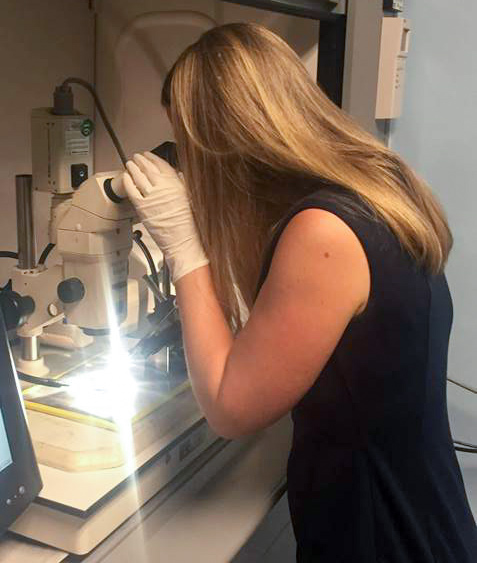
She paint-filled an embryonic mouse inner ear and let us view it. I put on a pair of gloves and saw how tiny it was in the petri dish (less than 2mm in length) and then what it looked like magnified. As the day went on, I grew more and more impressed with the technical aspects of scientific hearing research.


In Dr. Griffith's lab, he discussed how his team helps those with genetic hearing loss. By identifying specific genes that are mutated in families, in certain cases, he can develop personalized therapies to address the cause of the hearing loss and prevent it.  Dr. Griffith also discussed exciting research from another NIDCD lab that is using CRISPR/Cas9 genome editing technology to create and test therapies. This amazing editing tool has been touted as being faster, cheaper, and more accurate than previous gene editing technologies; HRP researcher John Brigande, Ph.D., is also using it in his current HRP project. 

It was a super impressive tour—the scientists and administration are all friendly, smart, and most importantly dedicated to advancing hearing science. It’s so refreshing to meet so many people who are committed to the advancement of humankind and to uncovering discoveries that will lead to improvements in the quality of life and health of so many.
 
HHF is very happy to partner with the NIDCD and its research goals, which Dr. Battey wrote about in the Summer 2016 issue of Hearing Health magazine. We are also very proud the majority of early-career scientists we support through our Emerging Research Grants program go on to earn additional funding from the NIH, underscoring the importance of the innovative research both our institutions believe is worthy.

Congressional staff and hearing advocates at FCHHC’s 2016 NIDCD tour

Congressional staff and hearing advocates at FCHHC’s 2016 NIDCD tour

Print Friendly and PDF

BLOG ARCHIVE

Summers With HHF Are Well Spent

By Morgan Leppla

Last December, I realized I would need something to do for the summer after my freshman year of college. I knew I wanted to end up in a city and work with nonprofits, so I put out feelers for internships in San Francisco, D.C., and New York City.

A friend of Hearing Health Foundation (HHF) put me in touch with Laura Friedman, HHF’s communications and programs manager, who I interviewed with earlier this year. It went well (clearly, I’m here), and to my delight, on the same phone call she offered me an internship at HHF.

I had a few offers from other organizations but Laura told me that HHF would be dedicated to ensuring I would have a fruitful internship experience. And on the last day, I can corroborate her initial promise.

Before I started my internship, my knowledge of hearing health was both sparse and vague. I knew little about research conducted on hearing loss and related disorders, and I assumed my internship would be spent monitoring HHF’s Twitter and Facebook accounts and photocopying, while occasionally eavesdropping in on conversations otherwise too important for my ears.

After 12 weeks of actually writing blogs (many thanks to people reading them!) and, for the Fall issue, magazine articles, plus researching statistics and talking and working with people who care about HHF’s mission, I now have a plethora of hearing-related facts I intend to regale classmates with at (not-too-loud) parties for years to come.

For those who don’t know, HHF’s full-time staff includes four people, with three part-time freelancers—so while they are small, this is a talented and efficient group! The CEO, Nadine Dehgan, will stuff appeal envelopes with me and anyone else in a staff meeting just to get it done. HHF employees may not be the scientists discovering breakthroughs, but the energy, labor, and hours behind collecting enough dollars to sustain the organization and fund life-changing grants surely accumulate into something with a recognizably valuable shape. To witness such unwavering commitment is striking.

I am not trying to hide my partiality for HHF, I think that much is clear. It’s true Laura has tried to infuse my experience with purpose, so I am of course grateful for that. And if you’ve been keeping track, I’ve hit a few of those buzzwords (unwavering, life-changing, meaningful, etc.) you might find usually overstate the point or are overused to meaninglessness, but this time I don’t think I’ve fallen into that trap.

It’s not that often that you (that is, people who consume media online) are allowed to peer into an organization’s foundation, for the cloak of professionalism is mighty. But hopefully I’ve brought to your attention the quality and dedication I have witnessed firsthand today and every day here at HHF.  

I leave my summer internship with appreciation and admiration and the hope that HHF will prosper for years to come!

And, of course, if it within your bandwidth, please donate to make sure this happens!

Print Friendly and PDF

BLOG ARCHIVE