
By Brent Burgess
There’s a history of hearing loss on both sides of my family. My first experience was with my grandmother. She lived in a care home in Santa Barbara where I would visit her a couple of times a year. In her early 90s (she lived until just shy of her 100th birthday) we would try writing messages on a notepad to communicate. She seemed to read them and try to answer back with a loving smile and some nods.
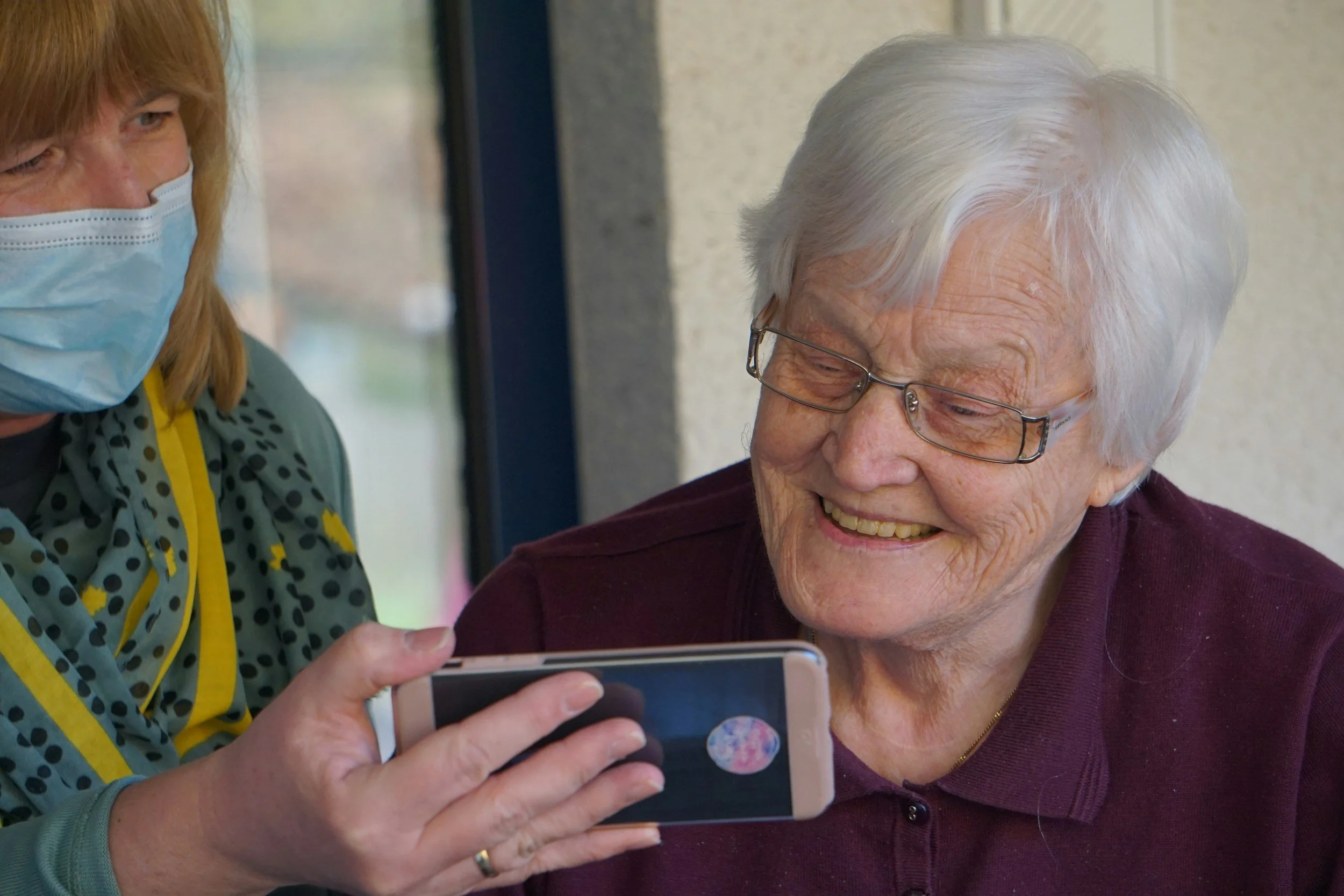
Credit: @knurpselknie/Unsplash
As she had lost her hearing over a number of years there were efforts to teach her to lipread, but it never really stuck, and assistive hearing technology at the time wasn’t enough to help. Over the next decade the notes turned into talking loudly, hoping she would understand something, receiving the same familiar smiles and nods (doubtless due to seeing her grandson on one of his occasional visits rather than from comprehension).
By the time she was in her late 90s all pretense of communication had vanished and handholding, gestures, and smiles were the main forms of communication. Her isolation was complete but her smiles and warmth were ever present.
When my mother started to lose her hearing it was a different experience. My mother had raised me and I was used to her hearing everything perfectly and having smooth, natural turn-taking conversations. Her hearing started to falter in her late 60s and she tried to cover it up and would just ask me to repeat myself.
Grasping that this person who taught me to speak and converse couldn’t hear me clearly was difficult, especially with the fog of denial she created. I would get frustrated and raise my voice, to which she would say, “You don’t need to yell at me.”
But I would say things when her back was turned and she wouldn’t respond. Yes, Mom, I did.
The main thread during these interactions was a feeling of frustration. Frustration for my grandmother not being able to understand, and frustration with my mom that she maybe wasn’t trying enough.
In the years since then I have realized that the frustration was more born from the feeling of sadness from shouting at a loved one. With my grandmother it was a raised voice to a kindly old woman whom I saw only occasionally. My youth and inexperience told me that it was okay to shout at her, and the back and forth communication was minimal, and there wasn’t very much of it, mostly miming.
With my mother—well, here was a person who raised me and I was shouting at her and getting frustrated at this woman who once heard just fine because she was having trouble holding a conversation due to hearing loss. Shouting at your mother is a terrible thing.
My dad is now the target of my shouting. He is in his 80s and living in a retirement community. His hearing has gotten progressively worse, resulting in a cycle of finding stronger and stronger hearing aids. Between upgrades we would be reduced to slow shouting at him (he would return the favor).
Once again I was in a situation where I was shouting at a family member. This time I was going to do something about it. I’ve been a software developer for many years, so I made a conversation aid app that I named dicto that can transcribe one side of a conversation. I put it on the app store so I could get it onto his iPad.
I was excited to share this marvel of communication with him… but lo and behold, he upgraded his hearing aids, so I didn’t need the help this time around. When his next upgrade cycle approaches, I’ll be ready.
The National Institutes of Health have linked isolation to an increased risk of cognitive decline in older people. Communication tools to help people stay engaged are what I feel is an important area that needs additional focus.
In addition to helping the hard of hearing communicate more, better tools will lessen the impact on families and caregivers who are moving through the stages of hearing loss, a neglected thread that increases the isolation. A person becomes hard of hearing, caregivers and families start raising their voices, no one likes shouting at another person, the conversations decline.
More communication tools are needed to meet the specific needs of people experiencing and dealing with hearing loss, while respecting their privacy through their hearing loss journey. This is why I have turned the app I initially uploaded in a rush to help talk to my dad into something I hope will help more families get back into the habit of talking to their loved ones.
It’s time for less shouting, more talking.

U.K. resident Brent Burgess is the founder of BHB Technologies, makers of dicto.
The Latest Blog Posts




A person becomes hard of hearing, caregivers and families start raising their voices, no one likes shouting at another person, the conversations decline.