Central Auditory Processing Disorder

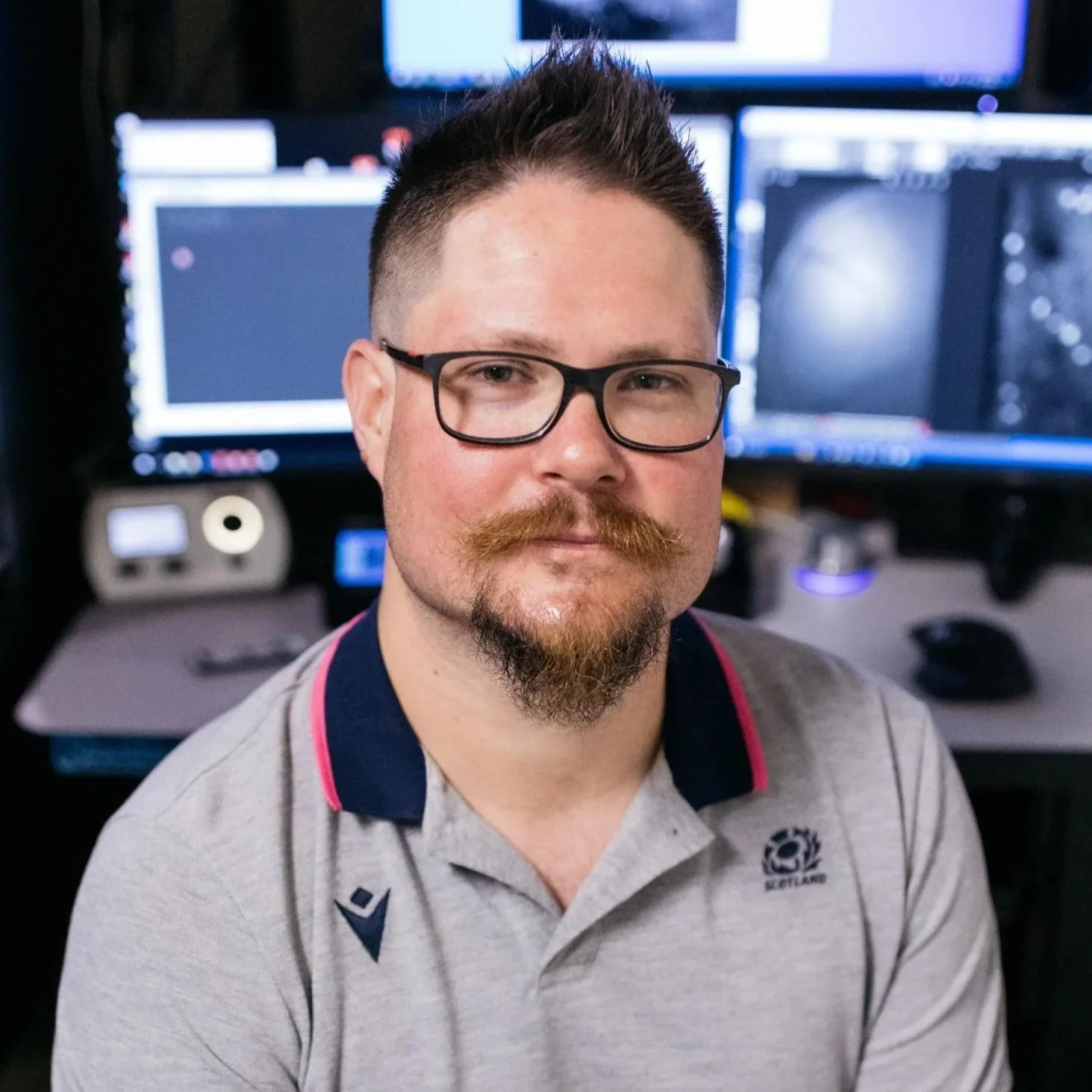
Joseph Toscano, Ph.D.

Joseph Toscano, Ph.D.

Villanova University
Cortical EEG measure of speech sound encoding for hearing assessment

Accurate speech recognition depends on fine-grained acoustic cues in the speech signal. Deficits in how these cues are processed may be informative for detecting hearing loss, and particularly for identifying auditory neuropathy, a problem with the way the brain processes sounds. Diagnosing auditory neuropathy in newborns and infants is particularly challenging, as it is often difficult to distinguish it from sensorineural hearing loss using current measurement approaches. Speech tests that measure cortical responses may allow us to overcome this problem. The current project uses electroencephalogram (EEG) techniques to measure brain responses to specific acoustic cues in speech (e.g., the difference between “d” and “t”). These data will be compared with listeners’ speech recognition accuracy, pure-tone audiograms, and self-reported hearing difficulty to determine how these responses vary as a function of hearing status and may be used to detect early stages of hearing loss.

Kenneth Vaden, Ph.D.

Kenneth Vaden, Ph.D.

Medical University of South Carolina
Adaptive control of auditory representations in listeners with central auditory processing disorder

Central Auditory Processing Disorder (CAPD) is typically defined as impairment in the ability to listen and use auditory information because of atypical function within the central auditory system. The current study uses neuroimaging to characterize CAPD in older adults whose impaired auditory processing abilities could be driven by cognitive and hearing-related declines, in addition to differences in central auditory nervous system function. Functional neuroimaging experiments will be used to test the hypothesis that older adults with CAPD fail to benefit from top-down enhancement of auditory cortex representations for speech. In particular, activation of the adaptive control system in cingulo-opercular cortex is predicted to enhance speech representations in auditory cortex for normal listeners, but not to the same extent for older adults with CAPD. This project aims to develop methods to assess the quality of speech representations based on brain activity and characterize top-down control systems that interact with auditory cortex. The results of this study will improve our understanding of a specific top-down control mechanism, and examine when and how adaptive control enhances speech recognition for people with CAPD.

Ross S. Williamson, Ph.D.

Ross S. Williamson, Ph.D.

University of Pittsburgh

Active corticofugal control of sound localization in noise

Locating sounds in a noisy environment is essential for everyday communication, and it is a task we accomplish with our bodies as much as with our ears. Listeners naturally turn their heads and orient toward a sound source, and these movements change the signal arriving at each ear from moment to moment, giving the brain additional information about where the sound originated. Exposure to loud noise permanently damages the connections between the inner ear and the auditory nerve, degrading the fine detail required to separate competing sound sources. The result is that many people report considerable difficulty following a conversation in a crowded room despite a normal audiogram, a core complaint in central auditory processing disorder. Almost everything known about how the brain computes sound location, however, comes from experiments in which the head is held still, eliminating the very movements listeners rely on in natural settings.

This project asks how noise-induced hearing loss disrupts active listening, and which neural circuit is responsible. We have developed a task in which mice move freely around an arena surrounded by speakers, searching for a target sound while a competing distractor sound plays simultaneously. Video tracking allows us to measure the strategies they use: pausing to scan the head from side to side, correcting an initial trajectory with a sharp turn, or spiraling gradually toward the target. Comparing these strategies before and after noise exposure will reveal whether noise damage degrades not only what an animal hears, but how it searches. We will then examine the descending pathway connecting auditory cortex, which identifies the features of a sound, to the superior colliculus, a midbrain structure containing a map of space that issues commands to orient the head and body. We hypothesize that this pathway converts sound features into a direction to turn, and that noise damage dysregulates it. We will record from the pathway during behavior, suppress it in normal-hearing mice to determine whether this reproduces the deficit, and activate it in noise-exposed mice to determine whether the deficit can be reversed.

Daniel Winkowski, Ph.D.

Daniel Winkowski, Ph.D.

University of Maryland
Noise trauma induced reorganization of the auditory cortex

Tinnitus (‘ringing in the ears’) is a debilitating condition that is experienced by millions of people worldwide. Tinnitus is frequently seen after noise trauma to the ear. One of the core hypotheses of the etiology of tinnitus is that the percept of ‘ringing in the ears’ is generated by changes in patterns of neural activity in brain circuits at many levels of the auditory pathway. One brain area thought to be at least partly responsible for the tinnitus percept is the primary auditory cortex (A1). However, the precise changes in neural activity within local neuron populations have not been investigated directly. The goal of the proposed project is to probe how noise trauma affects both large- and local-scale organization of A1 brain circuits with unprecedented spatial and cellular resolution in an animal model of tinnitus. Proposed experiments will use state-of-the-art optical imaging approaches to investigate how entire auditory cortical areas (large-scale) and auditory cortical microcircuits (local-scale) are disrupted by noise trauma. A multi-level understanding of circuit dynamics underlying tinnitus (from single neurons to complete representations) will enhance our understanding of precisely how cortical circuits remodel after noise trauma and, in turn, develop and identify strategies by which this debilitating condition can be repaired.