
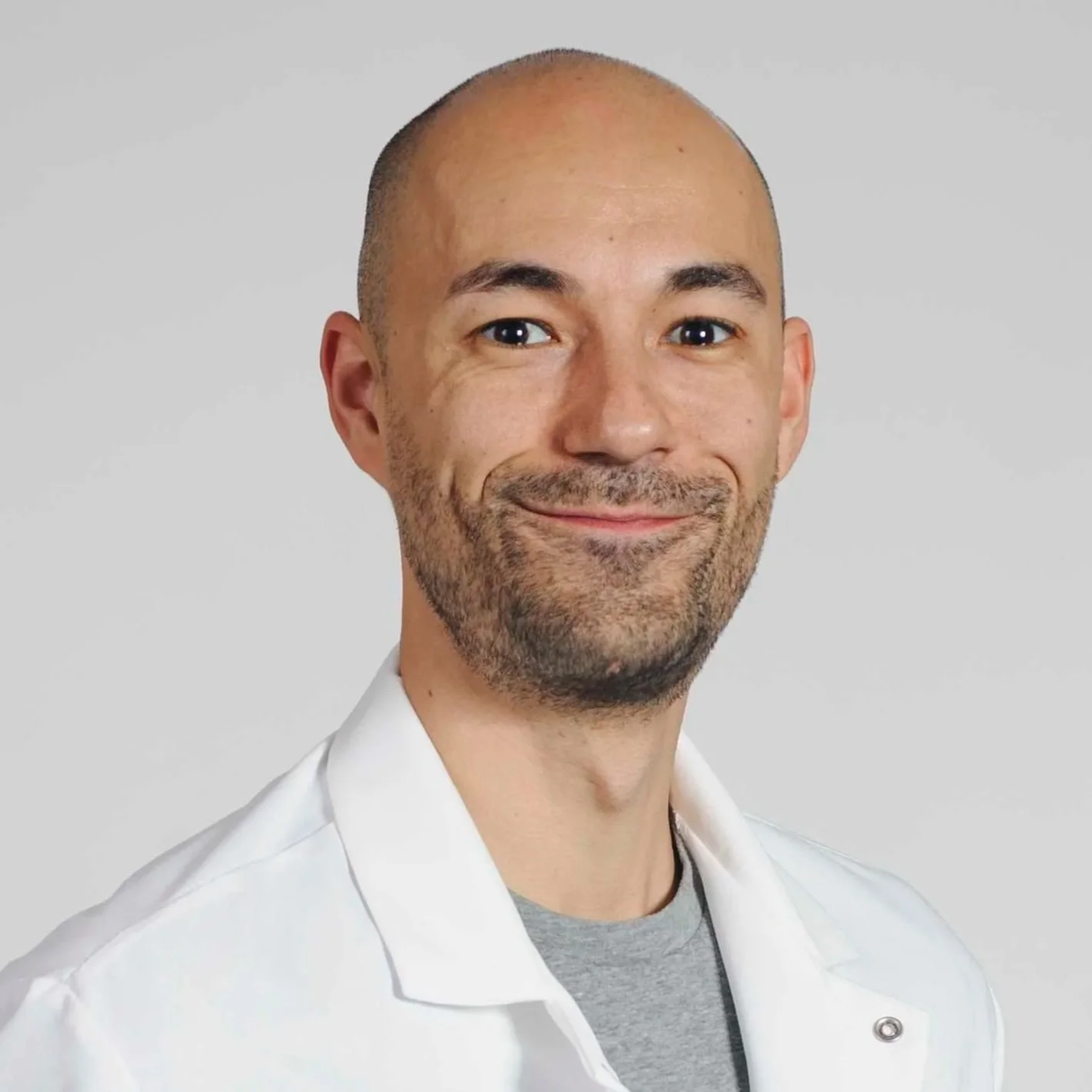
Paul Gratias, Ph.D.
Mass Eye and Ear
Meet the Researcher
Paul Gratias, Ph.D., is a postdoctoral fellow in the laboratory of Artur Indzhykulian, M.D., Ph.D., at the Eaton-Peabody Laboratories of Mass Eye and Ear and Harvard Medical School in Boston. He received a doctorate in auditory neuroscience at the University of Montpellier in France, where he studied how impulse noise, such as gunshots and explosions, damages the inner ear’s sensory hair cells and their synapses with the auditory nerve. His research now focuses on protecting hearing from noise and ototoxic drugs, and on restoring it through gene therapy for genetic forms of deafness such as Usher syndrome and otoferlin deficiency. Gratias is a 2027 recipient of an Elizabeth M. Keithley, Ph.D. Early Stage Investigator Award, generously funded by Zellis Family Foundation.
The Research
Efferent function and noise vulnerability in otoferlin-deficient and gene-therapy-treated cochlea
Some children are born deaf because they carry a disease-causing variant in both copies of a single gene, OTOF, which encodes the protein otoferlin. Without functional otoferlin, the sensory hair cells of their inner ear still detect sound. But they cannot release the chemical messenger that carries the signal across the synapse toward the brain.
Using gene therapy, a healthy copy of the OTOF gene can be delivered into the inner ear to restore this release. Children born deaf can then begin to hear and to develop speech. This is the first form of genetic deafness to be treated with gene therapy.
But by the time children receive the treatment, their ears have already been developing in silence for years. Sound is not only what the ear detects. During development, the activity it drives also shapes the connections between ear and brain. The synapses that the therapy relies on are normally refined by the activity that flows through them, first spontaneous, then driven by sound. In mice lacking otoferlin, this activity is missing. There are fewer of these synapses, and they look abnormal. These connections are now asked to carry sound for a lifetime, in a world that is frequently loud.
In response to loud sound, a healthy ear reduces its own amplification. Activity traveling up to the brain triggers a reflex back to the ear (the medial olivocochlear reflex) that turns this amplification down. This protects the hair cells and these same synapses from damage. The reflex is set in motion by sound, so an ear deaf from birth has never used it. We do not know whether it was ever formed, or whether it can still be engaged when the first sound reaches the brain later in life.
Gene therapy switches the sound signal on for the first time in the ear’s life. Working in mice that, like these children, lack functional otoferlin, we will measure this reflex before and after treatment. We will also examine the synapses as they begin to function, and determine how a treated ear withstands a controlled period of loud sound. Together, these experiments will show whether an ear that hears for the first time following gene therapy is also built to last, both robust enough to withstand noise and able to protect itself from it.
Long-term goal: In the past few years, gene therapy for otoferlin (OTOF) deficiency has made history. Children born deaf have begun to hear for the first time, and in April 2026 the U.S. Food and Drug Administration approved the first gene therapy for deafness. As families and clinicians look ahead, a new question arises: Will this new hearing last a lifetime? My long-term goal is to understand what makes restored hearing durable, and to turn that knowledge into practical guidance for patients. Today, gene therapy is judged mainly by whether a child can detect sound. I also want to know whether the treated ear is protected. Healthy ears have a built-in “volume control,” a reflex from the brainstem that turns down the inner ear's amplifier when sounds get loud. Because this reflex is triggered by signals the ear sends to the brain, it is likely silent in ears born deaf. I want to find out whether it switches on after gene therapy, and how well the newly activated synapses between sensory cells and the auditory nerve withstand loud sound.
This work could help patients at three stages:
Before treatment: Gene therapy can only help ears whose inner-ear amplifier (the outer hair cells) still works. Yet many children with OTOF deafness gradually lose this function. Although these children cannot hear, their outer hair cells still vibrate with every sound, loud ones included. Because no signal reaches the brain, the protective reflex may never be triggered, and damage could build up unnoticed. If our results confirm this vulnerability, simple measures could help children waiting for gene therapy preserve the cells they need to qualify for treatment. These include limiting exposure to loud environments or using ear protection.
During follow-up: Once a child has been treated, clinicians will need to know whether the ear's volume-control reflex has come online. A simple test can tell. A healthy inner ear gives off faint echoes that a tiny microphone in the ear canal can pick up. A gentle noise in the other ear triggers the reflex, which turns these echoes down. This quick, painless test is available in audiology clinics, and our work will help determine whether it can show how fully the ear has recovered.
After treatment: Some treated children may need hearing aids, which deliver amplified sound to an ear that may still lack its reflex. Our findings could guide counseling on noise exposure, hearing aid use, and long-term monitoring, so that these children keep the benefit of gene therapy. The same reflex is also thought to help us follow speech in noisy places. So restoring it could matter for everyday listening as well as for protection.
The central question of this project is whether ears that begin to hear following gene therapy can also protect themselves from loud sound. Beyond OTOF, gene therapies for other forms of genetic deafness are now in development, and they will face the same question of whether the new hearing lasts. The tools and guidance we develop here could help answer it for these patients too.
The Project’s Genesis
During my Ph.D. at the University of Montpellier in France, I studied how loud sounds damage the synapses between the inner ear’s sensory hair cells and the auditory nerve. These synapses are often considered the most fragile part of the ear, and they became my specialty. After graduating, I moved to Boston to join the lab of Artur Indzhykulian, M.D., Ph.D., at Eaton-Peabody Laboratories as a postdoctoral fellow, because I wanted to help develop new gene therapies.
Since I had worked on these synapses before, Drs. Kameron Clayton and Daniel Polley invited me to join one of their projects. Their team was using gene therapy to restore hearing in deaf mice that lack otoferlin, a protein essential to hair cell synapses. My role was to look at what the therapy did inside the inner ear. I prepared tissue samples and imaged them under the microscope. I checked that the therapeutic virus had reached the hair cells, and I assessed the health of their synapses.
While imaging these ears, I noticed something that surprised me. The treated mice could detect sounds as well as normal-hearing mice, yet they had only about half as many synapses. Their synapses were also unusually large. Treatment restored their size only partly, and their number not at all. I thought this could be my own project. I felt I could do much more with these ears than count synapses. Because of my Ph.D. work on noise, I first wondered how well these synapses would resist loud sounds, like those we encounter in everyday life.
A second observation came from patients. Reading the medical literature and talking with people in biotech developing the OTOF gene therapy, I realized that many children with this form of deafness gradually lose their otoacoustic emissions. These faint signals reflect the activity of the outer hair cells, which amplify sound inside the ear. This puzzled me. So far, otoferlin is known mainly for its role at the synapses of the inner hair cells, and we do not know whether it plays any role in the outer hair cells. There is no obvious reason why a lack of functional otoferlin should damage these cells. Yet gene therapy can only help ears whose outer hair cells still work. So something damages these ears even though they cannot hear, and I wanted to find out what.
My hypothesis is that the ears are missing a protective reflex. In a healthy ear, the auditory nerve triggers a reflex that turns down this amplification when sounds get loud. In an ear that has never sent auditory signals to the brain, this reflex may never have been developed or switched on. So after gene therapy, these ears could face loud sounds with fewer synapses, and possibly without their protective reflex.
To test this, I needed a reliable way to measure the reflex. More than 10 years ago, Drs. Polley and Charles Liberman and colleagues at Eaton-Peabody Laboratories (EPL) developed a method to measure it in awake mice. Awake measurements are important because anesthesia is known to weaken the reflex. With this method, I can ask whether ears treated with gene therapy can also protect themselves from loud sounds.
How Things Work
As a child, I always wanted to understand how things work. That curiosity first led me to study ecology and Earth sciences at university. Then I took a course in human physiology and neuroscience. Learning how the body and the brain work hooked me, and I switched my major. After my master’s, I started a Ph.D. on the inner ear in Montpellier.
The moment I knew I would stay in research came early in my Ph.D. A colleague was recording from single auditory nerve fibers, which carry sound signals from the ear toward the brain. He had plugged his oscilloscope into a speaker, so we could hear each nerve impulse as a click. Even in silence, the fiber kept crackling on its own. Then he played tones near the frequency the fiber is most sensitive to. When the sound came on, the crackle turned into a burst of clicks, like fireworks. When the sound stopped, the fiber settled back down. I had read about how the ear talks to the brain, but that day, I heard it.
Hearing loss runs in my family. Several people on my mother’s side have otosclerosis. In this condition, abnormal bone grows around the stapes, the smallest bone in the body. Eventually, the stapes gets stuck and can no longer pass sound to the inner ear. My mother had surgery on both ears and wore hearing aids. My grandfather probably had it too, and with him, we simply had to yell.
When I started my Ph.D., I finally understood what those tiny bones do and what was happening in my family members’ ears. I talked about my mother’s case with surgeons and physicians I met through my work. It became something she and I could discuss together.
I didn't choose to study the ear because of my family. My research focuses on the inner ear, not the middle ear, where otosclerosis happens. But I know my own hearing may decline as I get older. Years of studying noise damage have made me very careful with my ears. At the movies, when a scene gets too loud, I cover my ears with my hands. The people sitting next to me usually give me strange looks.
For my postdoc interview, Dr. Indzhykulian invited me to Boston to visit his lab at EPL. I had prepared a short talk on my Ph.D. work. I expected to give it at a small lab meeting, in front of four or five people. Later that day, he took me to the main auditorium instead. Much of the EPL research community was waiting there. Drs. Liberman and Sharon Kujawa were in the audience. Their work had shown that noise can damage synapses in the inner ear even when standard hearing tests come back normal. This discovery of “hidden hearing loss” had changed our field, and my Ph.D. was built on it. And now I was presenting my own results in front of them. I was nervous, and my English was still pretty rough back then, which did not help. But I took it as a real sign of trust from Artur.
After the talk, the questions and discussions went on for a while. Despite my English, I felt taken seriously by researchers whose papers I had read so many times. Artur had also arranged for me to meet Dr. Liberman one on one. We talked about how to image and analyze my samples, and he asked about my colleagues back in Montpellier. I left that day thinking that EPL was a place where I could grow as a scientist.
Before research, I planned to become a high school biology teacher. I liked the idea of explaining to students how living things work. Then I discovered physiology and neuroscience, and how much I enjoyed doing experiments myself, and my plans changed. I never completely gave up on teaching, though. When I train students and junior colleagues, I teach them how to do an experiment well. But I also make sure to show them the fun and cool things. Looking through a very powerful microscope or watching cells grow in a petri dish still makes me feel like a kid.
To relax, I ride my bike. During the week, I commute along the Charles River. On weekends, I go on longer rides to explore new places around Boston, and I try to push myself a little. I won't be riding the Tour de France anytime soon, but I like the challenge.
As a researcher, I never fully switch off. Experiments and open questions follow me everywhere. My best ideas usually come when I am not looking for them, in the shower or sitting in the sun on my balcony. The bike is the one place where I stop thinking about research. Anyone who has biked in Boston knows you have to stay focused on the road. I learned that quickly, after a few close calls with drivers. During a ride, I forget about synapses and data. I only think about the road ahead. I come back to the lab with a clearer head, and often with a fresh look at a problem I was stuck on the day before.
I love fishing, something I learned from my father. When I first arrived in Boston, I didn't know anyone and had some free time. So I would strap my telescopic rod to my bike and ride around looking for good fishing spots. I usually fish with lures, and I always release what I catch. I have even pulled a few largemouth bass out of the Charles River. It was my way of exploring a new city, and it is still one of my favorite ways to unwind.
In five years, I hope to be leading my own research group. This grant is an important step toward that goal. It lets me build a study of my own and get the results I need to apply for larger, independent funding. I am grateful to HHF and its donors for making this possible.
My lab will focus on getting the most out of inner-ear gene therapy. Restoring hearing is a great first step. I want to make the result as complete and as lasting as possible. That means understanding how well treated ears recover, and whether they remain vulnerable to everyday stresses such as loud sounds and aging. OTOF is only the first of many genes now targeted by gene therapy. The same questions will apply to every one of them.
In 10 years, I would like this work to guide doctors who care for children treated with gene therapy. It could help them decide when to treat, and how to make the newly restored hearing last.