
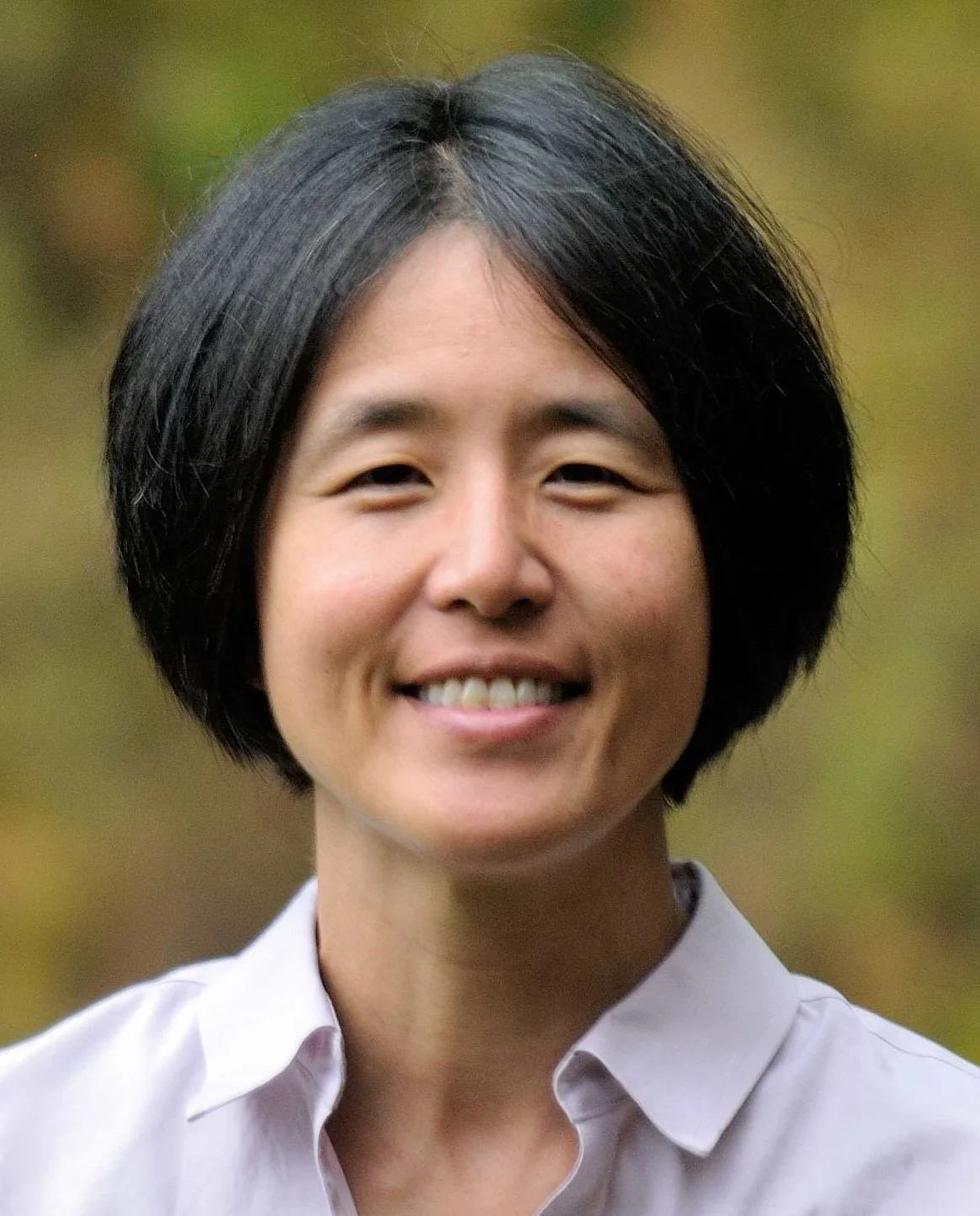
Lina Reiss, Ph.D.
Oregon Health & Science University
Meet the Researcher
Lina Reiss, Ph.D., received her doctorate in biomedical engineering from Johns Hopkins University in 2005, with a focus on neurophysiology of sound localization circuits in the auditory brainstem. She holds a B.S.E. in mechanical engineering from Princeton University. After receiving her Ph.D., she spent five years as a postdoctoral fellow in the area of cochlear implants and psychoacoustics at the University of Iowa. She is a professor in the departments of otolaryngology–head & neck surgery, biomedical engineering, and behavioral neuroscience at the Oregon Health & Science University (OHSU) School of Medicine, as well as on the faculty of OSHU’s Oregon Hearing Research Center. She is a 2027 Emerging Research Grants scientist generously funded by Royal Arch Research Assistance. She was also a 2012–2013 ERG scientist.
The Research
Role of abnormal binaural fusion in central auditory processing disorder
Central auditory processing disorder (CAPD) is a condition in which people with typical hearing have greater than normal difficulty with understanding speech in background noise. One possible mechanism is excessive binaural fusion, the process of combining sounds from both ears into a single, unified percept. In people with hearing loss, excessive binaural fusion was recently shown to be a strong predictor for the ability to understand a target voice in the presence of competing voices—and may also be the mechanism underlying difficulties in people with CAPD. Binaural fusion may also be possible to measure using electrophysiology (EEG), without requiring behavioral responses. This project will 1) investigate whether excessive binaural fusion is the mechanism underlying difficulties in people with CAPD, by comparison of binaural fusion with controls; and 2) develop an EEG measure of binaural fusion, which will allow for diagnosis in young children without requiring behavioral responses.
Long-term goal: The finding of a role of broad binaural fusion in CAPD will be a key step forward for understanding the mechanism and developing targeted treatments for this challenging disorder. In addition, a successful development of an electrophysiological measure of binaural fusion can be used for diagnosis in young children and allow for early intervention and treatment.
The Project’s Genesis
This project idea builds in part on previous work in my lab on binaural fusion, and the idea that excessive binaural fusion could explain difficulties with speech in noise in people with typical hearing, as well as those with hearing loss. However, this project mainly arose due to a collaborative effort with co-PIs Curtis Billings, Tess Koerner, and Angie Garinis. Curtis and Tess bring EEG expertise, and it came up in informal conversations that it would be very useful to come up with an objective EEG measure for binaural fusion. Angie brings additional clinical experience with CAPD and diagnostics to rule out other causes of hearing difficulty, such as auditory neuropathy, which would be critical for rigorous screening of individuals with CAPD. Several weeks brainstorming in remote meetings and pilot testing across sites led to development of a novel stimulus and EEG paradigm with feasibility for this study. We are thrilled to receive the grant and excited to begin the research, which we hope to lay the foundation for a larger future team proposal.
My father was a scientist at Bell Labs in their heyday. That was likely my first inspiration. And my mother's assumption that despite growing up with severe-profound hearing loss, I would someday get a PhD. However, the experience that solidified my interest was a high school summer internship, the Partners in Science Program. I was paired with a professor, Dr. Burke at Seton Hall University, and had the chance to run my own experiments in yeast, specifically pichia angusta. I enjoyed the whole process, from designing the experiment, careful logging of data, creating graphs, and writing a paper. What I remember most vividly is the satisfaction of troubleshooting when the experiment initially did not show significant differences between yeast species. In our meeting, I suggested autoclaving the flasks to eliminate cross-species contamination. This led to clean new data which showed the hypothesized effect clearly.
I have severe-profound hearing loss, as well as balance issues. I have worn hearing aids all my life, since age 2, and received a cochlear implant in May 2020. This has inspired my interest in hearing research in particular, and more lately in balance research. This hearing loss and difficulties with speech in noise both provide motivation for the research questions and allow connection to patients. I don't know sign language. There are many of us who are deaf (lower-case d), but rely only on oral communication with our hearing aids or cochlear implants.
Meeting Mentors
An important and career defining highlight was meeting Tilak Ratanather, Ph.D., in 1995, who was then a postdoc at Johns Hopkins University. I was an undergraduate at Princeton at the time, and we met online in the Deaf-L listserv in the early days of the internet. While I knew I was interested in science, I did not know yet about the possibility of studying hearing. Tilak set up a summer internship with the late Eric Young, Ph.D., at Johns Hopkins, and that opened up my world to auditory research. (This was also the start of Tilak's years-long founding and development of our network, HI-ARO, of scientists with hearing loss in hearing research, for which he received the Presidential Award of Merit and National Institutes of Health funding for a formalized summer internship program, STEMM-HEAR).
It was exciting to learn about how hearing worked, and to be exposed to experiments studying speech perception and the auditory nerve, and hearing loss models. That experience is what led me to join the hearing field, as I applied to join that lab at Johns Hopkins for my Ph.D. after I graduated. Eric Young passed away in 2024, but he was a phenomenal teacher and mentor, and I owe the my strong foundation in auditory science to the rigorous training in his lab.
Up until college, I did consider the alternative career of being a writer. I enjoyed writing essays, took a journalism class, and published in a national literary journal. I swim regularly as part of a master's swim group—I find swimming to be very immersive and meditative, and a great way to de-stress. But most of my ideas come about when waking up in the morning and thinking about the day ahead, or when biking in on the way to the lab.
Lina Reiss, Ph.D., shared about her hearing loss journey in our magazine and blog here.
