
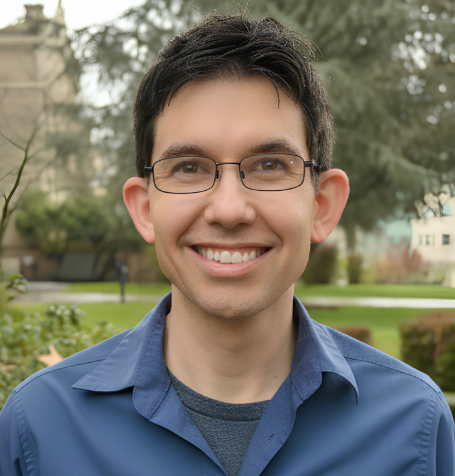
Brad Buran, Ph.D.
Oregon Health & Science University
Meet the Researcher
Brad Buran, Ph.D., is an auditory neuroscientist and research assistant professor at Oregon Health & Science University. He received his doctorate through the Harvard-MIT Program in Speech and Hearing Bioscience and Technology. He is a 2027 Emerging Research Grants scientist. He was also a 2015 ERG scientist generously funded by Hyperacusis Research.
The Research
Drug-mediated cochlear synapse regeneration: reversing central gain and hyperacusis in a gerbil model
Loud noise exposure in the workplace and everyday environments is one of the leading causes of hidden inner ear damage. While traditional hearing tests measure the quietest sounds a person can detect, they frequently miss a critical form of injury: the damage to the nerve connections (synapses) that carry sound signals from the inner ear to the brain. Because standard hearing tests only evaluate basic sound detection, individuals with this nerve loss can still register “normal” hearing thresholds on standard audiograms. However, behind this apparent typical hearing, the brain is not receiving normal auditory information from the ear.
To compensate for this reduced input, the central auditory system turns up its internal “volume knob.” This adaptive brain response, known as “central gain,” is an attempt to amplify faint signals. Unfortunately, when the volume remains turned up too high, it can cause decreased sound tolerance where some sounds become uncomfortably loud. Decreased sound tolerance can impact daily function and affects up to 15 percent of older adults, yet there are currently no approved medications available to repair auditory nerve damage.
To address this critical therapeutic gap, this project evaluates a promising strategy: repurposing an extensively tested, FDA-approved drug. Utilizing a medication with an already established human safety profile dramatically accelerates the timeline for bringing a tangible treatment to patients. This specific drug acts on key biological pathways that actively stimulate the repair and regeneration of damaged auditory nerve connections.
Our research will test two clinically practical delivery routes to determine the most effective approach: an oral pill that works systemically, and a targeted gel placed directly into the ear to deliver the medication locally. Using preclinical models of noise-induced damage, we will examine the direct relationship between rebuilding ear-to-brain nerve connections, turning down central gain in the brain, and restoring normal loudness perception.
Long-term goal: The primary long-term objective of this project is to translate our preclinical findings into early-phase human clinical trials, leveraging the established safety profile of an FDA-approved drug to speed up development of a therapeutic for this type of hearing loss. Beyond validating therapeutic efficacy, our long-term goals include determining the most effective clinical delivery route, comparing systemic oral administration against targeted intra-tympanic gel application, to optimize dosing while minimizing potential side effects. Additionally, this work seeks to establish actionable electrophysiological and behavioral biomarkers that will enable clinicians to definitively identify hidden hearing loss in patients and identify candidates most likely to benefit from restorative therapy.
If successful, this research promises to transform the clinical management of noise-induced auditory damage and decreased sound tolerance by delivering a pharmacological therapy capable of actively repairing inner ear nerve connections. By restoring normal ear-to-brain signaling, this may turn down the brain's overactive central gain and reverse decreased sound tolerance.
The Project’s Genesis
This project originated from a close collaboration with my clinical colleague, Dr. Naomi Bramhall, driven by our shared focus on “hidden hearing loss.” Hidden hearing loss is the phenomenon where patients experience significant hearing complaints, yet test normally on standard audiograms. Combining my focus on preclinical research with my colleague’s clinical expertise enabled us to leverage our complementary strengths to conduct parallel studies in both models, facilitating the path from bench to bedside. Our early work focused on improving diagnostics; however, we recognized that improved diagnostics alone are not enough. Patients need treatments. In exploring therapeutic options, we identified a promising candidate drug that is FDA-approved and actively prescribed to treat migraines, insomnia, and depression. Because it is already in clinical use, this drug offers a unique opportunity to conduct parallel preclinical and human studies.
I have always been a tinkerer and enjoy taking things apart to determine how they work. I entered college as an architecture major, but added a large number of science classes to my courseload, much to the chagrin of my architecture adviser. By the end of the first year, I had changed my major to neuroscience and started volunteering in the laboratory of Dr. Arthur Popper studying the inner ears of deep sea fishes. At that point, my career path in auditory science was set.
I lost my hearing to meningitis when I was 14 months old. Living with hearing loss sparked a lifelong personal and scientific journey to understand how the auditory system works and how hearing loss affects our ability to understand sounds an interact with the world around us. This personal connection drives my focus toward translational science that goes beyond basic research to deliver practical, quality-of-life improvements for patients.
A defining moment in my career was a piece of advice from my Ph.D. mentor, M. Charles Liberman, Ph.D., who suggested that I should take a month to learn computer programming. I took his advice to heart, but I wasn’t satisfied with stopping at basic data analysis scripts. That single month turned into a year of a deep dive into multiple programming languages, computer science theory, and computational modeling. Taking the time to build that rigorous foundation fundamentally transformed how I approach science. It has allowed me to design and execute complex experiments that would otherwise have been infeasible given standard tools, time, and resource constraints. Given that I enjoy designing new circuits and software for my experiments, I suspect that if I had not switched to neuroscience, I would eventually have become an engineer of some sort.
Getting out into nature helps me relax and clear my mind, allowing me to step back and focus on the big picture. Often I will solve a perplexing research problem over the weekend while hiking or kayaking. At home, I also have three backyard chickens who are equal parts egg providers and equal parts beloved pets. Two of them love jumping up to sit in my lap whenever I am relaxing outside. Because my daily work involves training preclinical models to perform complex auditory discrimination tasks, I have contemplated setting up a similar auditory training task in the coop to give my chickens some cognitive enrichment (and a fun way to earn treats). They are quite bright, and show a keen capacity for learning.
Cued Speech
I grew up using Cued Speech, a visual communication system that uses hand shapes near the mouth to complement speechreading by visually disambiguating sounds that appear identical on the lips. For example, “mat,” “bat,” and “pat” look identical on the lips, but distinct handshapes for the “m,” “b,” and “p” sounds make them instantly distinguishable. Because it is a straightforward phonetic system, it is remarkably easy to learn.
During my time at MIT, my classmates often said they wished to learn it, but felt too overwhelmed by their heavy course load—except for one friend. He took a single weekend to learn the system and showed up to class on Monday cueing to me. Seeing him do it created an incredible ripple effect. My other classmates, being naturally competitive, realized how accessible it was, and soon most of them learned Cued Speech as well. To this day, many of those friends still remember how to cue with me, and you might even catch us cueing to each other across the room when we run into each other at research conferences.
If the proposed work is successful, my collaborators and I hope to secure an NIH R01 grant to expand this research, enabling us to move out of preclinical models and toward early-phase human clinical trials. Over the next five years, we hope to establish whether an oral pill or a targeted ear gel is the most effective approach to repair auditory synapses, while also establishing reliable diagnostic biomarkers that help clinicians identify patients with hidden hearing loss who can benefit from restorative therapy.
In 10 years, I aim to expand my research program to address the broader, fundamental question of how hearing loss shapes central auditory coding and brain plasticity over time. Having received my first cochlear implant at age 17, my implants provide crucial environmental awareness, but not spoken language recognition. This is a powerful testament to how the brain remaps itself when deprived of auditory input during critical developmental windows. These long-term changes in central auditory coding deeply fascinate me. Ultimately, I want my lab to look beyond peripheral repair alone and tackle how the brain processes sound, developing insights and treatments that improve auditory perception for everyone living with hearing loss, whether overt or hidden.
Buran shared more about his research and hearing loss in the cover story of the Winter 2017 issue of Hearing Health magazine.